About Me

My photo
Author of queer, wry sci fi/fantasy books.

Saturday, 29 March 2014

B!tch Please: An Argument Against Token Female Warriors

Hello hello!

I seem to be on a character development kick, and we're bringing it back to feminism once again this week. People seem to like these, so I hope it gives you guys something to chew over in the next book you read, movie you watch, or creative work you produce. This week, I want to talk about a new trend that seems to be the counter-answer to princess culture: warrior girlz. Note the zed. There are also...

SPOILERS SPOILERS SPOILERS SPOILERS


...for a whole bunch of movies, but none of them are less than several months old. Mulan, Tangled, Frozen, Brave, How to Train Your Dragon, Snow White and the Huntsman, and Alice in Wonderland are all getting mentioned, so beyond this point, deal with it.


Context: What got the ball rolling


I was watching Mulan earlier this week, and man, does it ever stand up well. Sure, it activated Nostalgia Mode and I pretty much ended up belting out "Be a Man", interrupting my editing flow, but it was still great. There's a lot of great stuff on gender performance and normativity that the movie examines really well.

 I've gone on the record as being a fan of Frozen, but I agree--that, Tangled, and Brave all have this intense discomfort with their female characters. I love that Kristoff never once mentions that Anna might not be able to do something because she's a girl--it's that she's untrained with the mountains that earns his ire. (And the bloggers who object to him calling her 'fiestypants'....really? Not exactly an offensive nickname there, guys.) People complained that she didn't do as much as Rapunzel, but not everyone has to be an intellectual---Anna's clearly physically active and strong, and would probably be a jock if she grew up in our time, and that's fine. However, the cutesy character designs are, well, a bit over the top. Brave was fun, but the painful and strained GIRLS CAN TOTALLY DO STUFF OKAY tone and the awkward SHE'LL TOTALLY MARRY EVENTUALLY thing at the end of the movie wrecked it for me. And Tangled...I'm sorry, I just can't forgive the movie for having its female protag invent astronomy, teach herself about art, and wield a frying pan while she does acrobatics...and kinda shove all that aside, because oh my goodness, boyfriend! I get that she's lonely, but that was The Little Mermaid-level bad.

Now measure that against Mulan. A girl who can pass for a guy, has more game than her intended romantic partner but who *doesn't* marry him at the end of the movie, develops confidence in herself, and above all, trains hard before she kicks ass? Great personal journey, and one that really holds up, along with the gorgeous animation. I'm not a 2-D-will-always-be-better-than-3-D person, but there's something to say for the lovely details in this movie. It's got the montage, sure, but Mulan still does a lot of work outside of that, and it's impressive.


Comparison: Aye, there's the rub


Now we get into less comfortable territory. I was watching a review of Alice in Wonderland--the Burton version--and I noticed a strong similarity to Snow White and the Huntsman. Combined with something I was editing, I noticed an ugly parallel. Many critics complained about Alice's takedown of the Jabberwocky. I actually liked AiW, for all its flaws, but the review brought a bunch of them to light. And honestly? I agree with the critics now. Not unlike in SWatH, our insipid and dull heroine gets a sword and armour and defeats the baddy with minimal effort...after no training or work whatsoever.

I love warrior women. Brienne of Tarth, Arya Stark, and Asha Greyjoy were my favorite characters in Game of Thrones. Joan of Arc? Personal inspiration. Athena? My favorite goddess when I studied Greek mythology as a kid. Boudicea? My go-to reference when I'm angry, if I don't think of The Morrigan first. And yes, Xena is awesome, but you don't need me to mention that.

The thing is, all of these women did things the hard way. So did Mulan. The challenge is part of the story. So slapping on the boob plate and just defeating the antagonist cheaply is...well...almost as bad as princess culture, really. Andrey, aka Disarcade, aka the boyfriend, pointed out that boys have been getting the easy-win treatment for years, so I guess it's progress from that perspective. But I have to admit, I don't like it. Playing dress-up in armour and weaponry is an improvement, I guess, over pink frilly stuff, but is it really? Snow White and Alice are boring as hell and only token-assertive, and these roles are still pretty heteronormative and cis-normative (meaning that they confirm gender roles and identity as they currently exist). I haven't seen non-white girls get the roles, either, but the trope is young. Standing up for yourself or for others involves fighting, and people don't just part like the Red Sea the minute you stop accepting what you're told. (Please, ask me how I know.) Hell, even in Lord of the Rings, Eowyn just puts on armour and rides forth like it ain't no thang. Arguably she at least had context for maybe having some skills, but the other two?


How do we fix it? 


This is really, really easy. Show some pushback. Create more diversity in the girls elevated to warrior stance. A little age diversity wouldn't hurt either, because life doesn't end when you turn thirty. Above all else, show some effort and give the girls (and people) some personality. A character needs to have a personality when you decontextualize them. What can you say about a character apart from describing their actions? Mulan, for example, is brave, obedient, Lawful Good, and struggles to handle people's expectations. She's compassionate and very patient, but isn't a vanilla cake of sweetness or neurotic. I'll give Disney this--I can at least describe the personalities of all the girls in the cartoons I just described. (Rapunzel, for the record, deserved a better movie; I've omitted Tiana from the lineup because I wouldn't say gender performance or norms are as much of a thing in her movie, though Naveen certainly learns to respect women more as a result of exposure to her.) Snow White? Alice? I guess they...exist? That's about as far as their characterization goes. Guy characters tend to be 'cool' or 'nerdy' (because the 90s never died, I guess), and problems are similar, but the ladies generally get the shaft in characterization and tend to be weaker to boot.

So, there you have it. Make sure your character is a person, and if they become a fierce warrior or something like that, make sure they have to work for it. Now, let's get down to business...!

*****
Thanks for dropping by the nest once again. Don't miss any of the phuquerie. Find Michelle on Twitter, Facebook, and on Tumblr, and find her work on Amazon. Check back on the blog to see when one of the irregular posts has careened onto your feed. This is the one and only SciFiMagpie, over and out! 


Saturday, 15 March 2014

Hurt So Good: How To Break Your Heroes


Hello hello!

So, as an editor, a lot of stories cross my desk every month. I'm also a writer, though, and that means that writing a good story isn't just a matter of being a spectator. I mentioned in a recent post  that sexual assault is often used for female characters as a sort of plot device--an easy way to give them a tragic backstory and offer a motive for being both defensive of themselves and prickly. However, that post also outlined the issues with it. On reading it, my partner challenged me, "Okay, so how can most writers craft a good character without using that as a plot device?"

Disclaimer


That's what I'm going to talk about today. Obviously, I've already covered one base, but I really think we can get more creative with ways to give your character that challenge. Before we get going, just a note--I'm going to keep saying "heroes", but all of this applies equally to heroines or nonhumans/non-binary heroes as well! I'm also going to focus a bit on fantasy and sci fi in particular, so keep in mind that you may have to adapt things based on your setting and genre a bit. And obviously, they're not set in stone, but do read them before you run off to break them.

So, why should your character "be programmed with the most tragic backstory ever written"?


Rule 1--They Don't Have To


Shocking, right? You can always give your character a surprisingly healthy history and then just load the tragedy and conflict on as events play out through your story. Never be afraid to hurt your characters on stage! They can't be too precious. Conversely, if you find yourself wanting to smash your heroes' hearts a bit too often, maybe pull back on a a bit. If I had a dollar for every time a manuscript had gone overboard on the tragedy department, I'd have a solid gold computer. Jenny Kirkette doesn't have to be an orphan whose pet beagle died in a horrific transporter accident to be on an uneven footing during the events of the story.

Rule 2--Know the Difference Between Pathos and Bathos


Hyperbole is *not* your friend in a serious manu--unless other characters poke fun at your character's unfortunate circumstances or there's inherent absurdity to the tragedy. It worked for Lemony Snicket, but I wouldn't call tragedy-overload a recommended style. It's hard to use. Pathos is, simply, an appeal to your audience's emotions. Bathos is transitioning from the exalted to the absurd. While Christopher Moore is a master of bathos, and can actually make some moving stories from the contrast, but it's not easy to do. I keep pressing the yellow 'caution' sign to make it light up here, but it's important to know when your backstory is so sad it's gone all the way to being silly. There's a balance point between tragic, heartbreaking, and tragedy overload--at 'tragedy overload', the audience's brains shut down and can't handle any more sadness. They have to giggle to deal with with things. (This is the same part of your brain that thinks Holocaust jokes and other offensive, tragic subjects are funny.) Be aware of that when you're writing.

Rule 3--Mind Your Cliches 


I mentioned sexual assault above. It's one of the gender-bound cliches; however, it's seldom used for male characters. Cliches are actually quite fine to use as long as you spice them up a bit. Consider gender-swapping them, for instance. Losing a mother motivates quite a few sons to seek revenge, but that's fine for a girl, too, instead of losing her father. Brothers and sisters are great targets, and lovers are traditional. Friends are less often used, and that's a shame, because I think we all know that in real life, friends can be as close as family, too. Adopted siblings are a good one. However, do be aware that they are cliches, instead of turning a blind eye. If you're going to have alien bandits capture your human hero's girlfriend and tie her to the space elevator tracks, be aware that it's been done before.

Rule 4--Gender-Swapping Is Your Friend


If you are using a cliche, try to do something different with it. Heck, this goes for less-overused ideas as well. Put a character in a situation that would not necessarily conform to their gender or cultural expectations. If you're in a fantasy or sci fi setting, this is doubly true. Don't limit yourself to Terran norms! If readers can suspend disbelief enough for dragons and magic and interstellar travel that's faster than light, they can handle having a sister rescue her brother, a mother rescuing her child, or a father who's been captured. Remember to think outside the normal box of boy-save-girl or girl-gets-hurt-by-boys-automatically. Your readers will love you for it.


Source. Above: Your main character. 

Rule 5--Go All the Way


If you're going for a cliche, don't be half-hearted. This goes for any sort of tragedy, really. Mind Rule 2, but a lot of readers do like it when authors amp up the sadness. Oh, sure, subtlety is important, but it's okay for something to wreck your character's life. After all, tragedies don't just conveniently come back whenever you need to talk about them. They keep characters up at night. Maybe your hero has flashbacks and Post-Traumatic Stress Disorder. Triggers are a convenient way to add to tension and realism--the smell of whiskey or Martian flowers or the colour octarine might remind your character of that fateful night in a way they can't forget. Addictions are a 'fun' way to add consequences, too. Remember--tragedy doesn't exist in a bubble.


Rule 6--Motivation Does Not Equal Reactions


Is your hero doing what they have to as a result of someone else's tragedy? How do they feel about it? Maybe they're annoyed because it's not really their war and they just want to go home. That ambiguity is great for having your character switch sides or even switch back! Is your hero inclined to forgive the person who hurt them, but feeling forced to go through with their revenge? Honour works both ways. What if the character's heart just isn't in it? Conversely, you can have your character go to some really dark extremes for revenge, even go overboard, but if you do that, make sure other characters (and not just a single, often female, token) criticize their choices. Just because your character has a motivation, doesn't mean it will determine their reaction. People change over time and consider their personal tragedies differently.


Rule 7--Sympathy For the Devil


Maybe your character understands why her commanding officer left her family to be devoured by the ravenous space wolves on the mine orbiting Betelgeuse--because it meant saving thousands of people in the colony ship. Just because your character is driven to revenge, doesn't mean you should hate on your antagonist or villain all the time. That leads to boring antagonists, and lack of conflict. Furthermore, making your villain/antagonist sympathetic will create distress in your main character. Distress is your friend! A strong villain is almost more important than a strong lead. Make sure their motivations make sense.

Rule 8--Why?


Why is your character's backstory important? Does it really add to the story, or is it cleverly-disguised filler? Is it exposition, clogging up the beginning, or is it revealed slowly? If you're stumped, it's okay to be mysterious. Sometimes it's good to discover your character's motivation along with the audience. And for a first draft, well, anything goes. You're going to fix it anyway. You can also map out multiple possibilities for the background if you're not sure about it. Above all else, make sure your character's tragedy adds to the story rather than clogging it up or slowing it down.

So, that's my list of recommendations! Hopefully it's set your plot bunnies to chewing at the lettuce in the garden. If you're feeling doubt over your story's direction, that's okay too. Remember, no-one's going to judge you for rewriting or playing with things.

*****
Thanks for dropping by the nest once again. Don't miss any of the phuquerie. Find Michelle on Twitter, Facebook, and on Tumblr, and find her work on Amazon. Check back on the blog to see when one of the irregular posts has careened onto your feed. This is the one and only SciFiMagpie, over and out! 

Friday, 7 March 2014

Breaking News--Two Short Reviews

Hello hello!

So, I try not to review too many books apart from my top-ten list, but I was overflowing with enthusiasm and love, and I just had to post these.

image

Re: Rags & Bones by Neil Gaiman, Garth Nix, Kelly Armstrong, et alhttp://www.amazon.com/Rags-Bones-Twists-Timeless-Tales-ebook/dp/B00BAXFB46

"I don't even know how to talk about this book. I loved it, and it was so beautiful it hurt. I admit that I'm prejudiced--it was an anthology of some of my favorite authors, about retellings--one of my favorite things--and folklore--another favorite thing--and it was illustrated by Charles Vess. I don't think it would be physically possible for me not to love this book.

And I still loved it more than I expected to. In the interest of balance, I'll mention that the last story left me cold and the organizational structure of the stories didn't make too much sense to me, but enh.

I loved it, you should buy it, and this will be going onto the list of some of my favorite books, with an honoured place. I am going to seek out the authors, too; some of the stories really caught my attention. It's well-written, spooky, mournful, romantic, haunting, and still very simple. It crosses genres.

Long story short, I can't say enough good things about it. Buy it and see why for yourself."

image


Re: Blackbirds by Chuck Wendig http://www.amazon.com/Blackbirds-Chuck-Wendig-ebook/dp/B007B2D4DU

"I adore urban fantasy horror, and Wendig just nails it. I'm going to quote fanmail I sent the author:
"So I am pestering you again because I just finished Blackbirds. How could you do that to my heart?! How? And it is a series...I am so scared and so excited. It was marvellous and awful and...I don't even know, but I think I have a big throbbing crush on Miriam Black." Miriam is like a manic pixie dream girl rendered goth, if the MPDG was a human being with damage and scars and a sad but realistic history and a romantic streak, and if MPDGs were prone to beating the living shit out of the men they're supposed to save. Her story is the story of America, and I can't wait for the next one.
It's tight, it's gritty, it's sorrowful, and it's funny as phuque. Oh, sure, I'll admit that the interrupted narrative gives it a slightly choppy flavour, but that's far from a dealbreaker.
Buy it, love it, and for the love of the gods, don't be a wimp about the cursing. The swearing is part of the soul of this book, and Miriam is going to haunt my dreams--cigarettes, cheap hair dye, scars, and all."

Also, I desperately want Miriam Black to meet Shadow from Gaiman's American Gods just to see what would happen.

*****
Thanks for dropping by the nest once again. Don't miss any of the phuquerie. Find Michelle on Twitter, Facebook, and on Tumblr, and find her work on Amazon. Check back on the blog to see when one of the irregular posts has careened onto your feed. This is the one and only SciFiMagpie, over and out! 

Tuesday, 4 March 2014

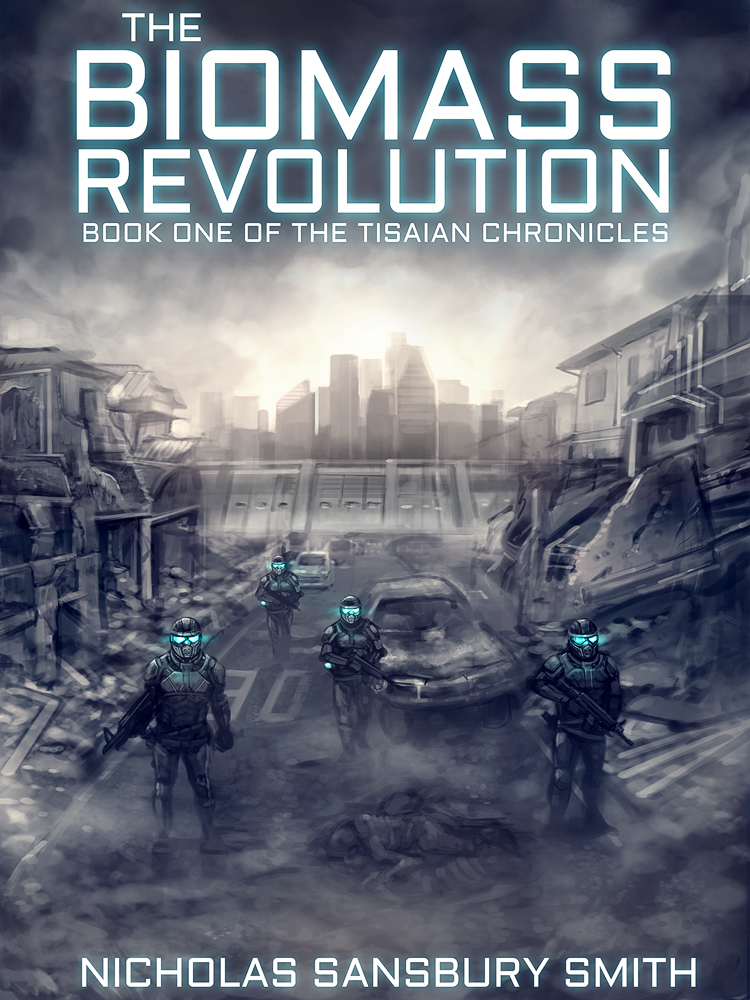
A Double-Sided Dark World Dystopia: An Interview with Nick Sansbury Smith

Hello hello!

So to celebrate Nick's recent successes, I thought I'd put this one out. It's all about The Biomass Revolution, his other series, not Orbs, but you should definitely read it.

Q: Describe yourself in 20 words or less.

First, author and triathlete. Second, public servant and activist. Then in no specific order; vegetarian, lover of all animals, adrenaline junkie and humanist.  

Q: Tell us about your novels.

The Tisaian Chronicles is the first series I have written with The Biomass Revolution being my debut novel. I wrote the prequels; Squad 19 and A Royal Knight to give the reader a better look at the world from both sides of the revolution.

TBR is my view of the future. It’s a bleak one, but one that can be avoided if we make the right choices moving forward as a global community. Here’s a synopsis:  

“What would you do if you lived in a world where your every move was scrutinized by your own personal artificial intelligence--a world where everything is regulated, from power usage to relationships--a world where everything you thought you knew turned out to be a lie?

Welcome to Tisaia - The last hub of modern civilization in a world left scorched by the nuclear fires of the Biomass Wars. Surrounded by a fortress of steel walls and protected by a fierce and loyal Council of Royal Knights, Tisaia seems relatively safe to the average State worker and citizen. A plentiful supply of Biomass powers the cities and food is abundant, but security has come at a terrible cost. The State will do anything to protect its resources, even if it means suppressing the rights of its citizens and deporting immigrants into the Wasteland - a virtual death sentence.

Spurious Timur is one of the State workers helping keep the wheels of prosperity turning in Tisaia. As he starts to explore Tisaia and question his own worth, he realizes there may be more to his subsistence than he thought. When he meets and falls for co-worker Lana Padilla, he begins to understand he may hold the key to restoring Tisaia to a just and free State.

However, restoring Tisaia will come at a cost; both to Spurious and those he cares about, because in Tisaia nothing is ever what it seems. And as more of his past begins to surface, he is faced with the ultimate decision--on which side of the revolution should he fight on?”

Q: Dystopias are pretty 'in' right now. What got you interested in the genre?

I grew up reading George Orwell, Joe Haldeman, Margaret Atwood, and S.M. Stirling, so I was always into dark dystopian literature. The past decade I’ve spent my time working in the disaster field, watching the US get pounded by tornadoes, hurricanes, droughts and fires. This experience combined with my background in political science and public policy influenced the world of Tisaia, one I believe we are heading toward.

Buy it here. Cover provided by the author.


Q: What do you think of 'The Hunger Games' and other YA-centred, romantic dystopias?

They are entertaining but in a Harry Potter type of way. When I think of a dystopian future, I think of big brother and darkness. The romantic themed dystopian books like hunger games don’t seem realistic to me. Do you really think a kid is going to save the world when things go to shit? Thinking back to Mad Max in Thunder Dome I recall the quote, “two men enter one man leave.” And I have a really hard time believing a girl with a bow and arrow would be the last person standing.

Q: Do you think TBR's events could happen? Are we 'too smart' for that, or heading towards a real-world dystopia?

I wrote a fore ward to the reader as a warning because I absolutely believe TBR could happen. Every day you hook your car up to a gas pump or water your lawn so it’s green we are inching closer and closer. If a virus doesn’t kill us first I believe fossil fuels will seal our fate as a race. Unless we switch to something sustainable and soon then we are heading towards a world where we may see more Mel Gibson’s aka Max Max’s.

Q: The Biomass Revolution has some cross-media references and influences, such as Gears of War. How do you see game ideas and movie ideas influencing books?

Being a huge fan of both the Halo books and Gears of War books I see quite a bit of this. However, I’m currently reading Metro 2033 and just realized that book influenced the game. It goes both ways.

Photo provided by the author.


Q: Where did you draw visual inspiration from for the imagery in Biomass?

Gears of War was a huge influence. I loved the architecture in that game and the uniforms the Gears wore. The weapons were badass too.

Five years ago I worked on the capitol complex that serves as a central hub for Iowa’s State government. I used to walk the tunnels underneath the capitol building on my way to other offices. This played a pivotal role in the tunnel’s described in Tisaia. Some of the buildings also were inspirations, the golden dome of the capitol being one of them.

Q: What do you plan to write or publish next?

A science fiction book called Orbs. Think The Fifth Wave, but the adult version. That’s all I am divulging right now : ).

Q: Which foods do you absolutely hate?

I don’t eat hate any foods, but I don’t eat anything with fur on it. For health reasons and because I love animals and work very hard for animal welfare and rights.

Q: Least favorite genre?

Westerns. I’ll read anime comic books before I pick up a Western. 


*****
Thanks for dropping by the nest once again. Don't miss any of the phuquerie. Find Michelle on Twitter, Facebook, and on Tumblr, and find her work on Amazon. Check back on the blog to see when one of the irregular posts has careened onto your feed. This is the one and only SciFiMagpie, over and out! 

Friday, 21 February 2014

Blame It On The Girls: Boys in Disney and 'Princess Flicks' in General (Girlcember 10)

Hello hello!

Earlier last month, I watched Frozen and compared it to several other Disney movies. I went for a bit of a blog rummage and had a look at other reactions to the movie. They were evenly split between 'FEMINISM YAY' and 'Grrrr, no PoC and they made a hash of the original narrative of the story'. The PoC criticism is a very fair point, as we all know that Disney seems to drop the ball the minute its main characters are non-white, but the last bit, enh; we should be used to Disney making a hash of folklore by now. (I should mention that Kristoff, by the way, has been officially confirmed as being a Saami person--it may have been done messily, but I ended up learning a bit about the Saami people as a result of the debacle, so there's that, anyway.)

Now, what follows involves

SPOILERS SPOILERS SPOILERS SPOILERS SPOILERS 


for Frozen and other Disney flicks. Are we good? Good! Then let's talk about something completely different: the boys.


I noticed something interesting--the male characters in Frozen were really quite stellar. The nameless King, Hans, the Duke of Weaselton, and Kristoff were all portrayed with surprising subtlety. The Duke, for example, was a jerk with mostly good intentions, and was manipulated by Hans. Both Hans and Kristoff were pretty layered characters, which was a nice change. And the King was trying to be a good father, but gave his daughter really bad advice--something Disney fathers aren't usually allowed to do. All of this was a great change from the norm.

A change from what, though? Surely the princes aren't that important in Disney movies; it's more about the women, isn't it?


Prince-i-pals


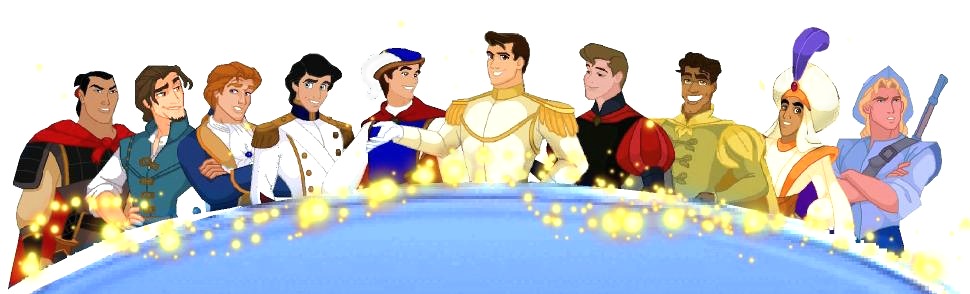
Therein lies the problem. Male characters don't have a problem with character development and representation in 'non-princess' movies, but for most of Disney's history, the men have had even less character and personality than the princesses. Consider Phoebus from Hunchback of Notre Dame, John Smith from Pocahontas, Adam (the human version of the Beast) from Beauty and the Beast, Eric from The Little Mermaid, and the nameless princes from Cinderella, Sleeping Beauty, and Snow White. Granted, the last three are older, but do the newer ones I mentioned really have that much more depth? Sure, there were sequels that expanded on these characters a tiny bit, but the most interesting princes/love interests in the 90s princess movie canon were the Beast (in Beast form), Quasimodo, Aladdin, and Shang-Li. You'll note that these are all societally-rejected or conflicted characters--Shang-Li's abandonment of Mulan on the mountain was very 'unprincely' and memorable. The majority, though, are bland as hell, and much less developed than the princesses. (A comprehensive list of princes and not-quite-princes can be found here.)


Source. Notice any similarities?

In contrast...


Consider princes from the most recent revamps of the franchise--the would-be princes in Brave are played for comedy, and are pretty dorky; Naveen from The Princess and the Frog is probably the most interesting character in the movie, and Kristoff and Hans have plenty of meat to their characterizations. The Prince in Enchanted was at least as interesting and sympathetic as the heroine, with faults to match (though the same cannot be said of Giselle's unmemorable other love interest), but I have to admit to a stumble with Flynn Rider. Flynn--in my opinion--is annoying as hell, but at least his thievery had more consequences than Aladdin's, and came with a deceitful personality. There's something to be said for that. In fact, like Naveen, he was arguably more interesting than Rapunzel herself, and went through more development. Disney has had a tendency to touch on subjects without actually exploring them, so the demonstration of more consequences and depth in a hero's personality and life is a very good progression. Real men (both in the sense of 'good men' and 'actual, 3-D humans that walk around and identify as male) aren't just villains OR heroes. They're lazy, strong, smart, stupid, naive, funny, lame, shy, and awkward; brash, quiet, gentle, sensitive, and sometimes, even boring. We're starting to see that shift, and it's overdue.


Is it changing?


Well, actually, the answer is yes. I don't know if it will lure more boys into the franchises, but at the very least, young girls are getting a better idea of what men can and should be like. Regardless of one's romantic or sexual preferences, getting the idea that men are more than cardboard superhero cutouts with money is pretty important. The idea that male characters can and need to develop right alongside their heroines is simply not there in a lot of female-targeted media. A lot of romance novels tend to blur over that or only add token development to the male leads, when they're not abusive and overly dominant jerks, of course.

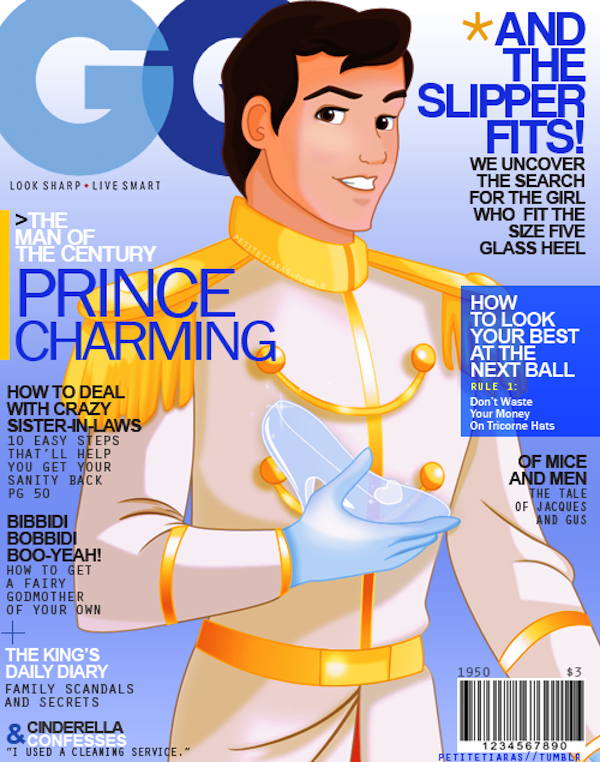
So, all of that is very good, and girls deserve examples of realistic men--the song 'Fixer Upper' in Frozen encapsulated why quite beautifully, with the idea that no-one is perfect but love (and patience) can really help--but a constant refrain always punctuates this issue...


Source. Presented without comment.


But...but...princess movies are for girls!


Okay, but do they have to be? I do understand that princess movies are sort of a 'safe space' for a lot of women--girls and grown-ass adults alike--to bond over. However, the fear of boy cooties, much as it may be valid, is foolish and feeds into cloistering of gender roles. I have no doubt that these movies will still continue to be marketed to and written for girls.

This is a serious issue, because it means there's no hook for boys to participate in the princess culture thing easily. I touched on the way girls' toys are segregated in my previous list, and I want to continue with that point here; boys are still stigmatized for liking anything feminine. That's bad both for boys and for girls. Boys do, in fact, knit, bake, paint, and do other artistic things, and they aren't always puff-chested heroes or monsters when they do said things. The problem with assuming boys who do these things are gay is that it forces boys into an awkward feminine camp, to say nothing of the fact that leisure activities have little to do with one's sexuality, if anything.


What needs to be changed?


As always, I like to point the accusatory finger back at the audience rather than just decrying the company. I think Disney is honestly trying, and while they still have a long ways to go with both culture and equal representation, it's more important for us in the audience to adapt. Genderswapping characters and things like the Hawkeye Initiative are great for showing off systemic misogyny and sexism, but women have to take an equal role in making sure that our portrayals of men don't just continue the same negative trends. So, consider inviting a boy or two to that 'Princess movie night'. If you're a writer or artist, consider the way you're portraying men. Are your love interests all 'badass alpha males' or predominantly geeky boys? Are they ripped or otherwise 'perfect'? Is he a rich white dude, or is he a middle-class person of colour? It's time for us as creators to stop making our fictional characters self-inserts, the people we wish we could be or wish we could love. The world has enough cardboard princes. If even Disney can figure that out, so can the rest of us.

*****

Thanks for dropping by the nest once again. Don't miss any of the phuquerie. Find Michelle on Twitter, Facebook, and on Tumblr. More interviews and witty commentaries are coming. Keep checking back to see those surprise posts, too. This is your darling SciFiMagpie, over and out! 

Google+