Monday, 10 November 2014
Samuel Peralta: Noir
Samuel Peralta: Noir: At the violet hour, a tent’s unexpected shelter from constables and rain. Past doorway, beaded threshold, the lacqueria, the ivory famili...


Samuel Peralta: N. poeticus
Samuel Peralta: N. poeticus: It started with your voice, your shimmering breath spiraling downward through the water's depth - calling - so strange! - my name. I...
Friday, 7 November 2014
On Epic Disappointment: Bill Cosby and Jian Ghomeshi
Hello hello!
Right on the heels of a cheerful column, I have to discuss something really disappointing.
I'm going to put a large content warning on this post. If you're easily triggered, get out now. I won't be discussing anything gory, but I'd hate to know that someone had a panic attack as a result of this post.
Two personalities that a lot of people respected and admired have been outed as sex offenders. I didn't have much of an attachment to Bill Cosby--to be completely honest, I never watched him as a kid and always found him slightly off and creepy--but I did listen to Q on CBC Radio pretty often. In my first year of university, I would marathon old podcast episodes of the show while I studied.
At the time of writing this--Oct 27th; I sometimes write blog posts well before they're released--several articles have come out today.
The first thing I saw was this. Then Ghomeshi responded here. And then, after a day of carefully-worded contemplations and discussion with friends, I saw this.
This was really upsetting. It's been a while since I was a regular listener, but I had a good opinion of Q--it's a fun show, the interviews were thoughtful, and the music was quite good. What the experience did show me, though, is that there's a reason people defend sex offenders.
It feels like a real betrayal to know that someone you like and respect hurt someone else. Multiple people? It's even worse. Discovering that they aren't the person you thought they were is hard to handle, especially at first. Surely not, I thought. This has to be a misunderstanding. It's much easier to blame victims because they seem like faceless antagonists. Everyone's familiar with the idea of a woman vengefully ruining a man's career our of jealousy or spite. The truth, though, is that few assaults are reported to police.
These stats are absolutely horrible. I don't know any women who haven't been, at a minimum, catcalled, verbally harassed, or groped inappropriately--myself included--and while I won't disclose the number of friends I have who are survivors, the number is much, much too high.
Ultimately, no matter how much I'd like to support Ghomeshi, my personal feelings have to come second. That's really hard to do when you're fond of a celebrity, but avoiding the truth only feeds rape culture. And it's rape culture that makes it so easy to push things aside, to chalk the incidents up to a "crazy" woman or a few "crazy" women. It's easy to do this, but if we want those statistics to go down, we can't. We have to listen to the voices that cut deeply, that strip our illusions away. The price of not doing so is letting others get hurt for the sake of a dream.
But at the end of the day, the people we set on pedestals are still human beings. And human beings haven't learned to stop doing terrible, terrible things.
Find Michelle on Twitter, Facebook, and on Tumblr, and find her work on Amazon. Check back on the blog for more.
Right on the heels of a cheerful column, I have to discuss something really disappointing.
I'm going to put a large content warning on this post. If you're easily triggered, get out now. I won't be discussing anything gory, but I'd hate to know that someone had a panic attack as a result of this post.
Two personalities that a lot of people respected and admired have been outed as sex offenders. I didn't have much of an attachment to Bill Cosby--to be completely honest, I never watched him as a kid and always found him slightly off and creepy--but I did listen to Q on CBC Radio pretty often. In my first year of university, I would marathon old podcast episodes of the show while I studied.
At the time of writing this--Oct 27th; I sometimes write blog posts well before they're released--several articles have come out today.
The first thing I saw was this. Then Ghomeshi responded here. And then, after a day of carefully-worded contemplations and discussion with friends, I saw this.
This was really upsetting. It's been a while since I was a regular listener, but I had a good opinion of Q--it's a fun show, the interviews were thoughtful, and the music was quite good. What the experience did show me, though, is that there's a reason people defend sex offenders.
It feels like a real betrayal to know that someone you like and respect hurt someone else. Multiple people? It's even worse. Discovering that they aren't the person you thought they were is hard to handle, especially at first. Surely not, I thought. This has to be a misunderstanding. It's much easier to blame victims because they seem like faceless antagonists. Everyone's familiar with the idea of a woman vengefully ruining a man's career our of jealousy or spite. The truth, though, is that few assaults are reported to police.
These stats are absolutely horrible. I don't know any women who haven't been, at a minimum, catcalled, verbally harassed, or groped inappropriately--myself included--and while I won't disclose the number of friends I have who are survivors, the number is much, much too high.
Ultimately, no matter how much I'd like to support Ghomeshi, my personal feelings have to come second. That's really hard to do when you're fond of a celebrity, but avoiding the truth only feeds rape culture. And it's rape culture that makes it so easy to push things aside, to chalk the incidents up to a "crazy" woman or a few "crazy" women. It's easy to do this, but if we want those statistics to go down, we can't. We have to listen to the voices that cut deeply, that strip our illusions away. The price of not doing so is letting others get hurt for the sake of a dream.
But at the end of the day, the people we set on pedestals are still human beings. And human beings haven't learned to stop doing terrible, terrible things.
***
Monday, 3 November 2014
The Story of a Scarf
Hello hello!
Well, as those who follow my Instagram may be aware, I'm not only a writer, I'm a crafter. I knit, bead, work with wire, do a little bit of crewel embroidery, and sew.
Since I was a kid, I've had a fascination with softness. Silk and velvet (velour, too) would make me halt in place. Even now, I love to stop and touch things that look soft (with permission, of course, when applicable). Bits of ribbon, of lace, of velour and velvet, and even of satin overflow from the craft shelves in our living room.
I'd had many of my scraps for years--some, for over a decade. A stint in theatre camp while I was in elementary school (grade school, as it's called outside Canada) bright me quite a few opportunities to save little scraps of fabric from the art projects we worked on. With access to a box of leftovers from the theatre projects the university students would run, I ended up with a small pile of treasures. Still others came from doll clothes, old projects of my own sewing, and even rummage boxes. There were even a few bits from old velvet roses from chocolate boxes, Christmas ribbons, and a Halloween costume's cape.
I saved these bits and fragments, positive that some day I'd make something useful from them. I worked on other projects, repaired skirts, modified others...and the scraps sat in a shoebox, waiting. I tried to sew them into a tiny quilt, but the stitches were too crooked. I soon gave up and shredded it. The scraps sat, waiting, a tiny pile of soft memories. I'd made a few other strangely-shaped and unusual scarves, some with trims. They challenged my skills, but I'd learned to be bolder.
Then, a couple of weeks ago, the lightbulb moment I'd been waiting for arrived. I realised I could use bits of the ribbon to frame the scarf and could arrange the patches so they'd roughly fit together and form a rectangular shape. By using a flatter, larger piece of fabric to back it, I wouldn't have to deal with the rasp of the seamy edges of my neck or craft something that looked good from only one side.
I arranged my patches, shifting and flipping them, coordinating colours. I sewed with whip-stitch and flat-stitches, layering some sheer fabrics over others. The scraps puckered a little, creating a ruched effect all over the scarf and adding even more texture.
Finally, it was finished.
I'd worked on special and challenging projects before, but the one I've just finished is probably one of the best. It's a way of visualising a lot of my life--bits of things I worked on when I was a kid, growing up in the back of my parents' medical clinic, to scraps from old doll's clothes that fascinated me, to more recent acquisitions. It's not perfectly even, but bits of lamè, velvet, netting, velour, satin, and rayon mix and mingle in long stretches. Bursts of colour like fireworks.
I don't think I could be happier about this. I can think of a few personal lessons I learned from sewing it, but they matter less than the pure joy of having this abstract mosaic, this map spanning from my childhood to now.
Sometimes, the end result really is more important than the journey.
Well, as those who follow my Instagram may be aware, I'm not only a writer, I'm a crafter. I knit, bead, work with wire, do a little bit of crewel embroidery, and sew.
Since I was a kid, I've had a fascination with softness. Silk and velvet (velour, too) would make me halt in place. Even now, I love to stop and touch things that look soft (with permission, of course, when applicable). Bits of ribbon, of lace, of velour and velvet, and even of satin overflow from the craft shelves in our living room.
 |
Source. Though I only have two shelves, and it's not this, um, tidy. |
I'd had many of my scraps for years--some, for over a decade. A stint in theatre camp while I was in elementary school (grade school, as it's called outside Canada) bright me quite a few opportunities to save little scraps of fabric from the art projects we worked on. With access to a box of leftovers from the theatre projects the university students would run, I ended up with a small pile of treasures. Still others came from doll clothes, old projects of my own sewing, and even rummage boxes. There were even a few bits from old velvet roses from chocolate boxes, Christmas ribbons, and a Halloween costume's cape.
I saved these bits and fragments, positive that some day I'd make something useful from them. I worked on other projects, repaired skirts, modified others...and the scraps sat in a shoebox, waiting. I tried to sew them into a tiny quilt, but the stitches were too crooked. I soon gave up and shredded it. The scraps sat, waiting, a tiny pile of soft memories. I'd made a few other strangely-shaped and unusual scarves, some with trims. They challenged my skills, but I'd learned to be bolder.
Then, a couple of weeks ago, the lightbulb moment I'd been waiting for arrived. I realised I could use bits of the ribbon to frame the scarf and could arrange the patches so they'd roughly fit together and form a rectangular shape. By using a flatter, larger piece of fabric to back it, I wouldn't have to deal with the rasp of the seamy edges of my neck or craft something that looked good from only one side.
I arranged my patches, shifting and flipping them, coordinating colours. I sewed with whip-stitch and flat-stitches, layering some sheer fabrics over others. The scraps puckered a little, creating a ruched effect all over the scarf and adding even more texture.
Finally, it was finished.
 |
Source: me! The scarf is folded in half. |
I'd worked on special and challenging projects before, but the one I've just finished is probably one of the best. It's a way of visualising a lot of my life--bits of things I worked on when I was a kid, growing up in the back of my parents' medical clinic, to scraps from old doll's clothes that fascinated me, to more recent acquisitions. It's not perfectly even, but bits of lamè, velvet, netting, velour, satin, and rayon mix and mingle in long stretches. Bursts of colour like fireworks.
I don't think I could be happier about this. I can think of a few personal lessons I learned from sewing it, but they matter less than the pure joy of having this abstract mosaic, this map spanning from my childhood to now.
Sometimes, the end result really is more important than the journey.
***
Thanks for dropping by the nest once again. Leave your comments, rebuttals, and vehement agreements below. Don't miss any of the phuquerie. Find Michelle on Twitter, Facebook, and on Tumblr, and find her work on Amazon. Check back on the blog to see when one of the irregular posts has careened onto your feed. This is the one and only SciFiMagpie, over and out!
Writergate: A Few Words on a Burgeoning Controversy
Hello hello!
Oh, godsdamnit. The other community I belong to, the writing community, is starting to get almost as ugly as the gaming community. This article and this one illustrate the problem. When an author thinks it's acceptable to stalk and assault a reviewer over their hurt feelings, we have a major problem.
It's worth noting that I'm *not* a reviewer. An editor, yes, and definitely an author, but I only review for fun and don't take submissions. It'd be a conflict of interest, as well as being far too much of a workload on top of everything else. So, where do I stand on this?
Well, I should probably preface this with my own experiences. Last year, I had to pull out of GoodReads after a group went after one of my books rather nastily. It was pretty crushing. There were some very homophobic comments in the reviews, some unfair points...you get the idea. Until that point, I'd had a policy of contacting reviewers who had given me low ratings to ask them for more feedback so I could improve my writing. Most reviewers were friendly, kind, and appreciated the politeness of the contact, so we parted on good terms.
This time, I got overwhelmed. The thing is, I made the mistake of making one complaining comment in a thread about the book. One of the reviewers took exception to this and delivered a scathing private lecture to me. The thread was deleted, but that didn't stop the lecture. What did I do? I left the page, did some crying, spoke to friends in private, and cried some more.
Then I tried to figure out how I could have handled it better. For one thing, better use of categorization, making sure that people were aware the story was about a bisexual character, and that it contained strong language would all have helped. And, of course, just not reading some of the negative reviews--in spite of the morbid, painful curiosity--would have been wisest. Mentioning that it has a somewhat unreliable narrator could have helped too. Most of all, though, I wish I'd had the content editor I have now to work with me back then. Just getting the practice of taking criticism would have been so helpful in insulating me from my own reaction and upset feelings.
Ultimately, it would have been nice to be able to talk to some of those reviewers, but in the context of reviewing culture, it wasn't, and still isn't. Is it a bad idea to ask for some more feedback and thoughts from a particularly well-written bad review? Maybe not. Is it a bad idea to thank someone for a really nice review and tell them about your next book? In theory, not at all.
However, we're not working in a situation where that kind of interchange is possible. Instead, the indie scene has become a minefield. Roving bands of reviewers mock books for laughs--and authors go berserk, harassing, stalking, and now physically assaulting reviewers.
This has to stop. Yes, bullying has gone on from both sides. That does not justify unprofessional behavior or actually threatening people over hurt feelings. This article has a good overview of the Hale vs Harris case and the hurt feelings. The thing is, snark has become enshrined in the reviewing community...but authors seem to respond with disproportionate aggression and ire.
I would love to have professional, calm dialogues be the norm for authors and reviewers, but right now, too many people are reacting violently and abusively to make that tea-sipping discussion possible.
First, authors need to exercise discretion in handling bad reviews. Just not reading them can be a really good start.
Second, if you do read them, do it with a critical filter. Look for details about marketing rather than seeing it as your book, your baby, that's getting slapped. It can feel like that, but it won't help you learn anything useful.
Third, it's worth noting that while the customer isn't always right, snarking back at them won't help. Ever. Under any circumstances. It's better not to contact reviewers at all, and certainly not in public. At best, it makes you look whiny; at worst, well, there are websites devoted to the results. Far too many of them.
Fourth, being able to take a joke will make you look good. So if you *can* be cool about things, well, sometimes that turns out okay.
Fifth, it's worth keeping in mind that most reviewers--even the snarkiest--usually aren't trying to stab you in the heart. Making a few snarky jokes for attention, sure, but it's quite rare that they're actually out to burn you.
Sixth, remember that every snarky retort to a reviewer can come at the price of your career.
Seventh, make sure you have a support network of discreet people that you can vent to so that you don't make stupid Facebook posts that insult your readers. NEVER INSULT YOUR READERS.
Eighth, if you see a repeated issue, it may be worth revising the book. Not always, but sometimes it can be a good idea. After all, the advantage of indie publishing is that we *can* do this stuff, right?
Ninth, if you're actually attacked, report that shit to the website itself. It doesn't always work, but it's better than taking things into your own hands.
Tenth, if you have no idea what to do, don't do anything at all.
It would be great if we could all talk like adults and be respectful towards each other, no matter how painful the differences of opinion can be. If you read this article and you still don't like the advice, consider reading this and this and also this. If you disagree with someone, hitting them is not the solution. If you absolutely have to hit something, try printing the review out and taping it to a punching bag. If you still feel the urge to commit violence after all that, it might be a good idea to seek help.
How do you handle nasty reviews--or authors? Any good coping strategies? Let me know in the comments.
Oh, godsdamnit. The other community I belong to, the writing community, is starting to get almost as ugly as the gaming community. This article and this one illustrate the problem. When an author thinks it's acceptable to stalk and assault a reviewer over their hurt feelings, we have a major problem.
The history
It's worth noting that I'm *not* a reviewer. An editor, yes, and definitely an author, but I only review for fun and don't take submissions. It'd be a conflict of interest, as well as being far too much of a workload on top of everything else. So, where do I stand on this?
Well, I should probably preface this with my own experiences. Last year, I had to pull out of GoodReads after a group went after one of my books rather nastily. It was pretty crushing. There were some very homophobic comments in the reviews, some unfair points...you get the idea. Until that point, I'd had a policy of contacting reviewers who had given me low ratings to ask them for more feedback so I could improve my writing. Most reviewers were friendly, kind, and appreciated the politeness of the contact, so we parted on good terms.
This time, I got overwhelmed. The thing is, I made the mistake of making one complaining comment in a thread about the book. One of the reviewers took exception to this and delivered a scathing private lecture to me. The thread was deleted, but that didn't stop the lecture. What did I do? I left the page, did some crying, spoke to friends in private, and cried some more.
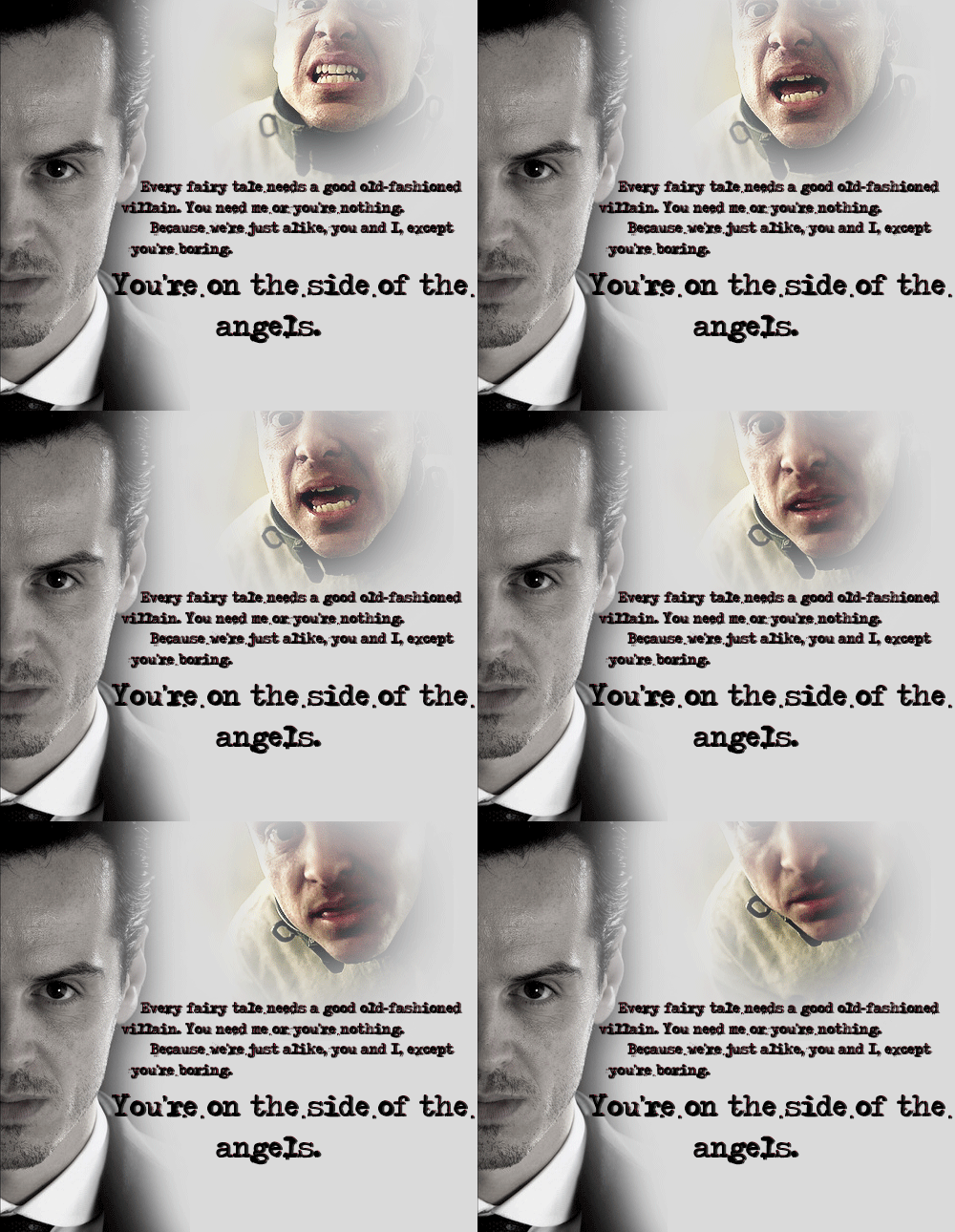 |
Sherlock gif, because I can. Also because a chained Moriarty is a good visualization for the way certain reviews can make one feel. |
How could I have fixed it?
Then I tried to figure out how I could have handled it better. For one thing, better use of categorization, making sure that people were aware the story was about a bisexual character, and that it contained strong language would all have helped. And, of course, just not reading some of the negative reviews--in spite of the morbid, painful curiosity--would have been wisest. Mentioning that it has a somewhat unreliable narrator could have helped too. Most of all, though, I wish I'd had the content editor I have now to work with me back then. Just getting the practice of taking criticism would have been so helpful in insulating me from my own reaction and upset feelings.
Ultimately, it would have been nice to be able to talk to some of those reviewers, but in the context of reviewing culture, it wasn't, and still isn't. Is it a bad idea to ask for some more feedback and thoughts from a particularly well-written bad review? Maybe not. Is it a bad idea to thank someone for a really nice review and tell them about your next book? In theory, not at all.
The hidden catch
However, we're not working in a situation where that kind of interchange is possible. Instead, the indie scene has become a minefield. Roving bands of reviewers mock books for laughs--and authors go berserk, harassing, stalking, and now physically assaulting reviewers.
This has to stop. Yes, bullying has gone on from both sides. That does not justify unprofessional behavior or actually threatening people over hurt feelings. This article has a good overview of the Hale vs Harris case and the hurt feelings. The thing is, snark has become enshrined in the reviewing community...but authors seem to respond with disproportionate aggression and ire.
I would love to have professional, calm dialogues be the norm for authors and reviewers, but right now, too many people are reacting violently and abusively to make that tea-sipping discussion possible.
How do we fix it?
First, authors need to exercise discretion in handling bad reviews. Just not reading them can be a really good start.
Second, if you do read them, do it with a critical filter. Look for details about marketing rather than seeing it as your book, your baby, that's getting slapped. It can feel like that, but it won't help you learn anything useful.
Third, it's worth noting that while the customer isn't always right, snarking back at them won't help. Ever. Under any circumstances. It's better not to contact reviewers at all, and certainly not in public. At best, it makes you look whiny; at worst, well, there are websites devoted to the results. Far too many of them.
Fourth, being able to take a joke will make you look good. So if you *can* be cool about things, well, sometimes that turns out okay.
Fifth, it's worth keeping in mind that most reviewers--even the snarkiest--usually aren't trying to stab you in the heart. Making a few snarky jokes for attention, sure, but it's quite rare that they're actually out to burn you.
Sixth, remember that every snarky retort to a reviewer can come at the price of your career.
Seventh, make sure you have a support network of discreet people that you can vent to so that you don't make stupid Facebook posts that insult your readers. NEVER INSULT YOUR READERS.
Eighth, if you see a repeated issue, it may be worth revising the book. Not always, but sometimes it can be a good idea. After all, the advantage of indie publishing is that we *can* do this stuff, right?
Ninth, if you're actually attacked, report that shit to the website itself. It doesn't always work, but it's better than taking things into your own hands.
Tenth, if you have no idea what to do, don't do anything at all.
 |
I realise it's an overly dramatic gif with a blue filter. I'm not apologizing. |
Final words?
It would be great if we could all talk like adults and be respectful towards each other, no matter how painful the differences of opinion can be. If you read this article and you still don't like the advice, consider reading this and this and also this. If you disagree with someone, hitting them is not the solution. If you absolutely have to hit something, try printing the review out and taping it to a punching bag. If you still feel the urge to commit violence after all that, it might be a good idea to seek help.
How do you handle nasty reviews--or authors? Any good coping strategies? Let me know in the comments.
***
Thanks for dropping by the nest once again. Leave your comments, rebuttals, and vehement agreements below. Don't miss any of the phuquerie. Find Michelle on Twitter, Facebook, and on Tumblr, and find her work on Amazon. Check back on the blog to see when one of the irregular posts has careened onto your feed. This is the one and only SciFiMagpie, over and out!
Subscribe to:
Posts (Atom)