About Me

My photo
Author of queer, wry sci fi/fantasy books.
Showing posts with label writing tips. Show all posts

Monday, 23 March 2015

Holy $#@*--On the Use of Profanity

Hello hello!

Ah, profanity. As a reader, I enjoy it for cases of verisimilitude and emphasis. As a writer, well, I love it. I’ve been dinged for it in reviews. As an editor, I long for more of it. So why do so many writers shy away from it?

The most common argument I hear against profanity is that it’s crude and coarse language. However, profanity has little to no correlation with socioeconomic status or personal refinement in most cases. Sure, there are people who use it as a substitution in their vocabulary, but it’s not as common as you’d think. Instead, aggressive, type-A, ambitious people with strong emotions tend to favour it. It’s also common in cases of injury or anger, as swearing actually has analgesic (pain-reducing) effects.
So why don’t people use it in books? While a cozy mystery or a Young Adult novel might not be the best place to drop some F-bombs, I am going to go out on a limb and say that other New Adult or Adult-oriented fiction (ie, most of the market) needs and requires cussing for verisimilitude. Even Jane Austen and the Brontes mentioned their characters swearing, and sometimes showed it--with censoring, sure, but it still happened. Some authors ‘aren’t comfortable’ with ‘inappropriate’ language, but considering that beheading a character or sexual assault flies easily with some of the same authors, I’m left scratching my head. Swearing makes up approximately 0.3-0.7% of language, and it’s a small but crucial portion.


So, when should characters swear? 


Strong emotions are a great time for this. Crying, bouts of anger, an argument, physical pain—all of these are prime times for some cussin’. If your characters are using exclamation marks—as they should, if they’re shouting—they can do some swearin’. Some people even swear when they’re happy—a joyous ‘F$#@ yeah! I won the lottery!” hardly goes amiss. As well, characters who are in the military, known for bluntness, or are teenagers, will likely do some cursing.

I am going to be blunt.  If you, as an author, are uncomfortable with swearwords, you need to get over it. That goes for readers, too, but this is a column about writing, so it’s authors I want to address. You don’t have to pepper your text with F-bombs in order to get the right feel, but a carefully-placed swearword can make a lot of difference. If you’re uncomfortable with swearing, practice saying it out loud (in private if you must) and try to write dialogue with lots of cussing in it to acclimatize yourself. Why do you have to? Because you’re trying to write a good story, and a lack of cursing can result in utter silliness.

“Ow! Ding dang dong diddly!” shouted Claudia. The insane clown grinned and continued to saw away at her toes. “Ow! Shucks and tarnation! That hurts!”

Your characters shouldn't sound like Ned Flanders. Even Ned would cuss if his toes were being sawed off by an insane clown. Consider this revision.

“Ow! Fucking shit! Get the fuck off!” Claudia yelled. The insane clown grinned and kept sawing at her toes. “Fucking--go to hell!”

This is how most of us would respond in the same circumstances, though probably with more screaming. Sure, these words can be seen as ugly, but they’re a natural part of language. Avoiding swearwords altogether is like avoiding the letter ‘z’—it might be rare, but you WILL stumble across it eventually, and having a slice of pi—a would be very odd.

I’ve also heard the argument that authors in the classical era didn’t swear. Anyone who’s read classical plays, Shakespeare, or even Jane Austen can easily refute that. ‘Damn’ used to be considered as powerful as ‘f$%#’, and now it’s used in kids’ movies. That’s right—the logical corollary is that even Jane Austen dropped a few ‘D-bombs’ once in a while, even if they were often censored.  Arguably, you could also say that just because classical authors did it, doesn’t mean it’s right.

So, my final words are these—whatever your religious or moral persuasion, in writing, it simply won’t do to avoid cursing completely unless you're writing children's books. You can make up the occasional curse-word as a substitute, but make sure you use it the same way as traditional curses, swears, and oaths. Don’t make your characters talk like Sunday-school teachers unless they are, and even then—I’m pretty sure every Sunday-school teacher has hit their thumb with a hammer at some point in life. 

What are some of the most creative swear words and phrases you've heard? Let me know in the comments.

***
Thanks for dropping by the nest once again. Leave your comments, rebuttals, and vehement agreements below. Don't miss any of the phuquerie--get on the mailing list. Find Michelle on TwitterFacebook, and on Tumblr, and find her work on Amazon. Check back on the blog to see when one of the irregular posts has careened onto your feed. This is the one and only SciFiMagpie, over and out! 

Friday, 30 January 2015

Holla, Holla: A Meditation on Selling Out

Hello hello!

So I was talking to my content editor a while ago, and we had a minor scuffle over genre classifications for exactly WHAT Urban Fantasy is. I thought one of my books fit into the category, and she heartily disagreed.

UF, according to Wiki, is this:

"Urban fantasy is a sub-genre of fantasy defined by place; the fantastic narrative has an urban setting. Urban fantasy exists on one side of a spectrum, opposite high fantasy, which is set in an entirely fictitious world. Many urban fantasies are set in contemporary times and contain supernatural elements. However, the stories can take place in historical, modern, or futuristic periods, and the settings may include fictional elements. The prerequisite is that they must be primarily set in a city.[1][2]"

It certainly matches my reading experience. But readers themselves have different ideas about UF. Some complain when the setting isn't contemporary. A lot, actually. Noire is also an expected element. And, as noted, the city setting is quite important. That seemed a bit off to me, because while the city bit only makes sense, what about steampunk that runs on magic? But no, most readers would not call that an urban fantasy. Where does the line between urban fantasy and cyberpunk stand? That's another tricky question.

The thing is, after I whined and moped a bit, I realised that what I thought wasn't as important as what readers thought. Definitions change and evolve, and while it's impossible to read minds or make everyone happy, not ignoring the blatantly obvious can be quite helpful. I quarrelled and protested, but ultimately, the modern setting rule--especially with paranormal elements--won out over my personal definition and Wiki's. After perusing Reddit and Facebook and surveying people, I found that they tended to fall in line. I took the "urban fantasy" tag out of the book's tag list.


And then I got to thinking... 


The thing is, it still bothered me that I was changing the classification of my book away from what *I* thought it was. Between that and contemplating the necessity of trigger and content warnings, I was quite torn about something.

When does the marketing of a book become selling out? Is "selling out" even an applicable argument when it comes to marketing and classification by genre?

Actually, no. 


It's hard to explain this to authors who are starting out, but it's important not to get too married to your categories--because you'll have to change them anyway. Categories for books are there to serve you, not worship. Does a book have most features of a romance but end tragically? Don't stick it under romance unless you can find a 'dark romance' or 'bittersweet' category; the readers will eat you alive. (Romance readers, in particular, are a special group.) Does your book about a half-angel, half-demon going to high school have a lot of queer themes and involve a diversion into horror territory in a big way? Cool. Give it a try in the horror listings as well as YA and New Adult or Paranormal. The key is to rotate.

But...but...genre rules!


No. Put down that "How to Write a Whatever" book. Pick up a new book instead. Read that. Take notes on what you liked, what you didn't like, and what worked, as well was what didn't. When did you find your attention drifting? That's a pacing issue. Kindles have a note-taking function. Use that sucker. It's not about selling out. It's about reaching readers.

Before I'd released The Underlighters as a stand-alone, outside of its place in The Loved, The Lost, The Dreaming, I almost ended up launching it as a tidied-up, de-sexed and lower violence YA version. Yes, this really happened. Miss I-Hate-Censorship herself almost caved and censored a book to make it fit people's needs. I even considered the advice one author gave me, to "put a girl with a flaming sword, fighting a Sandman" on the cover.

That might have worked, but readers who came to it would have been annoyed by the unreliable narrator, literary styling and pacing, and all the queer and equality issues that "interfered' with the action story. Ultimately, I'm not an author who writes that kind of fantasy, and misdirecting readers to think that it would conform to those expectations would only have pissed off everyone--the readers, and me. I left The Underlighters as it is, in all its convoluted glory. If I was doing it again, I'd put a more post-apocalyptic cover on it and chop that sucker in half, because I'm better at novellas than writing novels--but that's a discussion for another day.

So, wait, when does "selling out" happen? What does that even mean?


People seem to mistake "success" or change for selling out. I know I've done it. I've seen friends do it. But as long as you're not rewriting your book entirely to serve the market, even doing things you hate in order to sell books, you're okay. Ultimately, only you will know whether you've trespassed on your own integrity.

However, actually trying to sell books, talk to readers, pay for advertising, and read books on categories and niches isn't "selling out". Even now, there are still a lot of indie authors who seem to think that recognition will just happen magically and that art will somehow be self-sustaining, solely on the power of being an awesome, well-written (or well-crafted) piece of work.

I can confirm, first-hand, that it doesn't work like that. However, marketing and genre-classifications don't have to make you feel like you need a shower. The important thing is to focus on serving your vision and your work, and getting it into readers' hands.

Have you ever felt unreasonably upset about doing something for your art? Have you changed something that you later regretted? Did you get upset when a favorite author or artist changed something? I want to know, so tell me in the comments.

***
Thanks for dropping by the nest once again. Leave your comments, rebuttals, and vehement agreements below. Don't miss any of the phuquerie. Find Michelle on TwitterFacebook, and on Tumblr, and find her work on Amazon. Check back on the blog to see when one of the irregular posts has careened onto your feed. This is the one and only SciFiMagpie, over and out! 

Tuesday, 22 April 2014

Congratulations, You Showed Up: Power Porn, Part 2

Hello hello!

So, here's the second half of my exploration of taking it easy on characters. In real life, I'm a social democrat, and I've noticed that supporting people as a society is better for everyone. I'm not here to talk about politics, though, because in fiction, suffering is the way to go. You need to be hard on your characters, and that means making sure that they don't always have the best of everything or an easy time of it. I've been reading too many manuscripts where things come easily, and frankly, that's a bad practice to follow. So, how do you up the ante and the excitement in your story?


Take it easy--actually, don't


Characters need to work against the odds. Sure, you may want to give them a happily ever after, and you totally can, but they need to work for it. This isn't about politics or anything else--success has a price. Winning isn't free. Lunch can't show up on your character's table, or your audience will fall asleep. A simple apology shouldn't be all it takes to win back a lover, conquer a frenemy, defeat an enemy, or solve the world puppy shortage. There's a reason those CEOs and one-percenters are so hated, and it's because their lives are much too easy (there are other reasons, but again, character studies are my focus, not rampant economic corruption and injustice--today, anyhow).

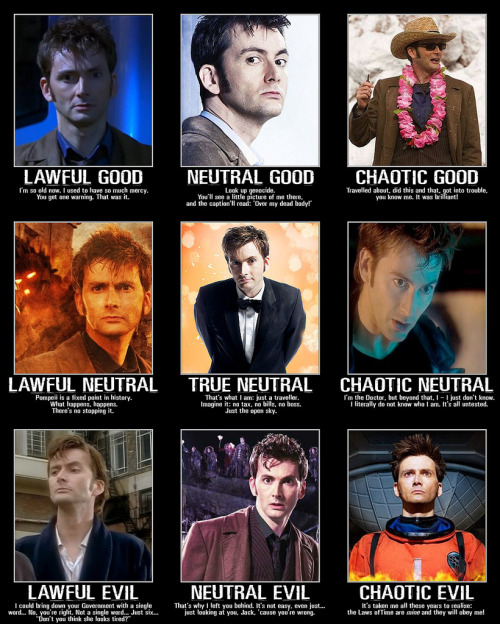
Love takes a toll, and so do relationships. The real difference between a comic book hero and a villain is circumstances and how they deal with them. Even then, the good characters sometimes make bad decisions.  One of the reasons I love Farscape and Doctor Who is that the characters do make bad decisions. Shameless plug time--that was a major factor when I wrote Janelle's character in The Underlighters; she is mostly a Lawful Good sort of person, but there were a few things she did that were, let's say, ethically dubious at best. However, she also had some really shitty runs of luck, which I can't talk about because they would involve blatant spoilers.


How does it go Pete Tong?


The thing that screws over most stories is excessive back-patting. Again, be harsh with your characters. Talking about how their cafe is the bestest or their apartment is the nicest or giving them free money usually make your readers sick. Spoiled people are annoying, and when we have to read about them, doubly so. It cuts into the likeability factor of a protagonist very heavily. Giving them shallow, easy-to-defeat enemies, justifying their actions too much, and rewarding them for the most minor victories is really unpleasant. Playing a game on 'easy' mode is one thing, but reading a story in 'easy' mode is boring as hell unless you're six.


David Tennant is a wonderful actor. But that doesn't excuse the fact that his Doctor gets away with murder and torture.


I don't understand what you're getting at. What do you mean by 'too easy'?


Story time, kids! Here's some flash fic to illustrate a character who's having things work too easily.

Gloria rode through the night, her perfect and completely natural red hair waving behind her on her motorbike like fire in the night. As she pulled up to the curb, removing her helmet in slow motion, a crowd of men turned towards her. A single glance from her emerald eyes was enough to make them all fall over like fainting goats. 

"That was a real nice pull in," said the blonde at the movie theatre's ticket booth grudgingly. 


"Thanks," said Gloria, tossing her hair. "That'll be one for the scariest action flick you have."


"Oh, wow, I didn't know women watching things other than rom-coms," said a handsome stud conveniently walking nearby. "I'm so impressed that you have the self-determination to watch a movie and own a vehicle! It's stunning! Please, marry me." 


One of the men from the curb ran over, his glorious brown eyes cutting into the newcomer. "I saw her first!"


"Sorry, boys, I don't roll like that," said Gloria. She leaned into the booth and seized the blonde by the lapels, kissing her deeply. The blonde fainted, falling back in her seat, and Gloria strode into the movie theatre. 


"What a woman!" said the first stud. "She's such a badass!"


This is an example of a character who doesn't actually do much. Frankly, she's vain, is willing to kiss someone unconsensually (which is basically diet sexual assault), and is a total showboat. But the characters around her are giving her unmerited praise and bending over backwards to be jealous of her. If you gender-swap this character, you basically have any of the protags from Supernatural, Doctor Who, or Sherlock, or without gender-bending her, a very average romance or thriller novel protagonist. The only thing worse than a vain, annoying character who's worshipped by everyone is an inconsistently-written character.


But...but..my character...


Stop it. You won't get anywhere by making them precious and saving them from trouble. I know this from editing my own work. Suffering is necessary in art, but it doesn't have to be yours--usually, it's your characters'. I use badassery as my whipping-boy, but saintliness is just as bad. Characters need flaws and moments without dignity. They need doubt and bad decisions. This is my 'how to fix it' section--hurt your character, and then hurt them more. When you get to your happy ending--or not--you and the reader will both know that the character really, really deserved it. And that's what makes for a good ride, and a good book.

*****
Thanks for dropping by the nest once again. Don't miss any of the phuquerie. Find Michelle on TwitterFacebook, and on Tumblr, and find her work on Amazon. Check back on the blog to see when one of the irregular posts has careened onto your feed. This is the one and only SciFiMagpie, over and out! 
Google+