Today, something's on my mind: the destructive power of narrative and stories.
TV shows, podcasts and books - more so TVs than the other mediums, funnily enough - do so love to talk about the importance and power of narrative. I remember episodes of Doctor Who and Supernatural that touched on this theme, and more recently, Game of Thrones used narrative and "having the best story" as an excuse to make a particular character rise to the throne of Westeros. (It's also worth mentioning that, in the same finale, talking about "the power of stories" is used to get a character out of execution.)
In the context of storytellers talking about the importance of stories - myself included - there's always something self-congratulatory and auto-fellating that bothers me about it, even when it's handled elegantly or beautifully. There's no getting around the fact that such situations represent creators literally telling their audience how important both their creations and the creators are. It reminds me of the tricks of confidence artists, bringing their mark or dupe into the confiding folds of conspiracy - although admittedly, a modest amount of money and an investment of time are probably less ruinous than most con-men's schemes.
As well, I can't help thinking about all the times when narratives can also be used to mislead, deceive, or even just present a perspective that's most flattering. Because there's a slightly glorified place for "storytellers" - journalists included, to some extent - we don't talk about how those narratives are active in, say, social circles and politics.
Yet there's something to say for a satisfying plot arc in real life: a rise, success, and a well-deserved fall. As I write this, non-democratically and possibly fraudulently-elected President Donald Trump is undergoing both a swirling media storm and the early stages of impeachment. For my part, I find this particular exodus deeply satisfying and long overdue. But his rapidly-dwindling base of supporters, of course, see him as a man wronged and maltreated.
For instance, Andrew Scheer and Maxime Bernier, among other politicians, are presenting the narrative that immigration needs to be regulated to "keep us safe" - using ambiguous and hinting language and implying things without saying them directly. They're invoking tropes, if you will, without saying them outright - more so in Bernier's case, but still.
Journalists can wade into this fight, as can scientists, but presenting facts and figures and sharing the truth alone isn't always enough - these, too, require the framing of a narrative to be acceptable by the public. Broadly speaking, journalists and scientists are pretty responsible, ethical people - but their work can be weaponized or misinterpreted as well, or presented out of context to reinforce a particular narrative.
Narratives are also used in social circles to present some people as victims and others as abusers, or when we present ourselves in the best light in a particular situation. Sometimes the truth is a little more complex than tropes, unfortunately - and sometimes, we have to overcome our own self-perceptions to mend bridges. Although some events lend themselves to easier decision-making, not every incidence of wrongdoing is as cut and dried as a sexual assault case usually is. Kai Cheng Thom has an excellent column in the Daily Xtra about accountability and social tension in queer communities -
something I've seen firsthand, and unfortunately, participated in as well, and her suggestions for restorative justice, accountability, and an overall philosophy of kindness are worth reading for everyone.
Part of the problem with viewing things narratively is that all of us are the protagonists and heroes in our own lives - which means we may not realise, or may not want to be honest about, our impact on others. It's easy to worry about being someone's big-bad-evil-guy, but sometimes, we're just the reoccurring villain or the frienemy - and because of our own narrative perspectives, we may not realise it.
It can feel like we're the pawns of greater narratives, or captive to our own desires, and to some extent, these things can be true - but only if we don't rebel or at least reconsider what happens to us, as well as the impact of our own actions. Critical thinking has always been important, but in an era where production values have never been higher, it's more than prudent to examine both our own presentations and those of others.
As always, what's best in life and what's most important come down to three things - the most pleasurable, the least harmful, and the best for others. Ideally, all three of these options or requirements should be fulfilled with our choices. Sometimes we have to choose between two of them, and there's something to be said for debating precisely how our actions and choices fulfill these categories, but it's a pretty good way to make decisions generally. At the very least, being aware of our own tendencies to be unreliable narrators and the pluralistic nature of truth will keep us both honest and cautious - and maybe even a little more forgiving.
TV shows, podcasts and books - more so TVs than the other mediums, funnily enough - do so love to talk about the importance and power of narrative. I remember episodes of Doctor Who and Supernatural that touched on this theme, and more recently, Game of Thrones used narrative and "having the best story" as an excuse to make a particular character rise to the throne of Westeros. (It's also worth mentioning that, in the same finale, talking about "the power of stories" is used to get a character out of execution.)
In the context of storytellers talking about the importance of stories - myself included - there's always something self-congratulatory and auto-fellating that bothers me about it, even when it's handled elegantly or beautifully. There's no getting around the fact that such situations represent creators literally telling their audience how important both their creations and the creators are. It reminds me of the tricks of confidence artists, bringing their mark or dupe into the confiding folds of conspiracy - although admittedly, a modest amount of money and an investment of time are probably less ruinous than most con-men's schemes.
A hidden punch
As well, I can't help thinking about all the times when narratives can also be used to mislead, deceive, or even just present a perspective that's most flattering. Because there's a slightly glorified place for "storytellers" - journalists included, to some extent - we don't talk about how those narratives are active in, say, social circles and politics.
Yet there's something to say for a satisfying plot arc in real life: a rise, success, and a well-deserved fall. As I write this, non-democratically and possibly fraudulently-elected President Donald Trump is undergoing both a swirling media storm and the early stages of impeachment. For my part, I find this particular exodus deeply satisfying and long overdue. But his rapidly-dwindling base of supporters, of course, see him as a man wronged and maltreated.
For instance, Andrew Scheer and Maxime Bernier, among other politicians, are presenting the narrative that immigration needs to be regulated to "keep us safe" - using ambiguous and hinting language and implying things without saying them directly. They're invoking tropes, if you will, without saying them outright - more so in Bernier's case, but still.
Journalists can wade into this fight, as can scientists, but presenting facts and figures and sharing the truth alone isn't always enough - these, too, require the framing of a narrative to be acceptable by the public. Broadly speaking, journalists and scientists are pretty responsible, ethical people - but their work can be weaponized or misinterpreted as well, or presented out of context to reinforce a particular narrative.
The ugly truth
Narratives are also used in social circles to present some people as victims and others as abusers, or when we present ourselves in the best light in a particular situation. Sometimes the truth is a little more complex than tropes, unfortunately - and sometimes, we have to overcome our own self-perceptions to mend bridges. Although some events lend themselves to easier decision-making, not every incidence of wrongdoing is as cut and dried as a sexual assault case usually is. Kai Cheng Thom has an excellent column in the Daily Xtra about accountability and social tension in queer communities -
something I've seen firsthand, and unfortunately, participated in as well, and her suggestions for restorative justice, accountability, and an overall philosophy of kindness are worth reading for everyone.
Part of the problem with viewing things narratively is that all of us are the protagonists and heroes in our own lives - which means we may not realise, or may not want to be honest about, our impact on others. It's easy to worry about being someone's big-bad-evil-guy, but sometimes, we're just the reoccurring villain or the frienemy - and because of our own narrative perspectives, we may not realise it.
A way out
It can feel like we're the pawns of greater narratives, or captive to our own desires, and to some extent, these things can be true - but only if we don't rebel or at least reconsider what happens to us, as well as the impact of our own actions. Critical thinking has always been important, but in an era where production values have never been higher, it's more than prudent to examine both our own presentations and those of others.
As always, what's best in life and what's most important come down to three things - the most pleasurable, the least harmful, and the best for others. Ideally, all three of these options or requirements should be fulfilled with our choices. Sometimes we have to choose between two of them, and there's something to be said for debating precisely how our actions and choices fulfill these categories, but it's a pretty good way to make decisions generally. At the very least, being aware of our own tendencies to be unreliable narrators and the pluralistic nature of truth will keep us both honest and cautious - and maybe even a little more forgiving.
***
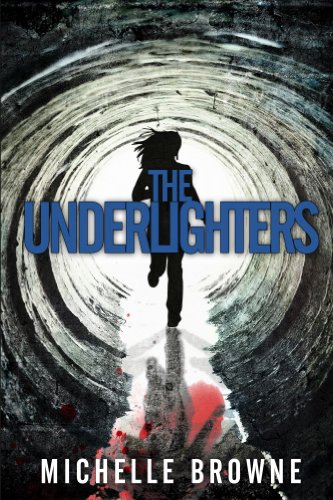
Michelle Browne is a sci fi/fantasy writer and editor. She lives in Lethbridge, AB with her partner-in-crime and Max the cat. Her days revolve around freelance editing, knitting, jewelry, and learning too much. She is currently working on other people's manuscripts, the next books in her series, and drinking as much tea as humanly possible.
Find her all over the internet:
* OG Blog * Mailing list * Magpie Editing * Amazon * Medium * Twitter * Instagram * Facebook * Tumblr *
Ko-fi