About Me

My photo
Author of queer, wry sci fi/fantasy books.
Showing posts with label creativity. Show all posts

Tuesday, 26 August 2025

Creative People Aren’t Good (Part 2)


Last week, I had a few things to disentangle about the commonly-held societal more that being able to make stuff means you’re holistically smart. This week, I need to continue that train of thought to explain the cycle of sabotage plaguing online fandom communities.

As before, I’m talking about English-speaking communities in cultures I can access. I truly don’t know if other communities and other language-speakers are doing the same toxic shit that we are. If you know the answer, please reach out! I’m very curious, and I love thinking and talking about the ways that our culture and language shape us and feed into themselves.

I’m also obsessed with trying to understand exactly how things got so fucked up, why they’re staying that way, and how we can fix it.

Cultural self-sabotage: a case study

Let’s talk about Neil Gaiman.

People who’ve followed my career for a long time, or who know me personally, are aware that I used to really admire Neil Gaiman. I described his prose as feeling like a friend telling a whispered secret story to you in a dark room. Loved the atmosphere of his writing, his mystery-shrouded worlds and complicated characters.

 I’ve reconsidered an awful lot about whether he’s actually as good as I thought he was, but I’m not ready to reread his work more critically yet. (If you’re interested in seeing some critical essays, let me know.)

Obviously, a number of potent allegations about his predatory behaviour have emerged. Some authors and people in the writing world have quietly mentioned that his name was a sour one among the whisper networks. Long before the viscerally upsetting details came out in courageous articles last year, at least some people in the BDSM scene in Australia and in fan convention and expensive professional writing class scenes knew that Gaiman wasn’t to be trusted.

But Tumblr didn’t, and for a while, he was the internet’s beloved English teacher. All of the affection for queer or queer-affirming teaching professionals who saved so many of us from peers’ rejection and cruelty was projected onto Gaiman. He didn’t deserve it, but we didn’t know that.

And how could we? After all, there’s a persistent, clanging notion that to be a creative person is to be a good person. That’s not true, but how did we get here?

Gifts from god

Hang on tight here, because I need to contextualise this shit with cultural Christianity. I don’t think North Americans, especially ex-believers and non-believers and pagans and whatnots, really grasp the power of the background radiation of Christianity. Little turns of phrase represent the way our thoughts and feelings are shaped by this background.

Now, the idea of sainthood is particularly linked to Catholicism, which also happens to be part of my background, but it’s certainly spread beyond that. Like mildew and algae blooming in one corner of a pond, the idea that creativity is a divine gift is casually accepted – and pernicious. (I’m not getting into the Roman roots and how all of that affected the way Christianity developed ideologically because frankly, I don’t know enough about it, and I’m also not sure that it’s really relevant to the discussion.)

“Talent” is considered a gift from god. A blessing. An arbitrary state of being bestowed by deities or fate. Even secular people tend to talk about artistic skills as though they just happened overnight, as though someone simply woke up with them one day, a divine act of reward or caprice.

Creativity is a blessing, so the corollary of that is: creative people are blessed, and blessed people are sanctified, and sanctified people are better than others.

This simple assumption manages to hold firm against every single disproof imaginable. Simply put, we expect famous creative people to be saints, and then we get pissed off, shocked, and disappointed when – surprise! They’re just people. Even the goddamn saints weren’t saints, as any hagiographer will tell you. (I’m not a biographer of the saints myself, but I have a few scraps of passing knowledge.) St Jerome was famously cranky. Don’t even get me started on the Apocrypha, the fig tree incident with Jesus, or any of that.

There was a time when we saw the imperfections of saints and gods as inspiring and relatable, but in the current era, all of those flaws have been sanded away. Some mistakes have a degree of acceptability, but others are too deep to bear. The measures for which sort is which tend to be painfully arbitrary. (Trust me, I have a lot more to say about our internet cultural standards and how fucked up they are, so stay tuned for that in the future.)

What is talent?

Here’s the goddamn problem. Because we see creative skill as a Thing, an inherent quality rather than a gradually developed one, our culture has a very toxic relationship with it. We don’t want to talk about the hours upon hours of skill grinding required to improve at something, and we certainly don’t want to admit that sometimes, people will just not get very good at something they practice. We don’t understand why some people are good at a thing and others aren’t. Some level of enjoyment or satisfaction, plus the willingness to spend time and outlast frustration plateaus, are the only concrete metrics we really have.

But those aren’t sexy and mysterious, unlike the concepts of talent and inspiration. Can anyone grind their way to looking talented? Can everyone do everything if they work hard enough at it? The first one is a maybe, and the second one is too expansive a claim to earn an honest “yes”. That whole Malcolm Gladwell “ten thousand hours” thing has been debunked by a bunch of people more patient and possibly more spiteful than I am. (As usual, misinterpreting and overapplying a scientific study was to blame. Who’s surprised?)

And anyway, repetitive work and practice means embracing failure. Failure is stigmatized here, in the English-speaking Western world, and is thought to indicate a moral weakness or faltering of some sort, so who the fuck wants to embrace failure? No, better to sigh wistfully over the idea that talent or inspiration simply passed us by. Never mind that creativity works the same way as other muscles, including the need for rest days.

A close up of a piece of paper

AI-generated content may be incorrect.

Above: my own slow, patient, grinding efforts to improve my drawing skills. Drawing gems is really damn hard.

Who should we be?

The thing is, as I talked about last week, just making stuff well doesn’t indicate anything about the quality of a person.

Let that sink in. None of the artists or creative people you like are guaranteed or even likely to be good, kind, or otherwise lovely by mere dint of their creative skill.

However, that means something rather nice – anyone who’s kind, patient, or otherwise lovely got that way by choosing to be so. Anyone can develop patience and kindness for others. It’s not a god-given talent; it’s a skill that’s trained.

Artists are not better people than the rest of the world – and we ought to forgive them for it, and the rest of us artists need to forgive ourselves for being messy, complicated, mistake-making creatures. We don’t owe the world goodness because we happen to be skilled at something. Kindness and generosity are their own rewards, not the side effects of a skill. Learning to give yourself and others grace, benefit of the doubt, kindness, and help? We can all earn those skills, regardless of whether we can paint a good sunset or write a brilliant string of code.

If you believe in God, maybe this is God telling you to give yourself some damn credit. If you don’t, then hey! Take it from me and my multiple therapists; recognizing your own achievements is a requirement for survival. It’s very hard to be nice to others when you’re busy being shitty to yourself, and not having been “blessed” with a “talent” tends to make people beat themselves up. It’s not easy to stop hating yourself, but just fighting the ideas about what makes people good, important, or generally better than you is a vitally critical start.

***

A writer and artist, Michelle Browne lives in southern AB with xer family and their cats. Xe is currently working on the next books in her series, other people's manuscripts, knitting, jewelry-making, and drinking as much tea as humanly possible. Find xer all over the internet: *Website * Amazon * Substack * Patreon * Ko-fi * Instagram * Bluesky * Mastodon * Tumblr * Medium * OG Blog * Facebook

Tuesday, 25 September 2018

Global Warming: Why The Winds of Winter May Never Come

This morning, I found myself penning a feisty screed about sequels, and I've been meaning to write an article about them for some time. Apparently, the moment has come. 

I have a theory about why ASOIAF's main storyline is screwed up beyond repair. It's not unrelated to the issues of the Kingkiller Chronicles, which have also been all but abandoned by Patrick Rothfuss.

As much as authors don't owe their fans instant gratification or satisfaction of every whim, offering a finishing date and moving that is a breach of etiquette and trust, especially since it's been going on for so many years. 

I'm no stranger to setting up sequels and struggling to finish them. No author is. But these books have gotten somewhat out of control, and after a few years of trying to discuss it, I think I can summarize the reasons why, both quickly and simply.

The what now? (No, really.)


If you've somehow been living under a rock or in a windowless void in some alternate dimension, A Song of Ice and Fire is the series by George R R Martin that's been adapted to a big-budget tv show by HBO. It's been a smash hit, especially for its controversy-courting topics and often blunt, insensitive approach to issues. It's basically historical fanfiction combining The War of the Roses (mostly as presented by Shakespeare), the Borgias of Renaissance Italy, Mongolian Huns circa Ghenghis Khan's reign, and Vikings, with protagonists plucked from other works of classic literature for spice, and absolutely shameless borrowing from Memory, Sorrow and Thorn's plots and themes (a series by author Tad Williams that features a fire priest, coming winter, undead creatures, nasty political conflict, and the reawakening of magic). 

(If you don't know those names, I recommend a wander through Wikipedia for the basics, because the history stuff is really cool. There's also somewhat inaccurate but entertaining and lush series about the Borgias, Vikings, and Mongolian rulers on Netflix. Shakespeare covered the whole War of the Roses, so you can listen to or watch readings of the plays on Youtube if you're wondering what those were about. There's no shame in reading notes for Shakespeare, and hearing all that intricate speech is easier than reading it sometimes. So now you know!)

Oh, and there's some dragons, intriguing bits of Lovecraft/Robert E. Howard fanfiction that doesn't go anywhere, and nods to Celtic myth cycles that also don't really get used that much. Everyone else and their dog has covered the feminist and representation issues in the series, but this should give you a rough idea of what it's about or what it's like. He also kills way too many peasants in the series, which did not happen in mediaeval Europe, because a) they were civilians and b) peasants are an important resource in a non-industrial country, but I guess that's what it takes for an adequately upsetting body count. 

It has some strong points, like the way Martin manages to subvert tropes by exploring them very fully, and the disability representation is pretty good, in my opinion. It has tons of worldbuilding porn and description porn, but long-term readers of fantasy and pulp aren't going to find anything truly challenging here. Basically, it's fine. But it's not perfect, and it could be better - as I'll explain in a second.

SO - be aware of the SPOILERS SPOILER SPOILERS referred to herein.

Why should we care? 


The thing is, A Song of Ice and Fire about the Starks. There are other characters, but we meet them first, we are given cues to care about them, and we connect with them. We explore more of their perspectives than those of any other family, including the Targaryens and Lannisters. Ned Stark died in the first book, as we probably all know. However, that wasn't a dealbreaker - as his family got scattered to the winds, readers and Martin had a strong motivation to see them reunited.


The reuniting a family theme is actually underused, but it worked in Fivel Goes West and it worked here. Eagerly devouring the books, we all hoped to see the Starks come back together, surviving their harsh circumstances (which are historically inaccurate as heck, by the way). 

BUT - in book 3, when the Red Wedding happened (killing eldest son Rob Stark, his mother, and his new wife - even though his mother returned as a scary undead lady), it all fell apart. Sure, it was a brilliantly unpredicted plot twist - but it messed up the emotional throughline. 

Who do we care about, and why?


A land is made up of people. The history of a world is meaningless if it doesn't include individuals. By killing off so many Starks one by one - and by killing their direwolves, too - GRRM completely nuked his own emotional throughline. That's why books 4 and 5 start focusing on Noble #5 and Suitor #3, characters that we don't care about, and why they're such a mess. The books would benefit from focusing on non-noble characters, but classism fetishization is an important problem in fantasy as it is, and GRRM does little to remedy it.


All the other families could be torn apart, but by killing too many of his real protagonists, he made the emotional throughline of the book completely collapse. I don't know if it can be fixed, and I think that's why The Winds of Winter just keeps failing to come out. He's trying to write his way out of a hole, but the fact remains that he killed the characters who gave us a reason to give a shit about the story.


Someone might say "but the story is bigger than the Starks!" But that's the point - it isn't. They symbolise so many other families torn apart. There is no real hope in the series. It's equivalent to a romance novel where one of the protagonists gets killed halfway through (in a contemporary setting without magic or tech to bring them back) or a mystery where there's no solution.


What's wrong with that? 


Artistic works usually set up an emotional contract with the reader, albeit an unspoken one: "I will create people and a journey for you to care about, and you will spend your hours reading my work--and in exchange, I will provide you some kind of satisfying conclusion, or at least finish what I set up."


ASOIAF has broken its most important throughline, and the author has inadvertently sabotaged himself. Between that and the pressure of living up to what he's set up - because The Big Fight That Changes Everything is a risky creative choice at the best of times, actually - Martin has to fight himself to get it out. Hence the years of delay. But if an editor had been allowed to cut all those stupid and unemotionally interesting attempts (far too late in the series, I might add) to hook us into someone else to care about, and to mess with his stupid murder-fetish earlier, maybe the series could have been saved.


Of course, I might be wrong, and we might see The Winds of Winter come out any month now. But it sure is hard, as a former fan, to watch the deadlines keep getting pushed. Because it's not just "the book isn't done yet" - it's that he's mentioned release dates, and they fall through over and over. Even if that's his right, it does suck to deal with.

And personally, I just don't care anymore. In such times as these, I've gotten weary of endless dark and gritty tales with few redeeming features. Having outgrown Can Lit and the fetishes of literary fiction - more on that in my next post - I need more than chronically depressed murder-hobo protagonists. 

I need hope, and life, and a world outside the muggy, stifling confines of imaginary Western Europe.


***
Michelle Browne is a sci fi/fantasy writer. She lives in Lethbridge, AB with her partner-in-crime, housemate, and their cat. Her days revolve around freelance editing, knitting, jewelry, and nightmares, as well as social justice issues. She is currently working on the next books in her series, other people's manuscripts, and drinking as much tea as humanly possible.

Catch up with Michelle's news on 
the mailing list. Her books are available on 
Amazon, and she is also active on MediumTwitterInstagramFacebookTumblr, and the original blog. 

Monday, 24 July 2017

Diversity Isn't Enough: The Importance of Radical Inclusion

Hello hello!

Well, a friend of mine has now been to 78 agents and gotten as many rejections. Surely, this indicates that the book is simply Not Good Enough, right?

That's the thing. I've read it, and the book is excellent. Featuring a character with PTSD, who is both gay and from a mixed heritage background, it's full of funny moments, intelligent thought experiments about robotic consciousness, and has a very solid mystery through the core. The cast is populated by well-rounded and differentiated characters - of mixed abilities, genders, ethnic heritages, and sexualities. And in this setting, their societal and work crew composition is pretty normal. So in addition to featuring a robot love story and a murder mystery, there are plenty of moments where the night crew assembles, and a deaf character sits at a table with a young hijabi clinic worker and her mechanic girlfriend, and two divorced people who remain friends, as well as the main character - all so they can play cards in the park, out of the sight of a nearly omniscient AI.

The thing is, while audio-visual projects - which often spring from book series these days - such as A Wrinkle in Time, American Horror Story, Sense-8, American Gods, The Adventure Zone, Welcome to Night Vale, Penumbra, Who Fears Death (Nnendi Okorafor), Steven Universe, Blackish, Dear White People, Master of None, Switched at Birth, Fresh off the Boat, Luke Cage, Dark Matter, The Expanse, and Westworld include cast members of many shades, there's still a focus on able, attractive, mostly straight people - not to mention that in more than a couple of these, white characters still end up dominating front and centre roles. Yes, this is getting better, but there seems to be a genuine fear of addressing the (surprisingly large) populations of trans and genderqueer, aromantic or asexual, Deaf, visually impaired/blind, and visibly and invisibly disabled people. Not to mention that a lot of these populations intersect. I personally know plenty of people who are people of colour, genderqueer, and disabled. I've read articles by a surprising number of genderqueer, mentally ill people of colour. Add present and former sex workers to the mix, and you have a pretty good sampling of humanity.

So what's the problem?


The problem is that these diverse shows, which are not radically inclusive yet, are only the tip of the iceburg. Producers and studios and publishing houses tend to hire just one or two people to demonstrate their wokeness, and keep the rest their content steaming along as though it's business as usual - teen YA love triangles, stubble-covered male power-fantasy thrillers, gritty sex murder mysteries, soft and juicy chick lit, spicy supernatural sex romps, and tooth-gritting fast ship space porn.  I've edited these books, read them, and enjoyed them - but the fact remains that the market's determiners keep orienting themselves to what they think is a safe bet, an easy seller. 

We still live in a world where an alternate history series where the South won was greenlit by HBO. So yeah, Nnedi Okorafor's series is getting a production deal, but so is a slavery fantasyland series. So is Ready Player One, too. A Minecraft book by Max Brooks is at the top of the bestsellers right now. So yes, diversity's making inroads, but The Problem Is Not Fixed. Radical inclusion, i.e. just treating people like people, and writing stories where non-white, non-able, non-cisgender, non-heterosexual, non-Christian people are allowed to exist and be in starring roles is absolutely revolutionary. 


Ready Player What, now? 


For those not familiar with RPO, it's basically a pop culture slurry of references; another Teenage White Boy Saves The World book, with virtual reality, and somehow he's the only one who knows Stuff About the Eighties - and Steven Spielberg is attached. You'd think he'd pick a more challenging project or have better taste, but no, fanboy fantasy it is.

The biggest problem is that people think Ready Player One is like, subversive somehow? Or self-aware? But it absolutely isn't. It's sincere. Max Brooks is one of the guys who launched the zombie craze--he's very good at commercial writing, to the extent that he's actually a Name, but yeah, he's not exactly known for challenging or artistically mold-breaking projects.

And all of this would be fine, except that it, and the dozens of imitators who crop up to try and skim that flavour, crowd out the more innovative and interesting projects.

Is this another Commerce vs Art rant? 


Absolutely not. It's not that Commerce and Art are Enemies. Heck, it's *fine* to monetize the daylights out of something. Art's relied on Commerce for basically all of modern history. If it wasn't Commerce, it was religion. But - the problem is *how* those selections are done, and the way people trust their preferences to be free of bias. Which just isn't the case.

It's OKAY to have biases. The problem is that we treat a certain kind of bias as objective, and it gets far, far more sway over the stories that get told than anything else. To the point where just including people is considered revolutionary and gamechanging. Simultaneously, there are so *few* of these inclusive stories that individual properties are often torn apart for being 'not good enough'. Yet meanwhile, mainstream stories with sparkling white casts somehow get a break.

But including people is how you GET different kinds of stories. Now, to be clear,  I LOVE the Hunger Games. A lot. But we have a market where agents are like, 'eh, this sold, let's get ten more that are basically variations of this flavour'. There's very little willingness to risk the core of the market, and it becomes a self-fulfilling cycle of, well, crap. 

Like, if you go to a corner store you can buy some chips. And chips are good, I like chips, but even if you put zesty spice or cool ranch or sour cream on them, they're *still* chips. they're not zucchini chips, or sweet potato crisps, or whatever, ya know? The problem is that the market tends to focus on chips, and assume nothing else will sell...

Wat do? 


The solution is simple. Readers have to step outside their comfort zones - unfortunately, the readers who might not even read this blog are the ones I'm addressing - and writers and publishers have to band together. There is definitely a need and an audience for diversity, and moreso, radical inclusion. People often talk about 'not seeing colour', which is an issue I won't even get into right now, and complain that they want stories that are 'normal', and aren't focused on 'identity politics'.

That's the most bitter irony of all - these stories exist, and they're fun and delightful. And yes, inequality issues do crop up in some of them, because of how those issues affect people's lived experiences - but a lot of the time, people across the ability, gender, ethnicity, and sexuality spectrum just want to have fun.

A transgender plus-sized psychic lady who talks with the dead to solve murder mysteries? Yes. A deaf Chinese-American engineer who discovers the secret to time travel and accidentally changes the course of history? Definitely. A love story featuring an asexual mobility-impaired Indian woman and a Zulu warrior king from an alternate world? Why not? 

***

Thanks for returning to the nest. Leave a comment and say hi! I want to hear from you. Keep up with the new releases by getting on the mailing list. Buy my books on Amazon, and keep up with me on TwitterFacebookTumblr, and the original blog. This is the one and only SciFiMagpie, over and out!

Thursday, 29 September 2016

A Loaf of Bread: on Imperfections

Hello hello!

So, my father's been visiting this week. As those who follow my blog and Facebook may know, my familial relationships are somewhat complex and...perhaps the word 'fraught' is applicable. Still, things have gone pretty well. On the weekend, I was eager to show off my baking skills, which now include yeast bread. I don't have a stand mixer and do everything by hand, so as other bakers and cooks will know, this is a bit of an achievement.


Bread (and creative pursuits) are hard 


Bread is easy to mess up. It has to be kneaded the right way, left to rise, the water has to be the right temperature, and people across the internet have pretty fierce debates about when to add the salt for the sake of the gluten structure. Some people recommend a drier dough; some, a wetter dough. Different climates, elevations, and water types affect the taste of the bread. As a friend who went through culinary school explained it, bread made in a particular city will never taste quite the same as bread made elsewhere because of the makeup of the atmosphere. The point is, there's an art to it, not just the science of combining ingredients in a particular order.

While my father walked around the lake to make sure he could handle the carbs, and complimented the taste, he was also quick to look up the science of making bread. He immediately started looking at various ways to make absolutely optimal bread - using a stand mixer, of course, not tearing the dough as it's kneaded, the way to proof yeast, the chemical process of autolysing - and started quizzing me about whether I'd measured everything out to the gram or used volume measures.

I felt quite embarrassed and explained that I wasn't striving for perfection--just a good, edible loaf of bread. Food tastes different depending on whether the cook had their heart in it that day or was doing things perfunctorily. Something doesn't have to be perfect to be enjoyable for what it was. I explained, too, that I'm a relative novice - this is my third loaf of yeast bread ever, which is really not much - and that, as with knitting, one must do garter stitch, then stockinette, then lace stitches. I have to master a simple version of a thing before I start doing it more precisely and better.

My father, seemingly not understanding this, challenged me to a bread-making competition for the next time he visits. Although I laughed at the time, I felt disquieted later. The thing is, he proudly says that he can't cook but can follow a recipe, and that's very applicable to the arts. A paint by numbers kit is perfectly acceptable, but to create something new, diversions from a formula must occur, or will happen inevitably. For writing, bad or mediocre stories precede adequate, good, and excellent ones. And even then, writing is kind of hard.

I spent a long time not even attempting to make yeast breads because they're so difficult and technically challenging. Then I tried a breadmaker and ended up with some bricks. Eventually, I got up the courage to use a conventional oven and start attempting loaves. I'm definitely better at writing than I am at making bread, but that's okay.

At some point, reading about a thing can just be intimidating and make one self-conscious about imperfections. It's easier to criticize than to do, let alone to do well, and even the best art can never be utterly perfect from every single perspective. People are different, and what satisfies one person will leave another hungry and bring another jubilation.

How do you know it's good enough?


There's an anecdote I heard about Tennessee Williams; a friend of his found him sitting at his typewriter, editing a story that had already been accepted for publication. Williams shrugged off his friend's incredulity, saying the story wasn't done.

For my own part, I'm currently re-editing And the Stars Will Sing and The Stolen: Two Short Stories for re-release. I have a lot more bread to make and a lot more projects to knit, and many more books to write and edit. And none of these things will be perfect, but they're part of a process. Finally, at least they may satisfy some people in the moment, and when I release them, they will represent the best efforts I could offer at the time.

Here's the other thing, though - hindsight is a luxury borne of experience. It's easy to say "this ought to have been done a certain way", but that comes about after circumstances have changed. Maybe I shouldn't have torn my dough, maybe I should have left that character alive, but even having that alternative perspective only has come about because a decision was made. It's too easy to beat oneself up and focus on the past rather than using that experience and acquired knowledge to improve the future.

At the end of the day, the best one can do, even if it's imperfect, is better than an ideal creation that never enters the world. I know what the perfect loaf of bread would taste, feel, and smell like, and I can imagine it, but my learner's efforts and the slow process of attempting garlic olive oil bread and brioches will yield more goodness than a hundred dreams of snow-white loaves ever could. After all, as any poor person could tell you, dreams may be enticing, but they leave one's belly empty.

What do you regret? What would you change, and what have you learned from creative failures? Let me know in the comments.


***

Thanks for returning to the nest. Leave a comment and say hi! I want to hear from you. Keep up with the new releases by getting on the mailing list. Buy my books on Amazon, and keep up with me on TwitterFacebookTumblr, and the original blog. This is the one and only SciFiMagpie, over and out!

Monday, 1 April 2013

An Unexpected Bounty: C. J. Marco's Counterargument!

Hello hello!


Today I have a bit of a treat. This is a repost from my friend Colin's blog. I challenged him to write a counterargument to my fantasy post on Tolkein. Do you agree? Or do you guys think I was right--that classic mediaeval European fantasy needs to be adapted to maintain its relevance?

*****

All right, I'll admit it: I did not really care all that much for the prose in Lord of the Rings. I preferred The Hobbit, to be perfectly honest. The Hobbit recently hit theaters and is being released for home viewing today, actually. My aim here is to talk a little bit about Tolkien's works, a little about the film adaptation, and a lot about what Tolkien's massive body of work means for those who both write and read fantasy fiction.

The Hobbit and The Lord of the Rings (along with a dearth of other, less-known-to-those-who-are-not-hardcore-fantasy-fans works like The Silmarillion) are all set in the pseudo-medieval world of Middle-Earth, a place populated by mysterious, magical, wise, haughty elves, mine-dwelling, gold-greedy, proud dwarves, peace-loving, restive, often-hungry-yet-overlooked hobbits, and the race of Men, the wildcard race. Sound familiar? Probably. These are the most commonly-touched on tropes of the fantasy race mix. Magical objects and swords and runes? Check. Epic struggle between the forces of light and darkness? Oh yeah.  Why does it all seem familiar now? Because Tolkien took off the blinders and showed us how it was done.


Prior to the saga of Middle-Earth, such stories were the province of T.H. White and Le Morte d'Arthur as well as myths, legends, and a few sword and sorcery novels. The Hobbit primed the audience for the saga of the Rings trilogy.


Many people have said that the Lord of the Rings movies were better than The Hobbit, and any time that a fantasy epic comes out in theaters, it is always inevitably compared to LotR, though the reviews generally refer to Rings as being the superior in the mix. Why? Because it is just that damn good. The Lord of the Rings is one of the primary building blocks for fantasy literature, and it also shows on the silver screen. 


But, the well's run dry! Everything's the same as Lord of the Rings! Where do we go from here?


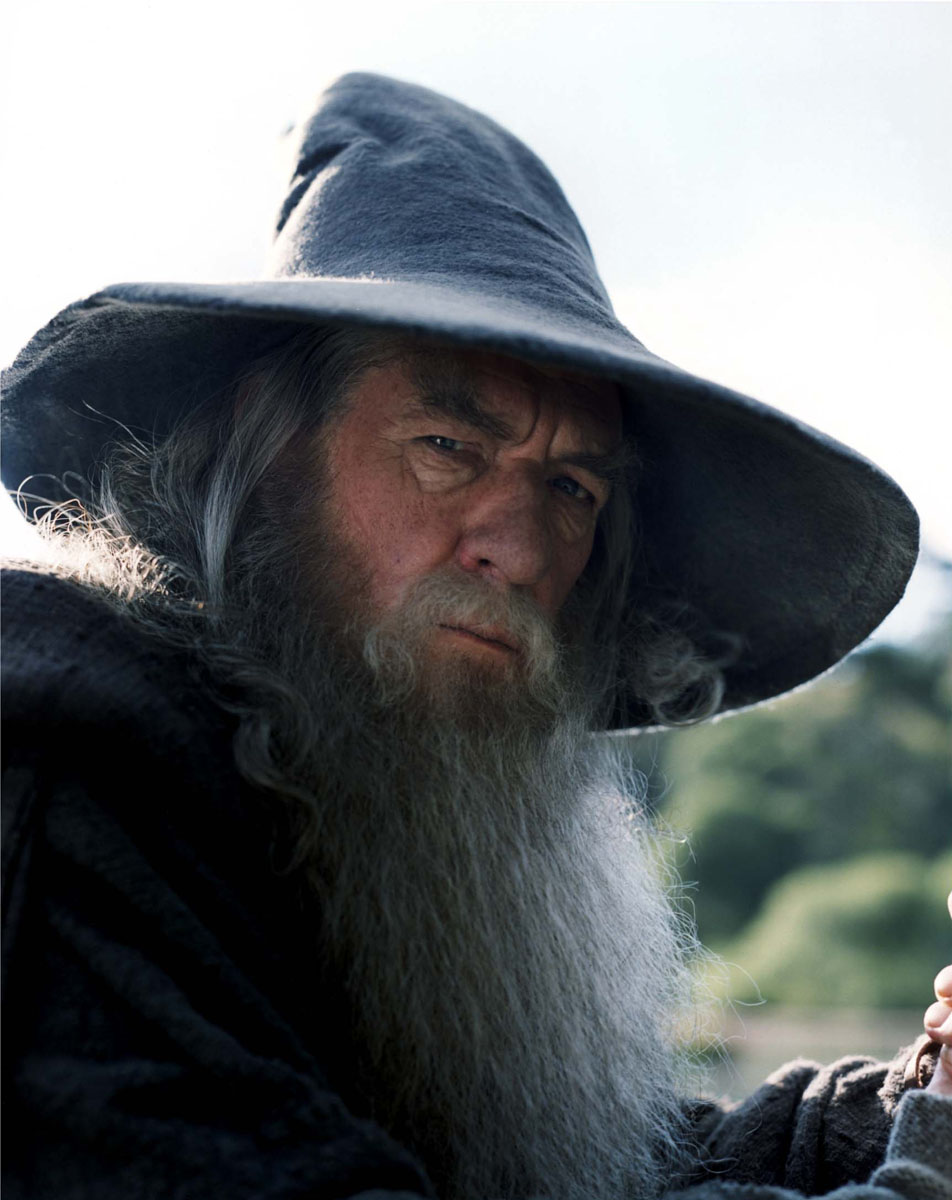
A wizard is never boring. Nor is he cliche. He entertains precisely when he means to. Source.

NO. High fantasy is thriving. It's bigger than ever right now. The Elder Scrolls, Dragon Age, Diablo, Warhammer, World of Warcraft, and my personal favorite, D&D/Pathfinder, are all influenced to a certain degree by their mighty predecessor, but they are extremely varied and have potential to be even more so. Great stories will always be great stories, regardless of some possible similarities. The sheer number of fantasy products out there are naturally going to incur some overlap. Many of the product lines I mentioned earlier are also equally influenced by Moorcock's tales of the albino Elric, Howard's Conan the Barbarian, H.P. Lovecraft, Ursula Le Guin, Lewis' Narnia, and any number of other sources. In fact, Michael Moorcock has gone on record saying that "one thing I'm pretty sure of, I was not in any way directly influenced by Prof. Tolkien". (Source)


This would have happened even without Tolkien. Source.

Fantasy is still largely populated by pseudo-European characters and isn't LGBTQ friendly! Is there any hope?

Fantasy is taking great strides to get some variation in it, particularly in the fields of fantasy roleplaying games. Nowhere is this more apparent than in the Pathfinder roleplaying game. According to company reps, all of the iconic characters (characters which personify the features of the classes they represent) are ostensibly bisexual, and include a black female paladin, an albino half-elf magus, a monk who appears to be from the Indian subcontinent, an Asian ninja, a middle-eastern oracle... the list goes on. There's only a handful of identifiably "European-looking" characters in the mix, and even then, they are not the majority, given that many other classes are either demihuman or near-monstrous races, such as orcs. The Paizo staff have actually said that they wanted to move away from the image of the "sword-wielding white guy"

The object of much scorn, Regdar was shoe-horned into D&D against the will of the design team. Sigh. Source.
Most of the Pathfinder design team worked for WotC back in the days of 3.Xe D&D. Regdar, the white-guy-with-a-sword of D&D, was almost universally hated by the design team, and so generally Regdar was typically the first to die in any artistic representation. This even carried over into 4e, where Regdar is both dead on the chapter intro for Rituals, and again in the Monster Manual in the medusa artwork. The team wanted a more diverse team of iconic characters, and instead, the corporate bigwigs forced Regdar upon them. 


For a little variation, culturally speaking, check out Legend of the Five Rings, which is set in a swords-and-sorcerers version of feudal Japan called Rokugan. It's a setting of pure epic fantasy, but it is mostly about warring clans of human samurai and the evil demonic overlord Fu Leng's treachery. 


Come to Rokugan for a break from your knights and wizards. Samurai and Shugenjas will fill the gap. Source.

Fantasy has also been moving away from simple tales of a male youth who grows from being a lowly pigherd into the Chosen One who saves the world from a stereotypical "Dark Lord", as Frodo was, but those archetypes and tropes will ALWAYS persist in fantasy literature. Ari Marmell is an established writer who consistently breaks the mold when it comes to his fantasy literature. His novel The Conqueror's Shadow is an inversion, where the archetypal Dark Lord (spiky, skull-helmed armor and all) becomes the hero by taking on someone worse than himself. His companions are an ogre farmer, a witch who eats people, and a grumpy bound demon. And they're the good guys.


Corvis Rebaine, the Dark Lord who nearly crushed the world beneath his iron heel, and reluctant hero. Source.

Now, I'll geek out a bit more here and I'll say that Marmell's work is EXTREMELY well-written and his other works also diverge from the norm of the fantasy tropes. I am eager to read his book The Goblin Corps, which is apparently a novel told from the perspective of a bunch of goblins, who are usually cannon-fodder in other fantasy books, games, movies, etc. I am big fan of Marmell and, honestly, I think he may write some of the best dialogue I've I've ever read. Read it. It's worth your time.

As cultural perceptions change, we are bound to start seeing more variety in our fiction. Female characters have been taking a greater role in fantasy. The "boys only" concept of fantasy is already viewed as outdated. Racial and cultural diversity is being given greater emphasis. It's a matter of the new, young authors taking steps to look at the existing tropes and finding ways to turn them on their head.


TL;DR - Gimme the Bullet Points!


- Lord of the Rings made fantasy popular, but it's not the only epic out there.

- Not all fantasy is influenced by LOTR. In fact, there's some very popular stuff that was never touched by Tolkien's influence.
- The future of fantasy is diverse, glorious, and is not doomed to endless repetitions.
- Fantasy is evolving, shifting, changing as our cultural perceptions are changing.
- There will always be imitators of great authors - Imitation is still the sincerest (if most annoying) form of flattery.
- If a fantasy novel/movie/show/series/product moves you emotionally or really draws your interest, that is marvelous! Don't let anyone tell you that you don't like "good" fantasy. It's all subjective anyway.

So...


Is there a work of epic/high fantasy you feel really moved you? Do you feel that fantasy is played out? What's your favorite world to lose yourself in? You can always reply here on the blog, or hit me up on Twitter @colinjmarco. I look forward to hearing what fantasy you enjoy. My particular tastes are pretty broad, running the gamut from anime like Record of Lodoss War, games like D&D/Pathfinder, movies like Clash of the Titans, and lots more. Let me know what you think. Am I out to lunch? 

*****

Thanks for dropping by the nest once again. Don't miss any of the good kind of crazy. Find me on TwitterFacebook, and on Tumblr. Watch out for my fantasy-themed spring: interviews with fantasy authors, content related to fantasy films and reviews, and some political commentary--the phuquerie you've come to expect from me. Keep checking back to see those surprise posts, too. This is your darling SciFiMagpie, over and out! 
Google+