About Me

My photo
Author of queer, wry sci fi/fantasy books.

Thursday, 12 June 2014

Forever Young: What YA Has to Offer Adult Readers (Part 2)


Hello hello!

Aaaand we're back.

I will be touching on many other books, so general

SPOILERS SPOILERS SPOILERS 


may lie ahead. So, let's get started again.

In my last post, I depressed the hell out of you all about what adulthood entails and then proceeded to bash nostalgia-goggles and the way they shape our perception of teenage years. However, I think that the same things that draw us to YA are also helping us get over those same problems.


Picking on teenagers lets adults pretend they're more mature, when they really aren't


There is no difference between the things teenagers do to "fit in" and the things adults do to "keep the peace". It's only a matter of sophistication. Is having alcohol for the first time with one friend and sneaking out to hang out with boys really so different from ignoring what one of your friends says about pretty women every time she goes to the gym just because you don't want to get in a fight? Teenagers are called "young adults" for a reason, and the same struggles that teens go through reoccur throughout life, just in different and sometimes more subtle forms. Teenagers have to compromise, assert themselves, leave bad influences behind, make new friends, and apply for jobs and other opportunities. That happens throughout adulthood, which is hardly the smooth ride towards success, retirement, and death that people pretend it is. One of the things that's been most surprising in my own journey out of high school and university is how much things do keep changing, and how just when one thinks things are under control and on lock, all sorts of weird stuff and various disasters will happen anyway. However, pretending that it's only teens who are caught offguard and unawares and make poor decisions makes adults feel better about their own errors and moments of truculence and rudeness.


Source. Because sometimes, you just have to show up to school dressed like Alice Cooper and start crying.


Going over past experiences helps you resolve them. 


Memories do change as we go over them, as I mentioned last time, and while i don't have the time or inclination to provide a fully-researched paper on that right now, I will say that the re-investigation of memories is one of the things that people work on in counselling. Ghosts are often bound to repeat the same actions over and over again, or are confined to the same locations, and that makes for an excellent metaphor on how people repeat the mistakes they haven't gotten over. By revisiting life experiences in YA and gaining new frameworks to compare life events to, people find new meaning in the things that sucked or seemed to ruin their lives. This is great, because you can't always track someone down on Facebook to apologize to them. They might have married, changed their names, or, well, died. YA stories provide a second chance at these things within the safe realms of the theatre of the mind. However, adults who've had many experiences aren't the only ones who benefit from this.


Teenagers need your sympathy, and remembering what it was like to be one really helps.


Teenagers need adults to read YA because it makes adults empathize with them more. It seems simple, but it's true. All that hindsight and self-insight and the other skills that come with a few level-ups just aren't present yet for teens. That's not their fault, it's just a matter of neural development and a lack of time. All that stuff that's all shiny and new and exciting? Well, it's also new, and that means teens have to learn to make decisions the hard way, i.e., by guessing. However, adults who are willing to listen to them can really help. Instead of calling a teenager stupid for fawning over a cute athlete who never gives them the time of day, remembering how utterly sweeping and magnificent the feelings of young love can be, and how much hope one had in spite of great odds, can be really useful. Sure, an adult will know that their crush is unattainable and actually kind of a douche, but teens haven't learned that yet, and the same beautiful hope can lead to some very stupid, heartbreaking things.


Regardless of all the age stuff, YA books are great to bond over.


Realising that teenagers aren't so very different from adults is helpful when talking to them, and once you get over that age hurdle, you can enjoy the same things. What a teen discovers for the first time might remind their family members or friends of similar experiences, and when the two talk about a book, other things will come up. That means other books, other movies, and of course, life experiences. The adult and teen can go through the same highs and disappointments in the book together, sometimes as a mutual first, and that's great for both. Sometimes, age doesn't even matter that much when the story is really good.


Source.


Should adults grow up and stop reading YA books? Do we need to fix this problem?


Of course not. Books are a gateway drug to more books. Sure, YA is less "scary" than traditional literature, but that doesn't mean it won't make people read those other books. YA is often shorter and easier to read than, say, contemporary lit or Russian heavyweights, and that's fine. The important thing is to read, period, and because YA isn't really bound by the same genre rules, it's adventurous. Someone who generally hates romances and "weeping bait" (yo!) might find themselves genuinely enjoying it and learning that yes, it's okay to cry hard over fictional characters again. Some YA is "safer" than adult lit, focusing on simpler problems, and that can be a nice vacation when one's partner has lost their job, their kids are struggling in school, and their mother has cancer. And, as mentioned, sometimes simple questions provide the answers for handling complex problems. Escapism can create problems and lead to really bad ideas too, because books do matter, but sometimes simple things can literally inspire a revolution. 

Ultimately, YA is just the flavour of the moment for people who want a whipping boy, something to condemn for the alleged state of ignorance of modern society. However, there's a quote about all our depravity that really needs to be mentioned.

"Our youth now love luxury; They have bad manners, contempt for authority; they show disrespect for their elders and love chatter in place of exercise; they no longer rise when elders enter the room; they contradict their parents, chatter before company; gobble up their food and tyrannize their teachers."

Oh, my bad. Did I say that was about modern youth? It's by Socrates and it's about the youth in his day and age. There's nothing like whining about them kids to make you feel like you're doing everything much better than they are. The kids are battered and bruised, they are dealing with a new, big, scary world, but at the end of the day, both the kids and their books are all right.

*****
Thanks for dropping by the nest once again. Don't miss any of the phuquerie. Find Michelle on TwitterFacebook, and on Tumblr, and find her work on Amazon. Check back on the blog to see when one of the irregular posts has careened onto your feed. This is the one and only SciFiMagpie, over and out! 

Tuesday, 10 June 2014

Forever Young: On Youth Fetishization and YA (Part 1)

Hello hello!

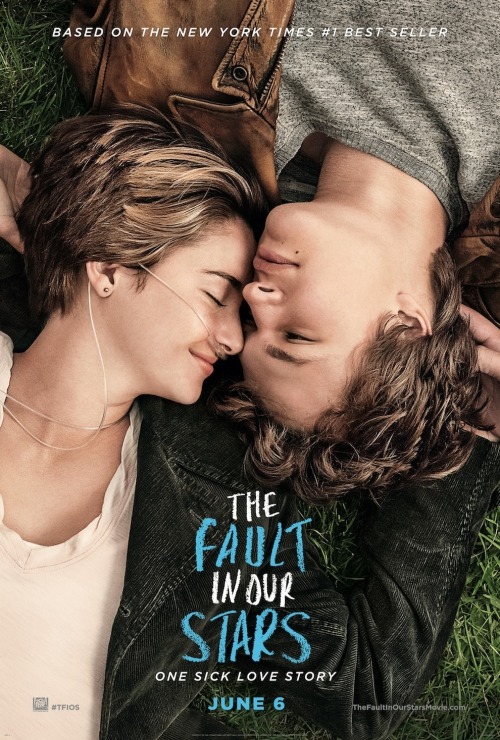
Did you miss my opinion pieces? I hope so, because an article that has been rattling around the internet got me thinking about what makes us love YA so much. I'll try to avoid spoilers for The Fault in Our Stars and Looking for Alaska by John Green, but I will be touching on many other books, so general

SPOILERS SPOILERS SPOILERS 


may lie ahead. So, let's get started.


What the hell is "YA", or "Young Adult" fiction anyway?


Adults love YA too, even though "young adult" fiction stars teenagers and is basically just an age category for marketing purposes that encompasses all lit targeted towards teenage audiences. I argued with some friends about whether YA should be a genre recently, and ended up agreeing that, no, it isn't and shouldn't be considered as such, although "Coming of Age" stories or "Bildungsroman" are, and should be marketed as a genre more often. The reason for this is that YA is just too damn diverse. It has some common elements--teenage characters, often girls, as protagonists, a setting in high school, a focus on personal drama, and elements that involve maturation or struggling with meaning. Existential elements and slightly simplified prose are very common.

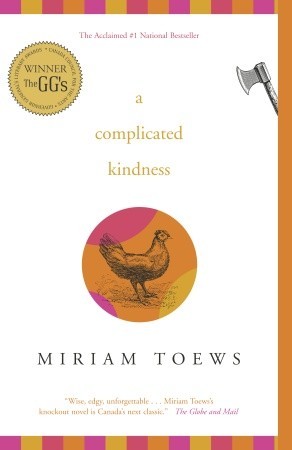
 If you want to get technical, both Life of Pi and The Underlighters could be called "young adult" books because of their topics and the age of their main characters. Ultimately, though, calling something YA is a marketing decision. There are adult books with teen characters, such as the Idlewild trilogy by Nick Sagan, Lullabies for Little Criminals by Heather O'Neill, and Irma Voth and A Complicated Kindness by Miriam Toews. Every single one of those could easily be called YA, but they weren't, and that just boils down to commercial reasons.


Source.

What's a "young adult", anyway?


The answer for this one is going to touch on something that we in North America at least, hate to talk about and also love to talk about. Namely, it's high school. We need to contextualize something about the modern understanding of youth, too--until the Victorian era, there was a hard definition between childhood and adulthood. You finished up a few grades of school and got sent into the working world, and boom, you were an adult. Then people started to realise that there was more of a transition between the snot-nosed childhood stage and the beer-breathed adulthood stage, and we created the concept of the teenage years, or what's more correctly called "adolescence". Oh, sure, "youths" were recognized before that change happened, but they were still basically treated as adults. It was The Great Depression and the Second World War that created the concept of teenagerdom, and since then, we've been stuck with it.

Of course, that means people decided to make money from young adults as well, and teenagers have been a targeted marketing group ever since.


So why do adults care about books for teenagers? 


There's this myth is North America, at least, that what happens in your childhood and adolescence doesn't matter. Bullied? "You'll get over it." Your friends and crushes will drift away, buried in the backyard of your mind like so many Barbie heads and Hot Wheels toys lost in sandboxes.

Well, it's just not true. Yes, time does heal wounds very effectively, and memory is much less certain than we think it is--you can create memories by talking about them and believing in them, and they change a little every time you recall them. And of course, stuff that happens in the first eighteen or twenty-odd years of your life doesn't just magically go away. However, people tell you that they're supposed to. It's strange, because old age is something not all of us live long enough to experience, but the formative years that almost all of us get to enjoy--nope, not important, shrug those off. Which leads me to my next point.


Adults are both in denial about their teen years and obsessed with them. 


Frankly, it's a little weird. This early part of your life, which you'll "get over" and you're supposed to move past, is the focus for most stories. Many protagonists are young--hell, A Song of Ice and Fire involves a whole bunch of characters under the age of twenty--but there's an expectation that maturity means putting high school behind you. That's reasonable, but people also tend to mention high school a lot and use it as a reference point. We're so busy telling people to put the past behind them that a lot of people don't deal with it properly, and the petty sins and small ghosts pile up after a while. Hell, Looking for Alaska depends on the protagonist, Pudge/Miles, following in his father's footsteps to go to a boarding school precisely because his father remembers his experiences there so fondly.

Perhaps as a result of this, most protagonists are quite young, and their stories often feature a lot more resolution than real lives do. The boy/girl/tentacle monster that got away, the parental argument, the bad decision--all kinds of things that hindsight's blazing lamp illuminates--tend to be the focus for these young adult stories. However, the young adult characters often have a lot more power and self-determination than most people feel they had at the same period.

Basically, the YA characters get the best of both worlds--the adult's hindsight and the teenage freshness--partly because people hunger to live through their youthful experiences again but handle them the right way "this time". The way Hazel from The Fault in Our Stars handles a particular adult certainly felt like a daydream of revenge against someone overly idealized. Gauguin said, "Life being what it is, we dream of revenge", and YA fiction is full of delicious, delicious revenge and resolutions. I actually heard about the Gauguin quote from A Complicated Kindness, and that's a story where there really is no figure to seek revenge against, though arguably, Nomi still does take some.


We are obsessed with youth and undervalue adulthood. 


For some reason, the period of time when people have little control over their lives, little self control, less money, and no experience is the time we think is the absolute best for adventure settings. Whether it's contemporary brushes with gang violence or leading an uprising against tyrannical totally-not-parental-figure leaders (et tu, my dear Hunger Games?), young adult characters are smarter, better, and their lack of experience is generally understated compared to real life. However, teens both real and fictional do have a certain brashness and courage that real adults lack. Constant justifications about why certain things can't be done--some reasonable, some downright cowardly--control people's lives. After all, your abusive boss might be piling on extra work, but you have a family to feed, and you can't lose your job. Teenagers haven't learned about consequences yet and sometimes just don't care about them, and frankly, that's not always a bad thing. Sure, it can be, but there are times when stupid decisions are the best you'll ever make.

There's also this weird denial of death and youth-fetishization thing that happens in North American culture (possibly others too?) where the zits and other actual health problems people encounter during adolescence are ignored to focus on the easy beauty teenagers have. Their bad health habits haven't set in yet or haven't caught up to them yet, they're active, they try to look good and impress other people, and for that reason, adults look at their teenage children and neighbours, then look at themselves, and basically collapse in a puddle of envious self-loathing and hatred.


Adulthood is awesome.


This is very stupid. Adulthood has a lot of advantages, and giving up wonder, curiosity, and etcetera are not the required prices of admission. Sure, you know more, but that means that bigger and better questions can be asked. If one compares earlier twentieth century literature to current lit, there's a lot more maturity in the characters. Bilbo and Frodo, for instance, don't hit the road until they're out of their "mischievous" twenties. Both of them are fifty when they go on adventures, and that's a stand-in for being forty. But because people tend to subtly hate and resent their lives, adolescence acquires a sort of golden patina. The angst and directionlessness are forgotten because the longing to go back to a time when everything was still new, when one had more freedom (regardless of how true that freedom was), tends to lure people back. It's nostalgia, and the problem with nostalgia is that it's a lie.

All of this sounds like a strong argument for adults to put down their YA books, but it's actually not.  In Part 2, I,ll get down to the nuts and bolts of why "YA" books are getting a finger-wagging reprimand and thousands of ardent supporters at the same time, and why I think it's awesome.

*****
Thanks for dropping by the nest once again. Don't miss any of the phuquerie. Find Michelle on TwitterFacebook, and on Tumblr, and find her work on Amazon. Check back on the blog to see when one of the irregular posts has careened onto your feed. This is the one and only SciFiMagpie, over and out! 


Friday, 6 June 2014

Character Development VS. Techno-Wank: When Sci Fi is More Than Sci Fi

Hello hello!

So, along with the massive inequality issues heating up the field, a new subgenre of sci fi has emerged to stir the pot further. Meet science fiction romance, or sci-fi romance: it's exactly what it sounds like. And honestly, it's the only kind of romance I can read, on the rare occasions that I do read romance.

 If you think about it, it was a natural progression. It's not like we haven't had a history of romance in sci fi before. Ursula Le Guin, Orwell, and Zamyetin all had romance in their books. In We, the first dystopian book, the romance drives the plot--as it does in 1984. And do we need to mention the frequent romances in television?  Movies aren't short on it either. "I love you. I know." Of course, Farscape has a fantastic romance--more than one of them--and Doctor Who has, too. The Trek was never short on romances either. So why are people compulsively vomiting and complaining about icky girl germs with sci-fi romance?


I don't like romance.


Well, okay, that's not entirely true. I like love stories a lot. I like a bit of bittersweetness or tragedy in there, too, because I think it's more interesting, but there's no getting away from the fact that I didn't cry my way though The Fault in Our Stars just because of kids with cancer. And I edit a lot of romances, and sometimes, I do really enjoy them. A good human story is always appealing, and that's where the hook comes from, for me at least. Other people like the escapism and the heady feelings and the 'happily ever after' thing, and I can't complain about those, really. But for some reason, female-coded escapism (romance, etc, etc) is seen as 'worse' or 'icky' compared to male-coded escapism, such as technowank and space ships and that sort of thing.


A brief digression on technowank


I also don't have a ton of patience for books where the author inserts a technical manual in the middle of the action. I've ranted and raved about exposition dumps on many occasions, and so I'll try to keep this short.
As much as I like sci fi, the hard stuff can turn into a very technical description of nuts and bolts and can actually lose sight of the plot. Some people love it when authors get carried away, others fall asleep.

Robots are awesome, but what makes them interesting is all the transhumanist arguments and the 'where does humanity lie', ghost in the machine stuff. It's not about the titano-carboridium alloys. We don't like C-3P0 because of his blank expression or the six thousand known languages in his database, we like him because he flies off the handle and acts as straight man to R2D2. Moya is a great ship, but as much fun as it is to run around her corridors with Dutch-angled camera work, it's the stuff that happens on her and to her that keeps our attention.


Shiny is good. 


I think visual formats do have an easier time of it because they can get away with just showing, rather than telling us too much--the 'show/tell' thing can be a bit tricky when it comes to the description end of things. We do need to know what things look like and have some idea of how they work, but finding the balance can be hard. And there is room for those lovely sweeping descriptions of xeno panoramas, big shiny ships, and all that good stuff. And, yeah, I rarely tire of reading about a well-written, gritty spaceport and the delicious food in it. One of the things I loved about the short Star Wars anthologies that came out was that they described Tatooine and the new Jedi Academy in fine detail. It was nice to hear about the little things and the students' person effects and the bacta tanks and 'shimmersilk' robes of dignitaries. The 'shiny' stuff and the worldbuilding are fun for both readers and writers.


Why do we need to fuss about characters?


Now that you know I'm not an opponent of worldbuilding or lyrical digressions, listen carefully when I say: it's all worthless with crappy characters. I've seen it mentioned in a few writing guides, and it's true--characters are what a reader remembers. Sure, Giger is amazing and the alien is gorgeous, but we remember Ripley and Ash and even that cat. That's why Prometheus sucked compared to Alien (s). It's also why many fans bemoan the Dune sequels and Star Wars prequels--all the king's gorgeous visuals and all the king's men couldn't make up for weird, constrained acting from most of the performers and characters that most of us just didn't like. (Phantom Menace, apart from the horrible racist caricatures, was the strongest of the three because it had the best portrayals of the characters, and I will fight you on that.)  The classics of sci fi have endured because they have fantastic human stories, not because of their settings alone. Sure, settings spark the imagination, but it's the people we relate to, cheer for, scream at, and develop messy childish crushes on that keep us going.


So, what does this have to do with sci fi romance again?


Well, sci-fi romance is ultimately only as strong as its characters. It's why diversity is so important in media, and it's why those of us defending that get pretty up in arms about it. Some sci fi romance is probably not that well-written, but the same is true of the 'old-fashioned', 'traditional' technowank stuff that relies on shiny bits rather than character development. Ultimately, one or two or even ten bad books do not merit discarding an entire genre. Sci-fi romance needs a little more time to grow up and branch out, sure, but it's a very new subgenre. Ultimately, the potential of more explicitly character-driven sci-fi is really exciting. We can take the settings and the shiny stuff for granted, because sci-fi is established as a genre. It knows what its doing now.We don't have to set up and describe every damn space ship because readers know what they are. That means we can push some boundaries. And ultimately, pushing boundaries while we envision the future is the heart of gold that drives this genre forward.


*****
Thanks for dropping by the nest once again. Don't miss any of the phuquerie. Find Michelle on TwitterFacebook, and on Tumblr, and find her work on Amazon. Check back on the blog to see when one of the irregular posts has careened onto your feed. This is the one and only SciFiMagpie, over and out! 

Thursday, 5 June 2014

Missed It: Strange Frame

Hello hello!

Summary


Okay, so I need to talk about how gloriously bad this movie is. And gloriously weird. And...actually, that it's kind of good in spite of its many, many faults.

Sweet dear gods, it has exposition puking in the voice-over, but it's made up of extended Claudia Black purring. I don't care what she's saying, it's Claudia Black. I should probably talk about the plot of this thing, though. It's unnecessarily arcane and kind of hard to follow, but basically, it's a resistance type story, normal for dystopias, and it's a super arty-film. Uh. More neon colours, lesbian sex, random Japanese art porn, a record deal for the girls...drug use in the club, confirming that this is probably supposed to be watched while high. The pacing and Yellow Submarine-like aesthetic suggests that, too.

Naia gets kidnapped. Parker contemplates and angsts. We get more exposition as Parker seeks advice from an old starship captain. There's some interesting multicultural content and equality stuff and transhumanism themes mixed in. The starship captain takes Parker up, and they have a brief crisis. There's more of the time-wasty talk and banter that runs through the rest of the film. Parker helps people on the ship. They help her in return and the rest is about her trying to get her girlfriend Naia back. For once, the Netflix summary really does cover all the bases.

Anyway, bad stuff happens. I won't spoil the ending, but it's a very moody-based movie and it really pulls itself together in the last bit. Kind of a shame the music never quite gets together enough. We'll talk about that in a second.


The Stylistics


So, the aesthetic. There's a lot of bright, psychedelic colours. Those of you who are so inclined will probably find that drugs are a good compliment. There's a LOT of neon green and aqua for some reason. And also animated boobs sometimes. And really awkward close ups of some of the most badly drawn kisses ever. And bat people. And cat people. And blue people, who are just chilled out. And--SWEET JESUS RED DEMON EYES NO! However, the weird Angela Anaconda motions of the characters are offputting. I can't decide whether the designs are good or godawful--maybe both at the same time? Some of the designs look profoundly stupid, but it seems like a lot of them were intentional.

For all those compliments and insults, I have to give it serious props for creative visual style and going all out. It's daring, and I can dig that. It has an aesthetic I recognise from my limited exposure to anime, but this movie does make that aesthetic all its own. It has a feel similar to Ganekutsuou, the retelling of the Count of Monte Cristo by some of the people who worked on the Anamatrix, but this goes all the way and doesn't go into stupid robot territory. Though there are robots.


Pros


I already mentioned this, but seriously. It's van art given life. Naia even does a damsel in distress/knights comparison the minute she meets Parker, and for some reason there's a lot of music. It has lesbians, it has sex, it has people of colour, it has noirish raver cyberpunky dystopian stuff in space, and it has Claudia Black and Tara Strong. How could I not love it to pieces? Also, bat bears that were technically human at some point.

It's gloriously weird and experimental, and it doesn't take any half measures. Also, the music is kind of okay, and Claudia actually sells her character. It's very symbol-laden rather than being purely literal.


Cons


Terrible animation and weird psychedelic colours. And the proportions of all the heads kinda off. It really accumulates to make for an off-putting visual experience. And if lespolitation bothres you, this might be annoying. It's not bad considering everything, but there's definitely traces of it. More than traces. It's kinda like someone took Sin City, added random musical numbers, and overcompensated for the black and white by overdoing the colours. Also, bat-bears that were technically human at some point.

The plot is also really confusing and too slow for my taste. If you have no patience for artistic movies, skip this one; you'll be frustrated. As for the music, Naia's singing is described as being the shit multiple times, but she sings slightly flat, and the jazz and whatnot used elsewhere weren't quite as beautiful and soul-transporting as they kind of needed to be.


Final verdict


You know what, I recommend this one. In some ways it's a failure, but it's such an interesting failure that you shouldn't pass it up. It's got some very vital flaws, so I have to give it a 7 out of 10, but it was just so interesting and different and weird and sincere that I have to recommend it. It's more style than substance, in spite of its best efforts, but those same efforts kinda make it work. Anyway, it's flawed but awesome, so consider checking it out, particularly if you want something different for background noise.


*****
Thanks for dropping by the nest once again. Don't miss any of the phuquerie. Find Michelle on TwitterFacebook, and on Tumblr, and find her work on Amazon. Check back on the blog to see when one of the irregular posts has careened onto your feed. This is the one and only SciFiMagpie, over and out! 

Monday, 2 June 2014

The Underlighters (Book 1 of the Nightmare Cycle)


Now available on Amazon, Barnes & Noble, Apple iBooks, Smashwords, and Kobo eBooks


Nightmares are bleeding into her waking world. Children are going missing. To save them, she must overcome her sensual wreck of a personal life and a closet full of skeletons. She doesn’t know whether the horrors in the shadows are real...or if she is going mad. 

18-year-old Janelle Cohen is an electrician in an underground city. The world above has been swallowed by mind-destroying Dust, but her girlfriend and friends make things as normal as they can be. Her small life changes forever when a dragon attacks her on the way home from work. 

Her friends worry that she has the Fever, Dust-induced insanity. A terrifying trip to the surface of the world, the ancient and abandoned Up, deepens the nightmare. With no world left above, she and the other Crows cannot afford to fail… 

5 stars: “…You will be rewarded with a dive into the depths of imagination that may leave you questioning, breathless and inspired.” –www.TracingTheStars.com 

5 stars: “… Engaging, ground breaking prose that is not afraid to test the reader’s boundaries. “—Sara Celi 

5 stars: “…A wonderful read that is full of life, nightmares, fear, and dreams.” –Casey Peeler

Buy it here: 


Google+