About Me

My photo
Author of queer, wry sci fi/fantasy books.
Showing posts with label phuquerie. Show all posts

Saturday, 30 March 2013

Love Hurts: Why Modern Romantic Comedies Inevitably Suck

Hello hello!

Time for more thinky bits. I know y'all love it when I analyse things, and for a change, I'm going to focus on something I hate instead of something I love. Namely: modern romantic comedies. 


Why do I hate them, personally? Sure, I'm a cis (that is, 'happy with my born sexual identity') white female, but I always preferred action and explosions for a dumb flick over something a couple of chocolates and a frilly bow short of estrogen poisoning. Romcoms, like the ones that proliferated in the 90s, are an insult to intelligence, the characters are shallow...well, I could go on about the whys, and I'm about to. It's not that I don't like love stories--I do, in fact, and often write a bit of romance into my plots. 

What may surprise you, then, is that I absolutely love Jane Austen. I've touched on this before, as well as my abiding love for the Brontes. In fact, I'm fond of a lot of 19th century literature, and a bit of an Anglophile (although I love French and Russian literature from the same era to exactly the same extent). So--how, you ask, can I like the original queen of the genre's writings, and race to Netflix and the internet whenever I hear that Pride and Prejudice or another Austen work has been adapted or re-adapted? Shouldn't I be shrivelling up like a salted slug at the mere thought of romance? 

I was watching a few reviews tonight on ThatGuyWithTheGlasses.com, a favourite site, when the answer hit me: modern romantic comedies totally deserve my ire because they're broken, and have been for years. Many serious romances are also pretty phuqued, but it's the comedies that are really boiled dry, and I finally know why. 

A brief note before I get into things--I'm going to focus on what I know, which is confined to English-language romances, mostly American and Hollywood-based. The issues I bring up may not be relevant or fit for a critique of Chinese, Indian, African, or other international romantic comedy films (which, unfortunately, I haven't had a chance to see many of), and certainly not the far more intelligent romantic comedies I've occasionally seen coming out of Europe.  I'd love to see some of the romances and romantic comedies of other countries, so if you have recommendations, please mention them in the comments. 


Source. It's only romantic because there are no nocturnal predators. In neolithic times they would have been so dead. 


A bit of background (pink background)


Just in case you've been fortuitous enough to escape one of the many lackluster rom-coms that have come out in the last couple of decades, let me save you a bit of work. From Meg Ryan to Julia Roberts to Katherine Hegel, we've had a number of stars make their careers based on rom-coms. Sex and the City milked an entire series of movies and a TB--I mean, TV--show from it, and there have been many other TV shows as well. From the 1980s to the 2000's, an absolute rash of films powered by these and lesser stars came out to appeal to pink-wearing period-suffering female cliches everywhere. 


The formula


The formula is simple: man and woman meet. Man and woman fight, often because they are competing over something. Man and woman may also be longterm friends who suddenly realise they're perfect for each other. Token love interests crop up to add complications. Woman's friends do girly things. Man's friends make misogynistic remarks. Man and woman are attracted to each other and sometimes sleep together. Awkwardness/personality faults/some contrived competition drives a wedge between them. It appears all is lost, but then a last minute save of some sort (usually the man's apology and rarely the woman's) fixes all. Harmony is restored and the couple dwells blissfully in ForeverDatingLand. 

It tends to be loaded with cliches and very poor. The movies are also notoriously repetitive. And yet, older versions of the same story are often charming, or at least bearable, for all their faults. Modern romantic comedies, like 500 Days of Summer and Kissing Jessica Stein, are also starting to move in a different direction. 

I'm ignoring the escapist side of things, such as the fact that romcoms and romances usually feature wealthy and attractive people that the audience wishes they could be/knock boots with, for the simple reason that most media has something of a fantasy element to it. I can't use magic or ride a steam-powered horse in real life, either, so that vicarious element averages into other genres as well. 


Source. As we all know, this is how people dressed in the 19th century. At all times.


Let's drop the history. 


The problem with romantic comedies, compared to their source material, is a temporal and societal one. Back in the days of Austen and her contemporaries, firm and rigid social rules determined the fate of women in the middle and upper class. Fail to follow them, and exile and disgrace--the sort that could ruin a family financially and socially--inevitably occurred. A woman's marriage meant everything, determining not only her own future and that of her children, but influencing that of her family, as well. Marrying for love wasn't really that common--one married for duty and love was supposed to develop. The rise of the middle class and the Industrial Revolution changed things, making people more prosperous, and cultural shifts led to a greater emphasis on freedom of expression. 

It's no coincidence that the many women in factories and even in the upper classes started to get uppity. The beginnings of women's rights and suffrage started here; dragging women into the workforce and out of the countryside changed everything. 

These societal clashes were very important in romantic books of the time, too. Tess of the D'Urbervilles is a fine example of a woman helpless to and aware of the dis-empowerment forced by her social class. Mansfield Park, one of my favourites, is all about the inequality within a household. Of course, Jane Eyre is another prime example of the same, as is Wuthering Heights (which is also about faeries and changelings, by the way. I should post about that for you guys some time). If you ended up at a disadvantage or made a simple misstep, boom, that was it. For the rest of your life. It provided a lot of tension, and because the issues are serious, the books resound with us to this day.


Say what? What do you mean by 'broken'?


The problem is--and here, I admit I'm conflating romances and romcoms a bit--modern stakes just aren't the same. The older books generally tend to have real antagonists, and a better understanding of human nature. Even when modern comedies are rather good, they still avoid the really uncomfortable issues implied or explicitly explored in older works. Instead, they play contemporary issues for drama to an exaggerated extent (hello, Nicholas Sparks), rely on illnesses, or make mountains out of molehills. 

Women had little to do except marry up. Now that we have careers and independence and enough money to be wasteful, or almost enough, the issues that made earlier works so urgent are basically gone. Things that would have been social death in a previous era are now mere inconveniences at worst, and that makes the social awkwardness in movies feel forced at best and terribly shallow and annoying at worst. We're allowed to talk, albeit poorly, about uncomfortable subjects now, and to really appreciate the stakes in a previous era's romance, one must understand that openness was verboten. Sex is usually offscreen, or goofy, or perfected for romantic comedies, and is almost never raunchy or kinky in a realistic way. 

In addition to easy fixes and simple solutions, romcoms skim over real emotional issues and avoid long term repercussions, focusing to psychotic exclusion of reality on the gratification of the romance. While a lot of women who read Austen kind of ignore this, the appeal in her books is that everything has repercussions and that all the small actions are followed up on later. The romances determine the women's life paths, and their interactions with other characters all pay off. The overarching human stories--somewhat touched on--that involved things not at all related to the LOVE STORY actually threw it into greater focus. People remember Elizabeth's sisters as much as they remember Elizabeth and Darcy, and there's a reason for that. 

Modern stuff has simply recycled the formulas used previously without understanding why they work. From the rote formulas, they copied the stories' details and took diligent notes, but failed to get across the soul of the story and the real conflict. Simply, they're a mix of unrealistic and unhealthy ideas with a fatal dose of anachronism. That's why they suck, empirically speaking.


Source. This would accurately reflect the fact that romance isn't a tidy affair.


How do we fix it? 


For starters, diversity would be nice. White people inevitably and sickeningly dominate the romantic scene. My Big Fat Greek Wedding explored culture clashing, and was reasonably smart and fun, but we need a lot more of that--preferably without condescending racist subtext. Adjusting the expectations for the female and male lead--such as the male lead's generally useless career and role--is also needed. 

Fortunately for us, the industry is starting to respond to the fact that romantic comedies are kind of a dead market. Only 19 of the hundreds of films coming out in 2013 are romances, and of the comedies, only a couple are remotely romantic. Having realised that chicks like guns and action and plots as much as guys do, the market is finally dead. We're still dealing with poor representation of women in action movies and mostly whitewashed casts, and with the majority of films (even from feminist Joss Whedon) failing the Beschdel test ( a) two female named characters b) talk to each other c) about something other than a man), the death of romcoms hasn't done much on its own to move us forward.

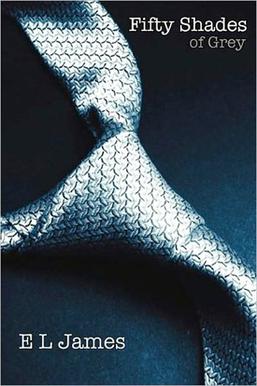
Interestingly, Twilight and 50 Shades of Grey, much as I have previously mocked both, have helped us get away from traditional romcoms, replacing them--and much of romance--with paranormal romance and BDSM and more erotic fiction. It's a somewhat lateral move, but the fact that women are more comfortable with these decidedly less passive and more aggressive displays of sexuality is probably a good thing. They still play into the same cliches as their predecessors, though, for the most part, so the real effect of the shift has yet to be seen.  

So, in summary of things to fix--a plot that deviates from the classics and gives female characters some agency, and gives men actual desires and feelings (rather than making them wish-fulfillment machines) would be great. Also, more lesbians and more gay men who don't just do hair or interior decorating or serve as hetero women's pets. Everything focuses on people between the ages of sixteen and thirtysomething, with a few rare exceptions, so we could stand to see a few more (dignified) comedies and films about middle-aged and old people. Queering up the joint would be a lot of fun, but anything not dealing with hetero white people usually gets confined to film festivals. Glee, of all things, and other media, are sloooowly bridging the gaps between 'alt' sexuality and 'normal' sexuality (can you see me wincing over the internet?) but we still have a long way to go. 

Fortunately, a few of these films do exist, so you can still cuddle up with a love story and you won't absolutely have to turn your brain off. 


Source. Those candles and rose petals should be used, not just sit there for decoration. You can do some fun things with a little hot wax... 


My recommendations 


I like my romances to be more complex and dark, as well as to have a lot more context and content than your average Harlequin in film or TV form. Here's a mixed list of a few of the romantic movies I've seen and liked. 


1) One of the best romances I've ever seen has to be Be With Me, a Malaysian mostly-silent film about intertwining storylines that's truly beautiful and moving. 

2) Across the Universe also earned points from me for not only having a stunning visual design, but addressing human flaws, multiple sexual issues, identity, and the ugly side of the 60s in a nicely stylised way. 

3) Mambo Italiano was an uncomfortable but memorable and realistic little Canadian comedy about an Italian-Canadian boy who has to deal with being gay and a painfully funny emergence from the closet. 

They're available on the internet and Netflix, so go enjoy them when you have a moment. 


*****

Thanks for dropping by the nest once again. Don't miss any of the good kind of crazy. Find me on Twitter, Facebook, and on Tumblr. Watch out for my fantasy-themed spring: interviews with fantasy authors, content related to fantasy films and reviews, and some political commentary--the phuquerie you've come to expect from me. Keep checking back to see those surprise posts, too. This is your darling SciFiMagpie, over and out! 

Thursday, 15 November 2012

Breaking Yawn: How to Fix The Twilight Series

Hello, hello!

Today, we touch on a dark topic, one that has evoked the strongest of feelings for the last handful of years. For some, they are feelings of love, frenzied adoration, and longing; for others, passionate hatred and disgust. And for still others, they are feelings of pain in the lungs and abdomen after laughing too hard. I speak, of course, of that literary abortion, Twlight.

After perusing that pre-eminent page of perlustration, Reasoning with Vampires, I remembered something I'd conceived earlier in the year. Unlike Bella's demon-child abomination, this conception had some merit to it. Bear with me, here; I managed to find a sensible theme in Twilight as a series. It's a remote possibility, but it may be that Stephanie Meyer is smarter than she looks, and has thrown all of us for a loop. Twilight, you see, can be read as a heavily allegorical American fable about the downfall of the economy and the world today.

Oh, there's my monacle. Right, then.


Thanks, Leonhart! Not sure if subtle acting, to be perfectly true to book...or showcase of incompetence...


Bella: Airheaded and abstracted, her depressed state is a mainstay of the books. She is detached from the world around her, and even from the boy she mentions as an object of obsession. This is a fine representation of the current state of the youth of America. Disenfranchised, they pay lip service to ideals that are fading fast in the glare of modernization and a new world. Forks is represented as an old-fashioned town, where the modern young Bella is adrift--even though its inhabitants purport to be friendly, her poor self-esteem causes her to distrust and reject them. Her immersion in old-fashioned literature is remarkable for her lack of absorption and connection with it. In spite of being able to name-check many fine authors, she passes over them as if their work has had no effect on her, no emotional resonance. She becomes obsessed by a thing she seems to hate...that is...

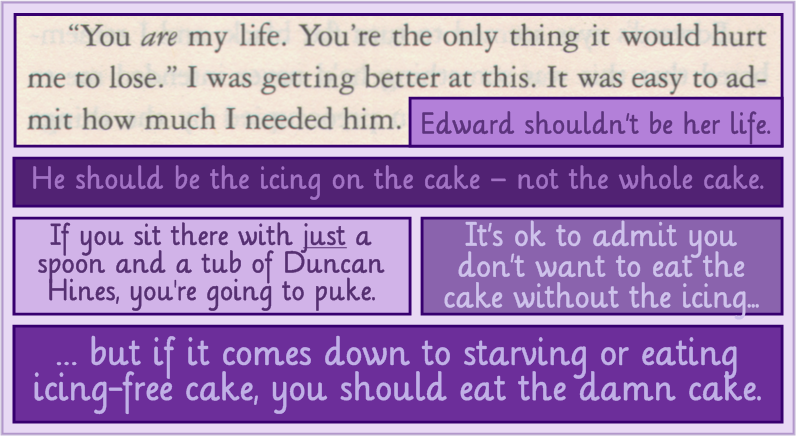
Edward: He is clearly an embodiment of the American dream: to be rich, coming from a balanced and wealthy family, and envied by all. He is physically perfect, but not tame, still wild and independent: a perfect American hero as much as a Byronic hero. He is a cowboy-like Lone Star figure who cannot be captured without sacrifice. His vampirism represents the way this dream is sucking the life out of the youth of America, who cannot escape it and are oppressed by their obsession with it. He even sparkles, not unlike the glittering hopes of the nation. His arrogance, entitlement, and infuriatingly superior personality keep him out of reach, while his form and figure are described as the glass of fashion and as 'angelic'. Need I mention the hint of Lucifer-like characterization in this literally "dazzling" love interest? Add, too, his moral stances, romanticised chastity, and Christian beliefs; and clearly we see Meyer's attempts to show the allure of bygone principles.

Jacob: With his doglike aspect and the subordination he is subject to, is a representation of both First Nations people and the family. His heritage is heavily emphasized in the series, as is the conflict between his people and the American Dream team. He is constantly oppressed by the American dream and shunted to the side by society. Bella, representing the youth of America, finds him appealing and relateable, but ultimately dismisses his devotion and affection as uninteresting. (She frequently discards adoration from others in the same way, illustrating her alienation further.) This has actually happened in 'real America'; consider the cultural appropriation by hipsters of First Nations art and symbolism for aesthetic reasons. Consider, too, that other non-whites become white when they are made into vampires; Jacob, unable and unwilling to assimilate, must be conquered another way. He eventually is subservient to Bella and Edward, and is assimilated in this fashion. This is shown by the way he falls in love with their child, whom he is willing to care for even if she can't return it as romantic love.

Ultimately, though, the pursuit of absolute happiness is an ideal that is more destructive than hopeful. Bella herself becomes a vampire in the end, after much debate. Her struggle is unhindered by her parents, remnants of the unsuccessful older generation who long to capture the dream themselves. Still, she debates with herself, endlessly tortured--is it worth giving up everything she knows to chase a dream? It seems blessed by god, and sure to bring her immortality, but what is its price? When she withdraws from the world and bears a child, she dies. Clearly, bringing a dream into reality is painful, and often more destructive than it is creative. Edward himself is disgusted by the child and considers it an abomination. After the birth, Bella becomes one with her dream, and in doing so, loses everything. She has become a part of the American Dream, but at the cost of her own destruction.

...Either it was the most subtle metaphor ever, or it was just an over-rated piece of racist, heteronormative, misogynistic crap. I can dream, but ultimately, there is no way (I hope) that Meyer intended all those levels of subtext.


Source. Thank you, Reasoning with Vampires. Dana, you give the best relationship advice!


I did mention fixing the series, though, implying that apart from my rather dark and hopeless reading of the themes, it would be possible to salvage this pile of soppy, overly emotional dreck. After a late-night ponder with the boyfriend, I found some actual solutions.

1) Good Editing: I'm only going to mention the soul-destroying, hilariously awful writing of Meyers for a moment, because it's been done elsewhere. And done again, brilliantly. Still, the writing is really abominable on a mechanical level. Cut out the excessive descriptors and go all Wuthering Heights up in this bitch, and you'd get some very interesting results. That novel, by the way, is characterized by really good descriptions of weather and terrain. Not only are they exceptionally skilful, they advance the plot, augmenting it like a small diamond set next to a larger gem. Take note, aspiring writers; your descriptions can be useful, instead of so much literary fapping.

2) MOAR DARKNESS!: Cut out the crap about her boring family, the kids at school, and the Cullens, or make it darker. Bella is already mopey...give the bitch something to mope about, and something to fear! Give the enormous cast of minor characters some genuine characterization, and make it sinister. Forks is too innocent and boring, and it could use some shadows. Hell, even a few cheesy ghost legends would help a bit. No one, especially Bella, ever seems to have had anything at stake, and the worse things that have happened are a slightly sad divorce and a car accident. More blood and guts, please, with a side of trauma. Make it painful. There is a bit of gore, sure, and the whole 'my boyfriend may eat me and not in a fun way' thing, but the fact that Edward is abusive is far more frightening than his vampirism. That is not good.

3) The Love Interests Need to be Monstrous: imagine a world in which vampires don't sparkle, they kill. Yes, I know, it's Anne Rice's territory, but her work is bogged down by pornographic details. Emphasizing the Draculean monstrosity of Edward's hunger and personal magnetism would have made for a much more interesting struggle. Jacob, too, should have done more slavering and less whining and cringing. A little more horror--other than the horror of all of those superfluous commas and dashes--would have done the job so nicely. As it is, the stalking, obsession, and threats of danger are often hilarious and disturbing rather than really frightening. Instead of being swept up by her love, intelligent readers worry for Bella's mental health, as much as it's possible to worry about such a despicable character.

4) Bella Sucks: Bella, of course, is a monster for different reasons, but if she had had her naivety abused by Edward and Jacob, it would've been a very different story. Her jaded, strained, depressed persona would have to go, obviously. or else it would have to be contrasted with some genuinely likeable traits. Give her a history of abuse, or at least a reason to be such a tough, emotionally resistant broad. A dose of tomboyishness would work, for instance. She hates everyone, and they like her in spite of it; any analysis of her character reveals a frighteningly warped personality. Instead of acting as though her stupidity and meanness are normal...why not worth around these traits? Bella lacks self-awareness even more than she lacks self-esteem, and that's saying something. Granted, she's a teenager, but even the most difficult teenagers have not inspired so much hatred. A harpoon gun to the face is the only thing that would improve Bella Swan at present, and there has to be a better way.

5) Atmosphere: Well, I have to give Meyer this much: she did a good job at establishing an atmosphere in spite of herself. Now, while I am tempted to regurgitate my supper at the mere admission that Meyer got something right, I have to underline this. The meteorological descriptions and scenery are, at heart, not too bad. The erotic tension in the book is also interesting, although the puritan approach to sex is a serious downfall. More sexytimes--less than Anne Rice, but more than what is currently shown--and more storms, with better descriptions, would have really enhanced the power of the setting and mood.

There's probably more that could be added here, but as entire blogs have been devoted to the subject, I'll leave my two cents here.

*****

Thanks for returning, ladies, gents, and people in-between. For more delightfully witty commentary, you can find me at Twitter and on Tumblr. This is your SciFiMagpie, over and out!

Tuesday, 7 August 2012

50 Shades of Finished: Reflections on A Bad Romance

Finally, at long last, I have returned!

As those who have been following my Twitter feed for the last couple of weeks have discerned, I am finished the Fifty Shades trilogy. That's right--I've conquered Fifty Shades of Grey, Fifty Shades Darker, and Fifty Shades Freed. If you somehow missed out on the horrifying and amusing social phenomenon of the hour, I'll give you a brief run-down. Fasten your seatbelts and get a good, stiff drink: we're heading into the dark and miserable world of fan fiction.


Thanks, Wikipedia! Now I can advertise this thing that has been polluting best-seller stands at airports and convenience stores everywhere.


Fan Fiction. Hold on, people. We're about to go balls deep. Or ovaries deep, if you like.


Clker is my hero tonight. Thank goodness for fair use and free images of ovaries! This made my night.


I'm not sure how many assumptions I should make about you, my beloved readers; after all, given that you're on the internet and that you found my blog, you are probably familiar with geekery on some level. Just in case that isn't so, I'll explain what I'm talking about and why I'm about to throw a miniature temper tantrum. Still, I can't make accusations without a damn good case, and without a review of the evidence.

Fan fiction is usually composed in written media, though occasionally it extends to webcomics, films, drawings, paintings, and other media. The written stuff--everything from short stories to monstrous epistles longer than the source material--is the area I concern myself with.

What is fan fiction, and why do I care?: I'm going to to my best to keep this rant really short. Fan fiction is a polarizing and contentious area because it involves extending, modifying, or retelling existing stories, or the creation of new work within their universes. It exists in an awkward grey area of creativity, since it relies on not merely inspiration by, but actual use of other authors' and storytellers' creative property. Some of it is glorified shitastrophic porn. Some of it attempts to tweak a story to fit the author's own idea of how the plot should have played out; some of it retells the story in a different setting altogether. Still more fan fiction attempts to fill out the universe's plot holes and expand the world. It's impossible to fairly condemn all fan fiction, especially since some of it is created with the author's express permission. Lancelot was a late addition to Arthurian legend, and he adds a lot to the world. Lovecraft's friends often wrote in his universe, and helped spread the fame of the Cthulu mythos. Gregory McGuire, one of my favorite authors, retells and reinvents fairy tales as well as having created Wicked, an renowned reinvention of the Oz series. Clearly, then, fan fiction can lead to creation of something new, or add something to the world. What's the big problem, then?

Let's touch on that 'intellectual property' issue. Using characters in an unauthorized fashion and changing a story line technically violates copyright laws, as well as being in bad taste. Sometimes, leaning on pre-made fiction can be useful as a learning tool of new authors. All too often, it results in a perversion of the story that the original author finds downright offensive. This is a shame, and some authors go to great lengths to track it down and purge the internet of its presence. Others find it a compliment to their work.

Statement of bias: Personally, I am fine with stories set in the worlds I create, as long as the laws of the land are obeyed and consistent, and as long as the main story line and central characters I create are left out of it. Telling an author--not just me, any author--that you think your version of the main story is better when a few minor adjustments are made is, simply, an insult. Work can be based on a non-original idea, and a derivative can be really good or even better than the source, but something new must be brought to it. It is this that Fifty Shades fails at, and hard. Let the trial commence.


Wiki, you are the man. I'm a little teapot, short and stout, this is my judgment, just hear me out.


The crimes, and their degrees of guilt: Intent to imitate, 1st degree; borrowing of perfectly good ideas whilst not remaining true to their spirit, 2nd degree; hilariously poor descriptions plonked in the middle of sex scenes, 1st degree; poor, repeptitive sex scenes, 2nd degree; reckless failure to continue or properly handle side-plots, 3rd degree; and, finally, romanticising abuse, 1st degree.

The Prosecution: As stated previously, and by divers others, E.L. James borrowed her best ideas from the film Secretary, including the main character's physical appearance, her love interest's surname, the BDSM, and the Dominant blonde woman who ruins the male protagonist's life. Furthermore, James does so in a disreputable and awful fashion. Material was also stolen flagrantly from Twilight and its sequels; both crimes are committed and no credit is given. Also, she is guilty of some of the most hilariously awful mixed metaphors known to man, terrible plot structure, and using the term 'inner goddess' outside of a new age beauty manual. Defamation of the BDSM community and romanticising a number of unhealthy mental traits in an unacceptable manner are also serious issues.

The Defense:E.L. James' editor should have done something about this plot. Or, if something was done, more should have done. The story does differ from its sources enough to be on its own, and there are moments when it approaches insight and interesting sub-plotting. There is something underlying this, for all the poorly-implemented capitalist porn, that is interesting. (The capitalism porn stuff, incidentally, is eerily similar to some parody ideas I had about Twilight, which will be published in an upcoming blog.) Ultimately, there are moments when Christian Grey almost approaches a real, interesting character, mostly in the second book. It may not have been realised well, but there was a brief glimpse of something more lurking deep below the stupidity, and that is worth something.

Statement of the Judge:

Verdict: I'm going to have to agree with the majority of the intelligentsia and wits of the internet: this book series does, in fact, stink. It has moments of disgusting levels of anti-feminism, but the author does really try hard to make something worthwhile. She also published this as porn for herself, and was unapologetic about it. For all of its faults--and there are a lot--that deserves a little credit. Was it a good book? Not at all. Could it have been a good book? Perhaps; if it wasn't confined to imitation of the morally repugnant and hilariously awful Twilight series, or to poor and inaccurate imitation of a very fine and sweet film, Secretary. However, it was, and that--as well as blatant product placement and demonstration of disgusting levels of white privilege in mid-sex-scene--led to its ultimate downfall.

The Sentence: First of all, E.J. James needs to learn to write a coherent sentence, and when not to use fancy words from the automatic thesaurus function. I love words, and I love thesauri and idiosyncratic words. This was linguistic assault. Ten years hard writing labour and literary analysis of more than (gag) "Classic British novels" ought to do it. Shame on you, E.L.James, for profaning the names of Bronte, Hardy, and Austen. The books are sentenced to be read in the most hilarious fashion possible by Gilbert Gottfried, and to be mocked by the internet at will.


*****

Thanks again for tuning into my phuquerie. There will be more--updates about my writing, more feminism and literary criticism, and probably some movies. There might even be some politics and science! Keep an eye on new releases by following on Twitter and on Tumblr. This is your SciFiMagpie, over and out!

Google+