About Me

My photo
Author of queer, wry sci fi/fantasy books.
Showing posts with label girlcember. Show all posts

Friday, 21 February 2014

Blame It On The Girls: Boys in Disney and 'Princess Flicks' in General (Girlcember 10)

Hello hello!

Earlier last month, I watched Frozen and compared it to several other Disney movies. I went for a bit of a blog rummage and had a look at other reactions to the movie. They were evenly split between 'FEMINISM YAY' and 'Grrrr, no PoC and they made a hash of the original narrative of the story'. The PoC criticism is a very fair point, as we all know that Disney seems to drop the ball the minute its main characters are non-white, but the last bit, enh; we should be used to Disney making a hash of folklore by now. (I should mention that Kristoff, by the way, has been officially confirmed as being a Saami person--it may have been done messily, but I ended up learning a bit about the Saami people as a result of the debacle, so there's that, anyway.)

Now, what follows involves

SPOILERS SPOILERS SPOILERS SPOILERS SPOILERS 


for Frozen and other Disney flicks. Are we good? Good! Then let's talk about something completely different: the boys.


I noticed something interesting--the male characters in Frozen were really quite stellar. The nameless King, Hans, the Duke of Weaselton, and Kristoff were all portrayed with surprising subtlety. The Duke, for example, was a jerk with mostly good intentions, and was manipulated by Hans. Both Hans and Kristoff were pretty layered characters, which was a nice change. And the King was trying to be a good father, but gave his daughter really bad advice--something Disney fathers aren't usually allowed to do. All of this was a great change from the norm.

A change from what, though? Surely the princes aren't that important in Disney movies; it's more about the women, isn't it?


Prince-i-pals


Therein lies the problem. Male characters don't have a problem with character development and representation in 'non-princess' movies, but for most of Disney's history, the men have had even less character and personality than the princesses. Consider Phoebus from Hunchback of Notre Dame, John Smith from Pocahontas, Adam (the human version of the Beast) from Beauty and the Beast, Eric from The Little Mermaid, and the nameless princes from Cinderella, Sleeping Beauty, and Snow White. Granted, the last three are older, but do the newer ones I mentioned really have that much more depth? Sure, there were sequels that expanded on these characters a tiny bit, but the most interesting princes/love interests in the 90s princess movie canon were the Beast (in Beast form), Quasimodo, Aladdin, and Shang-Li. You'll note that these are all societally-rejected or conflicted characters--Shang-Li's abandonment of Mulan on the mountain was very 'unprincely' and memorable. The majority, though, are bland as hell, and much less developed than the princesses. (A comprehensive list of princes and not-quite-princes can be found here.)
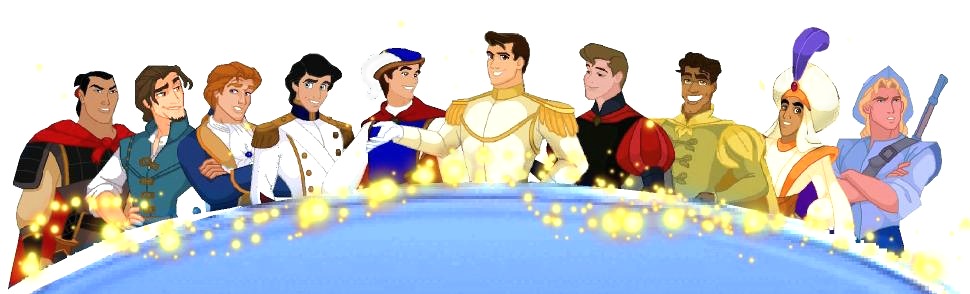


Source. Notice any similarities?

In contrast...


Consider princes from the most recent revamps of the franchise--the would-be princes in Brave are played for comedy, and are pretty dorky; Naveen from The Princess and the Frog is probably the most interesting character in the movie, and Kristoff and Hans have plenty of meat to their characterizations. The Prince in Enchanted was at least as interesting and sympathetic as the heroine, with faults to match (though the same cannot be said of Giselle's unmemorable other love interest), but I have to admit to a stumble with Flynn Rider. Flynn--in my opinion--is annoying as hell, but at least his thievery had more consequences than Aladdin's, and came with a deceitful personality. There's something to be said for that. In fact, like Naveen, he was arguably more interesting than Rapunzel herself, and went through more development. Disney has had a tendency to touch on subjects without actually exploring them, so the demonstration of more consequences and depth in a hero's personality and life is a very good progression. Real men (both in the sense of 'good men' and 'actual, 3-D humans that walk around and identify as male) aren't just villains OR heroes. They're lazy, strong, smart, stupid, naive, funny, lame, shy, and awkward; brash, quiet, gentle, sensitive, and sometimes, even boring. We're starting to see that shift, and it's overdue.


Is it changing?


Well, actually, the answer is yes. I don't know if it will lure more boys into the franchises, but at the very least, young girls are getting a better idea of what men can and should be like. Regardless of one's romantic or sexual preferences, getting the idea that men are more than cardboard superhero cutouts with money is pretty important. The idea that male characters can and need to develop right alongside their heroines is simply not there in a lot of female-targeted media. A lot of romance novels tend to blur over that or only add token development to the male leads, when they're not abusive and overly dominant jerks, of course.

So, all of that is very good, and girls deserve examples of realistic men--the song 'Fixer Upper' in Frozen encapsulated why quite beautifully, with the idea that no-one is perfect but love (and patience) can really help--but a constant refrain always punctuates this issue...
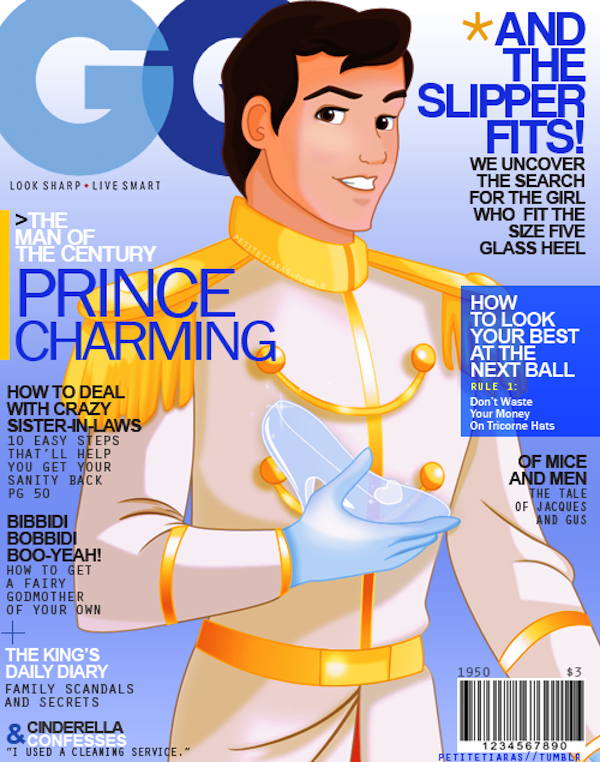


Source. Presented without comment.


But...but...princess movies are for girls!


Okay, but do they have to be? I do understand that princess movies are sort of a 'safe space' for a lot of women--girls and grown-ass adults alike--to bond over. However, the fear of boy cooties, much as it may be valid, is foolish and feeds into cloistering of gender roles. I have no doubt that these movies will still continue to be marketed to and written for girls.

This is a serious issue, because it means there's no hook for boys to participate in the princess culture thing easily. I touched on the way girls' toys are segregated in my previous list, and I want to continue with that point here; boys are still stigmatized for liking anything feminine. That's bad both for boys and for girls. Boys do, in fact, knit, bake, paint, and do other artistic things, and they aren't always puff-chested heroes or monsters when they do said things. The problem with assuming boys who do these things are gay is that it forces boys into an awkward feminine camp, to say nothing of the fact that leisure activities have little to do with one's sexuality, if anything.


What needs to be changed?


As always, I like to point the accusatory finger back at the audience rather than just decrying the company. I think Disney is honestly trying, and while they still have a long ways to go with both culture and equal representation, it's more important for us in the audience to adapt. Genderswapping characters and things like the Hawkeye Initiative are great for showing off systemic misogyny and sexism, but women have to take an equal role in making sure that our portrayals of men don't just continue the same negative trends. So, consider inviting a boy or two to that 'Princess movie night'. If you're a writer or artist, consider the way you're portraying men. Are your love interests all 'badass alpha males' or predominantly geeky boys? Are they ripped or otherwise 'perfect'? Is he a rich white dude, or is he a middle-class person of colour? It's time for us as creators to stop making our fictional characters self-inserts, the people we wish we could be or wish we could love. The world has enough cardboard princes. If even Disney can figure that out, so can the rest of us.

*****

Thanks for dropping by the nest once again. Don't miss any of the phuquerie. Find Michelle on TwitterFacebook, and on Tumblr. More interviews and witty commentaries are coming. Keep checking back to see those surprise posts, too. This is your darling SciFiMagpie, over and out! 

Friday, 14 February 2014

Writing Women, Part 4: FINE, SMARTASS, YOU TELL ME HOW TO WRITE WOMEN! (Girlcember 7)

Hello hello!

So, now that you probably think I'm an arrogant feminist twat who's ruined your novel, let's talk about stuff you should do.

Women! How do they work?


The most important thing in writing a woman is to write a person. Talking to real women can help with this. After all, your characters aren't dolls on a table--they're people. Even symbolic people need to be respected. I'm not saying bad things shouldn't or can't happen to them, but tragedies should never be cheap or tossed aside. If the events in the story happened to your mother or sister, how would you feel? What kind of person would they become? Let's not talk about what would happen to you; authors never have objective judgement on that sort of thing.

Understanding a female character requires understanding people. This may require you to leave your desk and talk to actual humans face-to-face. If you've gotten into writing to avoid people, or you're unwilling to do research by talking to the sort of people you're writing about, put down your pen or consider quitting. Writing fiction, whether that's sci fi and fantasy or the highest literary work, is about people. At no point should your characters come second to your plot, and if basic to intermediate research about your population/character/history makes you uncomfortable, stop writing about your topic or change it. This is harsh advice, but it needs to be delivered, based on both the traditional and independent publishing industries' output.


Instructions unclear? Dick stuck in keyboard?


Right, so--women. Make them real people. Your female character is not your substitute best friend, nor your substitute girlfriend, nor an alternate version of you. She is a person who lives in your fictional universe. She has little things she likes, such as chamomile tea or the way cotton ankle-socks feel or the way fresh snow looks. People are built of little details and tiny scraps of history. Grand gestures and career plans are fine, but the way her little sister looked when your character broke her toy train when they were both children matters more. The way your character surprised her mother on her birthday matters more. You don't even have to write these things in (though writing about them for practice might not hurt) to imply that they exist.


Here are some elements you could consider adding to a character--if they fit, that is. Ask these questions and try them on for size.

Has your character been injured? Seriously? Have they got a disability? That could be interesting. Physical challenges are much more intriguing than super-magical competence powers. Sometimes they're even a trade-off for magic, but they don't have to be.

What is your female character's motivation? Does it solely revolve around one person, or two? If it does, try to explore her motivations from her perspective, in a way that doesn't involve family or romance.

What are her favorite things? What does she buy at a market or grocery store first? What are her small indulgences or her vices?

What's the meanest thing she's ever done, the smallest evil? I don't care about saving puppies. I want to know about that one time she kicked on and it let out the saddest whimper on the face of the earth. I want to know what keeps her up at night.

That should give you a starting point. Now, enough talking. Go read some good books with female characters. If in doubt, ask some women. And above all else: practice, practice, practice. We won't eat you alive, as long as you keep trying.

*****
Thanks for dropping by the nest once again. Don't miss any of the phuquerie. Find Michelle on TwitterFacebook, and on Tumblr, and find her work on Amazon. Check back on the blog to see when one of the irregular posts has careened onto your feed. This is the one and only SciFiMagpie, over and out! 

Friday, 7 February 2014

Writing Women, Part 3: Rebels Without Their Bras (Girlcember 6)

Hello hello!

The tutorial on writing women continues!

Who is she?


Now that your female character has her sexual orientation, beliefs, and possibly her career picked out, let's talk about her background. Is she an orphan? A super-powerful young girl being fought over by two factions? The Only Hope for Humanity? An embittered assassin or thief, a-la Catwoman? A princess? In love with someone outside her species/social rank/temporal bubble?

 If some or all of these are true, you might have to crumple up your sheet and start again. They've all been done to death. We're bored. Oh, sure, you can write them, but you're going to need to go either balls-deep (or vag-deep, or ass-deep) and just RUN with that cliche in a self-aware way, or you're going to have to do some rewrites. In addition to reinforcing bad ideas--that women exist to serve men, that women are only powerful when they're young/cute/harmless otherwise, or that sex ruins women--those cliches are boring as phuque. We've heard them all before. We're done. Give us something different.


A brief word on a thing you shouldn't do, probably 


Now, another tricky topic--in addition to careers, sexual orientation, and etc, let's talk about a common plot device. If I had a dollar for every time I've read about a female character with sexual assault in her history or during the story, I would have a lot more tacos. Rape is a common trope used to make a character traumatized or tougher. Stop it. Just stop. I don't care how justified you think it is; cut it out. I'm not saying rape should never be written about; quite the opposite. Rape is hard to write about. If you do it properly, it will hurt you as an author and you'll be crumpled up in a ball of feels after you put your character through it. (Ask me how I know.) However, if you need a way to toughen your female character and show trauma in her past, be more goddamn creative. Car accident! Cat that exploded! Lost family member or best friend! These are just scraping the surface. You can do better than tossing in a cheap sideline rape. We'll be talking about that at length in a post down the line.

Some authors may be leaning forward, scrolling in consternation and trying to hold back a sense of panic; others may be leaning back cockily and saying, "ah, yes, but in MY story all of this is necessary!" I don't care what your identity is or what you've got between your legs. If you have a rebellious princess who has a super magical power and is embittered towards her father and still getting over a close-but-not-actual sexual assault that doesn't violate her purity, and if she 'does her own thing' and has several guys (and possibly girls) fawning over her, your book sucks. If you can make all that work, either you are a genius of parody, or you're deluding yourself. There's a small possibility it does work, but I'm not holding my breath.

"Ah," some authors may say, "but my work is literary! It--"

No. Shut up. Quality standards exist for a reason.

"Ah, but my characters defy social conventions!"

Okay, I'm listening.

"In her setting, she's really different for rebelling! She's--"

Is she a human plot device? If she was replaced with a talking lamp, would the story change? No? Shut up.

"But these are basic mistakes! Only really bad authors--" No, they don't. These can happen to the most well-intentioned or practiced authors if they don't pay attention. Don't fall asleep at the watch! It's easy to be sloppy with characters. I'm not saying this makes you a bad person, if you do these. I will willingly cop to a lot of them myself, especially in early drafts. After a while, too, it's easier to move away from tropes and cliches, but they will sneak in!


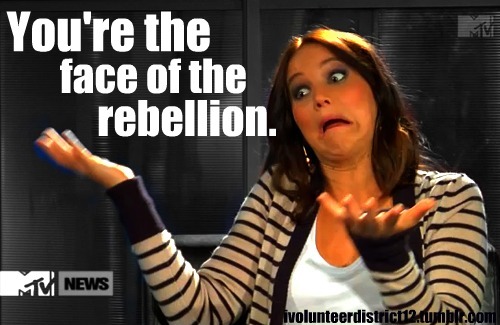
Source. Katniss is actually a good character because her actions contain internal logic and are self-consistent. 


Rebel, Rebel 


So, how can you make your character a rebel? The social class thing isn't a bad idea. You can play with gender and ethnicity. I was reading The Night Circus recently and noticed that Morgenstern avoided mentioning black people or ethnicity entirely. Not only was it an infuriating inaccuracy given the culture of circuses and sideshows of the era, it cut out some intriguing possible plotlines. Remember, you can make your character a person of colour, queer, or variously abled/challenged, and it doesn't have to make them less 'normal'. If anything, it makes them more normal.

Still not content? Okay, consider your character's circumstances. Why are they rebelling? Do they want to go against society? Is your character an anachronism in a fantasy setting,or is she part of a movement? Is she perhaps conservative? If so, why? Make sure the internal logic of the character holds up outside the story. If her actions make no sense, your audience will be confused and angered.

Okay, so, making sense so far? Tune in next time for more tips!


*****
Thanks for dropping by the nest once again. Don't miss any of the phuquerie. Find Michelle on TwitterFacebook, and on Tumblr, and find her work on Amazon. Check back on the blog to see when one of the irregular posts has careened onto your feed. This is the one and only SciFiMagpie, over and out! 

Friday, 31 January 2014

Writing Women, Part 2: Stand Alone Complex (Girlcember 5)


Hello hello!


Welcome back. So! How does all the gender/sexuality/identity stuff play into crafting a female character? Well, the basic point in my previous post is that a female character should not be built around or crippled by her vagina or her gender. (Or presumed vagina. Or whatever the species has that represents your character being sexually female.) This means that building your character solely around her romance with someone else is probably a bad idea.


Source. Fiona sees your shit, and she ain't having none of that.

Second, it also means that your character doesn't have to have physical limits. Boobs, hips, waists, and other things come in various shapes and sizes. You can have a flat-chested heroine who still identifies as female and likes pretty dresses. Boobs are not a requirement. As intimated above, a vagina isn't even really a requirement. They also don't represent a personality, or even magically grant one.

"But men and women are different!" I hear you cry. Well, yes, but in the ways people are different. If you're struggling with your female character, try making her male. Do her traits hold up, or do they seem silly? Does she cry and mope and whine a lot? Cling to other characters, especially men? Is everyone fine with this, or treat it as a normal thing for women to do? Conversely, does she go out of her way to do the opposite? If she does, she's probably a stereotype, and may not reflect reality very well.

How do I girl?


Think of your female characters as normal people. Believe it or not, even with the hormones and the terrifying complication of a vagina, there aren't actually many differences between women and men. They're mostly social. If they are rebelling against the standard gender roles of their world (which you might want to rethink, since it's a boring cliche to have wimmenz in the kitchen/hospital and menz in the battlefield/everywhere else), does their rebellion make sense? Consider Arya Stark from Game of Thrones. One of the things that works about her cliche character is that the rest of her personality lines up with her actions. She is cranky with her sister, conforms poorly to other norms, and pays the price for it.

Another important thing with creating women is making sure their behavior and ethos fit their period and setting. It's okay to have an obedient daughter if the situation calls for it; modern soap-box characters do not fit in historical settings, and are often jarring as hell. If you must have a woman with modern opinions in an anachronistic setting, there needs to be a price tag for those opinions. Do your research! It's fine to defy conventions, but it's also a good idea to abide by them when the situation is necessary. What are the social conventions of your world? How did you come up with them? (This may involve self-examination. I'll wait.)

See you next week!

*****
Thanks for dropping by the nest once again. Don't miss any of the phuquerie. Find Michelle on TwitterFacebook, and on Tumblr, and find her work on Amazon. Check back on the blog to see when one of the irregular posts has careened onto your feed. This is the one and only SciFiMagpie, over and out! 

Friday, 24 January 2014

Writing Women: Part 1, Or: THE VAGINA! IT DOES NOTHING! (Girlcember 4)

Hello hello!

So, it's common knowledge that in addition to writing my own books, I'm an editor. Obviously, I also like to read. I try to avoid writing about, well, writing on my blog, but I've been sitting on this topic for a while. Literally, if you like--because the thing I've been meaning to talk about since December is writing women. Depression, migraines, and a nasty flu have interrupted that, but I figured better late than never. So! Writing women. Let's talk.

One thing I've noticed a lot with male authors (or people who identify as male, anyway) is that they don't seem to 'get' female characters. This is often an excuse cited when the dearth of active female protagonists outside of romantic fiction comes up. "But women are hard to write," I hear, with much hand-wringing and sorrowful moaning. "How do you write a woman?"

Similarly, I find that female authors are actually just bad at women. Overly-idealised, often thin characters who are supposed to be rebellious but end up bland wish-fullfilling self-inserts...well, I've criticized Mary Sues in the past, and I'm not re-treading that. I'm not saying self-insert Gary Stews (the dude version) don't exist; they're just as obnoxious. However, female characters get the brunt of the difficulty, and I like writing and reading about women, so that's what I'm focusing on. Please note that this is mostly targeted at sci-fi/fantasy/cross-genre works, but the advice still applies to romance.


Source.  'Ensign Sue Must Die' is the original source and is now on my to-read list.


What's a woman?


Let's be clear on my definition of gender first, though. For most intents and purposes, people usually have either a vagina or a penis. Some people would prefer to have a different bit between their legs than they do, some would prefer both, some could do without either, etc, etc. Most of the time, the stuff between someone's legs lines up with how they see themselves. For example, I have a vagina (shocking, I know) and I see myself as a woman. This is called your sexual identification. As you can see from the link, most people don't get to (or need to) choose the bits they'd like to have. Believe it or not, it does not always line up with having XX or XY chromosomes, as chromosomes don't determine sex as neatly as we used to think. Sex is assigned based on what's between a person's legs, and one's identity may change with time or become fluid, but assigned sex does not define who a person is. 

However, the bit between your legs and what you choose to do with it (your orientation is the 'what you choose to do with it') may not be related to your gender role (stuff you do, according to society) or self-perception (how you think of yourself).

Right, so, still with me? If you're not familiar with some of these terms, there's no harm in asking. I can wait for a research break. Meet you back here in five for part 2!

*****
Thanks for dropping by the nest once again. Don't miss any of the phuquerie. Find Michelle on TwitterFacebook, and on Tumblr, and find her work on Amazon. Check back on the blog to see when one of the irregular posts has careened onto your feed. This is the one and only SciFiMagpie, over and out! 


Friday, 17 January 2014

Toys, Toys, Toys: Gender Roles, Performance, and the Holidays (Girlcember Part 8)

Hello hello!

So, at the beginning of December, I was working at a company on a temp assignment (this is how I pay the bills when editing is slow) and I decided to help out a bit extra by wrapping presents for the company's Christmas party. They were all children's toys, from Toys'R'Us, and it was an interesting experience. When someone hands you a bag of toys and a couple rolls of Tinkerbell and Spiderman wrapping paper, gender is hard to ignore or set aside.

My childhood involved a lot of pretty gender-neutral ideas. Generally, playtime involved coming up with outre fashions for Barbie, making crafts, playing with Legos, and coming up with stories involving small rubber and plastic animal figurines. Oh, and watching a lot of educational programs, reading, and watching Disney cartoons while the rest of that was going on. So, my understanding of gender roles was slightly off-kilter from day one, and it fascinates me endlessly to reflect on the way they are shaped for kids now.

I started off writing the genders as well as the contents on Post-it notes, but then I realised that was stupid, and stopped writing the genders. Anyway, what about the toys themselves?


Source. Bracelets and makeup. Definitely what I wear when I'm about to physically exert myself and whoop some ass.


Here's what I noticed:

1) Toys for very young kids are mostly either not-gendered, as with animal toys and blocks, or cement basic ideas of gender, such as with the pink and floral bathtime tea-party set designed for babies. I'm just going to mention that I never had tea parties with my dolls as a kid, and I only have them now as an adult.

2) Toys for older kids, about twelve and up, are generally boardgames and are somewhat less gendered, Toys involving science (a robot kit) were delivered in a deliberately gender-neutral way--the box was purple, as was the case for the Cranium games, but the fonts and visual design were somewhat masculine in style. This generally held true except for something I'll be noting in a minute.

3) Toys involving kids between about age 5 and age 12 were heavily gendered--trucks, alien Bratz dolls (no, they were actually aliens, the logical evolution of Barbie-type figures), and nerf guns.

4) Toys that are marketed to boys are somewhat more gender-neutral in appeal. They usually only have boys (and white ones, at that) on the box art, but there's a sort of silent acceptance of the idea of girls possibly owning them.

5) Toys marketed to girls, on the other hand, are explicitly and almost offensively feminine. Think sparkles, pink, purple, and girls on the front of the box art (whereas not all boy-oriented toys will have a boy on the front of the box). There is no suggestion that boys 'can' play with these toys, and the toys *for* boys would still have worked for girls in a lot of cases.

6) The Nerf 'Rebelle' gun has a chick in makeup and jewelry on its cover. I was pretty interested in a Nerf gun with feminine styling--it was actually cute--but my excitement faded when I read the back text. Summarized, it was basically, 'this gun is for girls! Really! We promise it won't turn them into a boy or make them do anything that's not cute and feminized! Please, redneck dads, don't be scared of buying this!"

7) Girl's toys are not designed for boys under any circumstances. I'm going to explore the way that divide is bad in my next column, but this still disturbs me. There's a silent penalty imposed on the masculinity of any boy playing with something sparkly. Remember, this is 2013 we're talking about, and gay rights and gender ideas are still stuck in very rooted traditions.

8) Toys are designed to give kids an idea of gender roles and 'what boys do' and 'what girls do' from day one of opening the box.

9) Just once, I would like to see people wrapping the Rebelle gun in Spiderman paper or the Scooby Doo Swamp Rover in Tinkerbell paper. Just once. If you immediately recoil at the thought of putting a 'boy toy' in 'girl paper', I'd like you to think about that for a minute.

What about the rest of you? Have you noticed anything disturbing or, conversely, positive about modern kids' toys these days?

*****

Thanks for dropping by the nest once again. Don't miss any of the phuquerie. Find Michelle on TwitterFacebook, and on Tumblr. More interviews and witty commentaries are coming. Keep checking back to see those surprise posts, too. This is your darling SciFiMagpie, over and out! 

Wednesday, 4 December 2013

Princess Movies, TNG: Disney's Continuation of Its Princess Franchise (Girlcember Part 2)

Hello hello!

Well, let's continue with Girlcember. Now, you might want to refer to this post if you're not sure why I'm mentioning really old Disney Princess movies, but in order to explain why Frozen is a significant achievement, I felt the need to go through the past. So, here's a quick rundown of other recent princess movies! Do note, for those of you who are sticklers, that this list has a proper count of which movies are 'official' princess movies and which ones 'don't count'. So, if you haven't watched some of these, be aware of


SPOILERS SPOILERS SPOILERS SPOILERS SPOILERS 


Now, with that out of the way, let's do a really fast run-down! Then, finally, on Sunday, we'll get to Frozen. 

Precursors, Part 3: Not Brave Enough


Oh, Brave. My Celtic heritage--Scottish, Irish, and French blood are all in my lineage--is something I'm proud of. I was pretty excited about a bow-wielding Scots princess. What I got was a box of tropes. While her relationship with her mother is excellent and well done, and Merida herself is pretty charming, the rebellious princess cliche kept slapping the audience in the face. It was handled well, including the beauty standards issues and the humanity of her parents, but that awkward ending where we're reassured that Merida will marry when she's ready kind of spoiled the whole thing for me. I loved her father's character, and her little brothers were actually done really well, but enh. 

I guess it comes down to that tropes thing and the lack of courage thing. Merida has her bow, sure, but basically it's love that saves the day. I don't even think she hurt the bear with her bow. Add in a Tarzan-level lackluster sound-track, and you have an awkward step down in quality from Pixar's usual faire. I know Merida is beloved on the internets, and I do like her, but there was so much more they could have done with this movie. 


Source. And that's even BEFORE we get to that damn Merida prettification fiasco.

Precursors, Part 4: Tangled--a bit too smooth, actually


I'm probably going to get hell for this one, too, but Tangled was another near miss. It's like Disney got drunk at the Xmas party and did its best Dreamworks impression. I mean, really. They had a strong Anastasia dynamic with Flynn--come on, tell me you can't see some Dmitri in there, and yes I know Anastasia is from Fox--and he comes off as the inferior male-pregnancy fanfic lovechild of Miguel and Tulio from Road to El Dorado (which is a much smarter movie than people think). I liked Rapunzel, especially when her hair was cut, but she's still...enh. She invented astronomy in her spare time and named her chameleon after a famous scientist and philosopher. Her superpower is hair parkour and wielding a frying pan as it was not meant to be...weld? I think it might be a sneaky reference to The Frying-Pan of Doom by Patricia Wrede. It's literally in TV Tropes, but I'm okay with the frying pan. Anyway--movie completely ignored that Rapunzel is a natural-born scientist. She got the crown and started experimenting with its purpose. She figured out that it could be used to heal and produce light. Someone get this woman a lab! But, of course, along comes a decidedly annoying dude and her dream becomes...him. 

And let's not talk about the embarassment of Mother Goethel. Shame on you, Disney, you can do better with villains, and you came so close. The music was wedged in, there were references to Shrek and The Little Mermaid shoehorned in (the boat scene), and over all...it was okay, even good in some places, but it felt forced. Like Hercules and other parody-toned movies, Disney is just no good at satirizing itself in a cynical way, and that really comes across here.

Fortunately, on Sunday we'll learn how Disney managed to learn from these mistakes for Frozen. And oh, thank goodness it did. We finally have an heir to the 90s Disney renaissance, and I'm pretty sure that Frozen might be able to bring a new one in. Why? You'll have to find out this weekend!


*****

Thanks for dropping by the nest once again. Don't miss any of the phuquerie. Find Michelle on TwitterFacebook, and on Tumblr. More interviews and witty commentaries are coming. Keep checking back to see those surprise posts, too. This is your darling SciFiMagpie, over and out! 


Google+