About Me

My photo
Author of queer, wry sci fi/fantasy books.
Showing posts with label disney. Show all posts

Friday, 13 July 2018

Evil is Boring, and Other Unexpected Things

Like a chipmunk crouching in a forest next to a nuclear reactor, Canada is in close proximity to the slow-motion disaster that is the United States of America. With a president who coasted into office on a wave of electoral fraud constantly compromising the safety of the country's information and people.

A part of me - perhaps unbelievably - is a little embarrassed to be excoriating Trump as thoroughly as I am, even though it's nearly a universally understood truth at this point - and even though his party's legislation has directly resulted in the caging of immigrants and their children, and their detainment in concentration camps.

That said, I think one of the hardest things to understand about Donald Trump is that, inasmuch as he's basically as evil and villainous as it gets, he's not the kind of villain I was raised to to expect.

What is evil?


That's a complex question, but for our purposes, I'm going to reference both aesthetics and intentions. My personal stance on evil is that it's more of a verb than a noun. One's actions, weighed in the balance of their impact, as well as the current historical or contemporary perspective, tend to determine whether or not one is classified as evil. For instance, Winston Churchill tested mustard gas on Kurdish villagers before deploying it during WWII, and the otherwise admirable Franklin Delano Roosevelt, who created the "New Deal" and a number of important social security measures for American citizens, also was responsible for the internment of Japanese-Americans. Canada has its own examples of leaders with similarly mixed legacies. In the context of colonialism and that resulting violence, it's hard to canonize any leaders, especially those in the "New World."

That being said, Adolf Hitler's actions and his legacy are pretty good examples - nearly archetypcal examples - of what we see as evil nowadays. (Well, those of us who are not neo-Nazis, anyway.)

But do they look evil?


Between Disney and other fantastical films, very clear portrayals of "a villain" emerged - a villain was supposed to be stylish, attractive, usually or frequently non-white, damaged, and either coded-gay or overtly homosexual (sometimes asexual). In contrast, heroes - especially in the nineties - were usually laid-back slackers, usually white, straight, and male; always heterosexual, and both mentally and physically well, often athletic or extremely nerdy, and usually lacking self-confidence and/or social skills. Frequently, said heroes were disproportionately popular, due to some inexplicable "leadership quality," and I'm sure many of my readers will be familiar with the token reward girlfriends usually accorded to such heroes as a matter of course.

The state of the present


Much hay has been made of the idea that young white men grew up seeing themselves as heroes based on their birthright, and therefore, have not had to do anything to deserve that mantle. Said young and less-than-young men are also increasingly fond of mocking marginalized people who dare set boundaries on the portrayals of their cultures, sexuality, and themselves.

Given that white men and white women voted for Trump in droves, and have continually shuffled out of the way when held accountable for inequality issues, I feel it's fair to say that both the left and right have come to see straight, white, cisgender, heterosexual, and able people as - well, the "enemy," or at least a source of antagonism - and as a "persecuted minority," respectively. That said, from what I can tell black people and other people of colour don't really hate white people, not really - but centuries and decades of persecution and marginalization and abuse have led to a lot of pain and entirely reasonable resentment.

More recently, in addition to the many nigh-endless microaggressions and larger acts of violent discrimination perpetrated against people of colour, images of the cargo shorts-clad and tiki-torch wielding racist protesters trying to "defend their white heritage and children" are inescapable. For white queers, a similar dynamic exists with "the straights" - it's not that we hate straight people, but we exist in a constant state of trepidation, wary of that moment when a friend or relative will suddenly reveal that they hate people like us, or have no interest in preserving the rights of people like us.

Because narratives cut us out of the spotlight or cast us in antagonistic roles, queers and people of colour grew up fixating on minor characters and often, on villains. When I thought about it tonight, my heart cracked to realise that the people who were supposed to be the heroes fighting injustice - ordinary white men - seem to care little about our rights and their so-called birthright - and those who were always cast as villains had ended up being, well, the ones fighting for people's rights to marry, control their own bodies, vote, and not be incarcerated or killed on fatuous or fabricated charges.

Coping with it


On the other hand, I finally had the emotional resources and the chance to watch Black Panther recently, and I think the movie - which did not disappoint - offers both hope and some potential solutions. Martin Freeman's (hilariously) American CIA agent is overtly (and rightly) called a colonizer, but he learns to listen to Nakia and Shuri rather than questioning them or assuming he knows better. The movie nods to the historical reality of American interference in other countries' governments, but unlike Andy Serkis' character, he doesn't refer to the Wakandans as "savages."

The peaceful resolution at the end of the movie brings tears to my eyes as I recollect it. Conquest and murder won't make reparations for the sins of the past (and present). But resources and nurturing might, and will save the current and future generations - as well as enriching all of us.

And personally, that's the future I want. Let me be clear - as a scary leftist, all I want is for everyone in my city, my province, my country, my continent, and this world to be housed, fed, and safe; for people to be happy, healthy, and loved. That includes the straight, white, cisgender people, not just the marginalized.

I want to see what the world can be if we work together to take care of it. I want to see what kind of art we can produce when we have the opportunity to make it, and what we can discover if we put the resources towards the sciences. And from what I've gleaned from talking to anarchists, communists, socialists, and even many people on the liberal spectrum - that's what all of us want.

But to do that, we have to figure out what we're fighting for, and maybe, who we're fighting.

As a writer...


I was never prepared for this eventuality. Will Ferguson's Happiness (TM), a book in which the end of the world is wrought by a self-help book, had some excellent points about the banality of evil. I think a lot of us still think of evil as stylish and classy, but where in that schema do we place a tasteless human vuvuzela like Trump? The bland and smiling "worst teacher you had in high school" persona of Mike Pence has something of a place in the rogue's gallery of archetypes, especially in dystopian fiction. But how do we reconcile with the fact that the people we were taught to trust and idolize - for instance, cops and parents - are only too happy to hurt us?

Honestly? I don't have an answer, so I want to know how all of you feel about this. Reblog, comment, and answer - how do you feel about this reversal? How are you going to write about villains and antagonists?


***
Michelle Browne is a sci fi/fantasy writer. She lives in Lethbridge, AB with her partner-in-crime, housemate, and their cat. Her days revolve around freelance editing, knitting, jewelry, and nightmares, as well as social justice issues. She is currently working on the next books in her series, other people's manuscripts, and drinking as much tea as humanly possible.

Catch up with Michelle's news on 
the mailing list. Her books are available on 
Amazon, and she is also active on MediumTwitterInstagramFacebookTumblr, and the original blog. 

Saturday, 29 March 2014

B!tch Please: An Argument Against Token Female Warriors

Hello hello!

I seem to be on a character development kick, and we're bringing it back to feminism once again this week. People seem to like these, so I hope it gives you guys something to chew over in the next book you read, movie you watch, or creative work you produce. This week, I want to talk about a new trend that seems to be the counter-answer to princess culture: warrior girlz. Note the zed. There are also...

SPOILERS SPOILERS SPOILERS SPOILERS


...for a whole bunch of movies, but none of them are less than several months old. Mulan, Tangled, Frozen, Brave, How to Train Your Dragon, Snow White and the Huntsman, and Alice in Wonderland are all getting mentioned, so beyond this point, deal with it.


Context: What got the ball rolling


I was watching Mulan earlier this week, and man, does it ever stand up well. Sure, it activated Nostalgia Mode and I pretty much ended up belting out "Be a Man", interrupting my editing flow, but it was still great. There's a lot of great stuff on gender performance and normativity that the movie examines really well.

 I've gone on the record as being a fan of Frozen, but I agree--that, Tangled, and Brave all have this intense discomfort with their female characters. I love that Kristoff never once mentions that Anna might not be able to do something because she's a girl--it's that she's untrained with the mountains that earns his ire. (And the bloggers who object to him calling her 'fiestypants'....really? Not exactly an offensive nickname there, guys.) People complained that she didn't do as much as Rapunzel, but not everyone has to be an intellectual---Anna's clearly physically active and strong, and would probably be a jock if she grew up in our time, and that's fine. However, the cutesy character designs are, well, a bit over the top. Brave was fun, but the painful and strained GIRLS CAN TOTALLY DO STUFF OKAY tone and the awkward SHE'LL TOTALLY MARRY EVENTUALLY thing at the end of the movie wrecked it for me. And Tangled...I'm sorry, I just can't forgive the movie for having its female protag invent astronomy, teach herself about art, and wield a frying pan while she does acrobatics...and kinda shove all that aside, because oh my goodness, boyfriend! I get that she's lonely, but that was The Little Mermaid-level bad.

Now measure that against Mulan. A girl who can pass for a guy, has more game than her intended romantic partner but who *doesn't* marry him at the end of the movie, develops confidence in herself, and above all, trains hard before she kicks ass? Great personal journey, and one that really holds up, along with the gorgeous animation. I'm not a 2-D-will-always-be-better-than-3-D person, but there's something to say for the lovely details in this movie. It's got the montage, sure, but Mulan still does a lot of work outside of that, and it's impressive.


Comparison: Aye, there's the rub


Now we get into less comfortable territory. I was watching a review of Alice in Wonderland--the Burton version--and I noticed a strong similarity to Snow White and the Huntsman. Combined with something I was editing, I noticed an ugly parallel. Many critics complained about Alice's takedown of the Jabberwocky. I actually liked AiW, for all its flaws, but the review brought a bunch of them to light. And honestly? I agree with the critics now. Not unlike in SWatH, our insipid and dull heroine gets a sword and armour and defeats the baddy with minimal effort...after no training or work whatsoever.

I love warrior women. Brienne of Tarth, Arya Stark, and Asha Greyjoy were my favorite characters in Game of Thrones. Joan of Arc? Personal inspiration. Athena? My favorite goddess when I studied Greek mythology as a kid. Boudicea? My go-to reference when I'm angry, if I don't think of The Morrigan first. And yes, Xena is awesome, but you don't need me to mention that.

The thing is, all of these women did things the hard way. So did Mulan. The challenge is part of the story. So slapping on the boob plate and just defeating the antagonist cheaply is...well...almost as bad as princess culture, really. Andrey, aka Disarcade, aka the boyfriend, pointed out that boys have been getting the easy-win treatment for years, so I guess it's progress from that perspective. But I have to admit, I don't like it. Playing dress-up in armour and weaponry is an improvement, I guess, over pink frilly stuff, but is it really? Snow White and Alice are boring as hell and only token-assertive, and these roles are still pretty heteronormative and cis-normative (meaning that they confirm gender roles and identity as they currently exist). I haven't seen non-white girls get the roles, either, but the trope is young. Standing up for yourself or for others involves fighting, and people don't just part like the Red Sea the minute you stop accepting what you're told. (Please, ask me how I know.) Hell, even in Lord of the Rings, Eowyn just puts on armour and rides forth like it ain't no thang. Arguably she at least had context for maybe having some skills, but the other two?


How do we fix it? 


This is really, really easy. Show some pushback. Create more diversity in the girls elevated to warrior stance. A little age diversity wouldn't hurt either, because life doesn't end when you turn thirty. Above all else, show some effort and give the girls (and people) some personality. A character needs to have a personality when you decontextualize them. What can you say about a character apart from describing their actions? Mulan, for example, is brave, obedient, Lawful Good, and struggles to handle people's expectations. She's compassionate and very patient, but isn't a vanilla cake of sweetness or neurotic. I'll give Disney this--I can at least describe the personalities of all the girls in the cartoons I just described. (Rapunzel, for the record, deserved a better movie; I've omitted Tiana from the lineup because I wouldn't say gender performance or norms are as much of a thing in her movie, though Naveen certainly learns to respect women more as a result of exposure to her.) Snow White? Alice? I guess they...exist? That's about as far as their characterization goes. Guy characters tend to be 'cool' or 'nerdy' (because the 90s never died, I guess), and problems are similar, but the ladies generally get the shaft in characterization and tend to be weaker to boot.

So, there you have it. Make sure your character is a person, and if they become a fierce warrior or something like that, make sure they have to work for it. Now, let's get down to business...!

*****
Thanks for dropping by the nest once again. Don't miss any of the phuquerie. Find Michelle on TwitterFacebook, and on Tumblr, and find her work on Amazon. Check back on the blog to see when one of the irregular posts has careened onto your feed. This is the one and only SciFiMagpie, over and out! 


Friday, 21 February 2014

Blame It On The Girls: Boys in Disney and 'Princess Flicks' in General (Girlcember 10)

Hello hello!

Earlier last month, I watched Frozen and compared it to several other Disney movies. I went for a bit of a blog rummage and had a look at other reactions to the movie. They were evenly split between 'FEMINISM YAY' and 'Grrrr, no PoC and they made a hash of the original narrative of the story'. The PoC criticism is a very fair point, as we all know that Disney seems to drop the ball the minute its main characters are non-white, but the last bit, enh; we should be used to Disney making a hash of folklore by now. (I should mention that Kristoff, by the way, has been officially confirmed as being a Saami person--it may have been done messily, but I ended up learning a bit about the Saami people as a result of the debacle, so there's that, anyway.)

Now, what follows involves

SPOILERS SPOILERS SPOILERS SPOILERS SPOILERS 


for Frozen and other Disney flicks. Are we good? Good! Then let's talk about something completely different: the boys.


I noticed something interesting--the male characters in Frozen were really quite stellar. The nameless King, Hans, the Duke of Weaselton, and Kristoff were all portrayed with surprising subtlety. The Duke, for example, was a jerk with mostly good intentions, and was manipulated by Hans. Both Hans and Kristoff were pretty layered characters, which was a nice change. And the King was trying to be a good father, but gave his daughter really bad advice--something Disney fathers aren't usually allowed to do. All of this was a great change from the norm.

A change from what, though? Surely the princes aren't that important in Disney movies; it's more about the women, isn't it?


Prince-i-pals


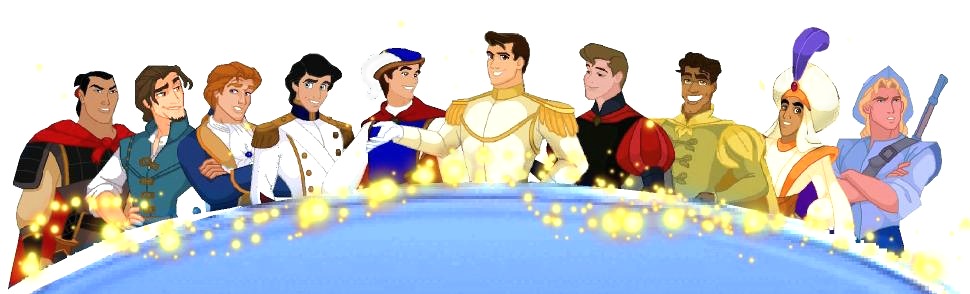
Therein lies the problem. Male characters don't have a problem with character development and representation in 'non-princess' movies, but for most of Disney's history, the men have had even less character and personality than the princesses. Consider Phoebus from Hunchback of Notre Dame, John Smith from Pocahontas, Adam (the human version of the Beast) from Beauty and the Beast, Eric from The Little Mermaid, and the nameless princes from Cinderella, Sleeping Beauty, and Snow White. Granted, the last three are older, but do the newer ones I mentioned really have that much more depth? Sure, there were sequels that expanded on these characters a tiny bit, but the most interesting princes/love interests in the 90s princess movie canon were the Beast (in Beast form), Quasimodo, Aladdin, and Shang-Li. You'll note that these are all societally-rejected or conflicted characters--Shang-Li's abandonment of Mulan on the mountain was very 'unprincely' and memorable. The majority, though, are bland as hell, and much less developed than the princesses. (A comprehensive list of princes and not-quite-princes can be found here.)


Source. Notice any similarities?

In contrast...


Consider princes from the most recent revamps of the franchise--the would-be princes in Brave are played for comedy, and are pretty dorky; Naveen from The Princess and the Frog is probably the most interesting character in the movie, and Kristoff and Hans have plenty of meat to their characterizations. The Prince in Enchanted was at least as interesting and sympathetic as the heroine, with faults to match (though the same cannot be said of Giselle's unmemorable other love interest), but I have to admit to a stumble with Flynn Rider. Flynn--in my opinion--is annoying as hell, but at least his thievery had more consequences than Aladdin's, and came with a deceitful personality. There's something to be said for that. In fact, like Naveen, he was arguably more interesting than Rapunzel herself, and went through more development. Disney has had a tendency to touch on subjects without actually exploring them, so the demonstration of more consequences and depth in a hero's personality and life is a very good progression. Real men (both in the sense of 'good men' and 'actual, 3-D humans that walk around and identify as male) aren't just villains OR heroes. They're lazy, strong, smart, stupid, naive, funny, lame, shy, and awkward; brash, quiet, gentle, sensitive, and sometimes, even boring. We're starting to see that shift, and it's overdue.


Is it changing?


Well, actually, the answer is yes. I don't know if it will lure more boys into the franchises, but at the very least, young girls are getting a better idea of what men can and should be like. Regardless of one's romantic or sexual preferences, getting the idea that men are more than cardboard superhero cutouts with money is pretty important. The idea that male characters can and need to develop right alongside their heroines is simply not there in a lot of female-targeted media. A lot of romance novels tend to blur over that or only add token development to the male leads, when they're not abusive and overly dominant jerks, of course.

So, all of that is very good, and girls deserve examples of realistic men--the song 'Fixer Upper' in Frozen encapsulated why quite beautifully, with the idea that no-one is perfect but love (and patience) can really help--but a constant refrain always punctuates this issue...


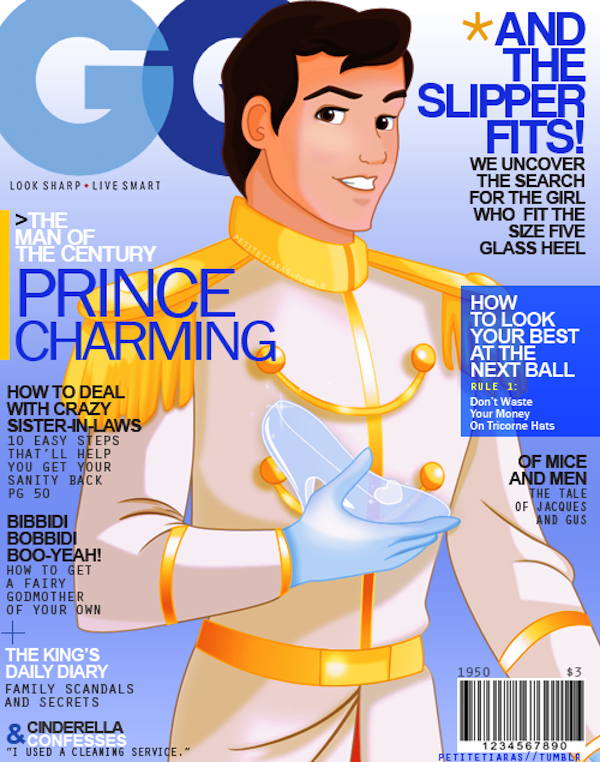
Source. Presented without comment.


But...but...princess movies are for girls!


Okay, but do they have to be? I do understand that princess movies are sort of a 'safe space' for a lot of women--girls and grown-ass adults alike--to bond over. However, the fear of boy cooties, much as it may be valid, is foolish and feeds into cloistering of gender roles. I have no doubt that these movies will still continue to be marketed to and written for girls.

This is a serious issue, because it means there's no hook for boys to participate in the princess culture thing easily. I touched on the way girls' toys are segregated in my previous list, and I want to continue with that point here; boys are still stigmatized for liking anything feminine. That's bad both for boys and for girls. Boys do, in fact, knit, bake, paint, and do other artistic things, and they aren't always puff-chested heroes or monsters when they do said things. The problem with assuming boys who do these things are gay is that it forces boys into an awkward feminine camp, to say nothing of the fact that leisure activities have little to do with one's sexuality, if anything.


What needs to be changed?


As always, I like to point the accusatory finger back at the audience rather than just decrying the company. I think Disney is honestly trying, and while they still have a long ways to go with both culture and equal representation, it's more important for us in the audience to adapt. Genderswapping characters and things like the Hawkeye Initiative are great for showing off systemic misogyny and sexism, but women have to take an equal role in making sure that our portrayals of men don't just continue the same negative trends. So, consider inviting a boy or two to that 'Princess movie night'. If you're a writer or artist, consider the way you're portraying men. Are your love interests all 'badass alpha males' or predominantly geeky boys? Are they ripped or otherwise 'perfect'? Is he a rich white dude, or is he a middle-class person of colour? It's time for us as creators to stop making our fictional characters self-inserts, the people we wish we could be or wish we could love. The world has enough cardboard princes. If even Disney can figure that out, so can the rest of us.

*****

Thanks for dropping by the nest once again. Don't miss any of the phuquerie. Find Michelle on TwitterFacebook, and on Tumblr. More interviews and witty commentaries are coming. Keep checking back to see those surprise posts, too. This is your darling SciFiMagpie, over and out! 

Sunday, 8 December 2013

Completely Snowed; How 'Frozen' Fixed The Princess Franchises (Girlcember Part 3)

Hello hello!

So, we've finally gotten to Frozen. I've kept you waiting long enough; for the cap on this series about Disney, let's talk about the one that fixed them all. Now, if you haven't seen Frozen yet, there will be 

SPOILERS SPOILERS SPOILERS SPOILERS SPOILERS 


With that out of the way, let's do a really fast run-down!


I would love to gush on about the plot, the brilliant twist of having a prince as a villain, the well-designed alternate love interest that actually avoided a triangle, the nod to the importance of consent in a kiss, the establishment of it being possible to save the day without a man, the relationship between the two sisters, the exploration of being an introvert vs an extrovert and how coiling into yourself is bad, the depiction of love developing through conversation organically, the idea that parents can mean well and screw up, and the fact that we now have a powerful female queen who is not evil but is a bitchin' ass mage of the first water. I could mention the gorgeous visual design, the proper use of 3D, and the nice historical flavour details (though there were some anachronisms). I don't have to to gush about every detail, but I'm going to hit on the big ones. 


Source.  I promise the annoying snowman isn't as bad as you'd think.

Real girls: We can has them?


The biggest thing that was fixed is that the princesses are based on an updated understanding of femininity. Anna has no self-doubt about her ability to rescue her sister. When we first see her as an adult, she is drooling on her pillow and her hair is an enormous floofy mess. She likes chocolate! She elbows people in the face, yet can scale rooftops when necessary! (And the clumsiness comes about when she's self-conscious or not paying attention--well done, Disney!) She even makes a bad decision over a boy and is too trusting! I love the fact that she's a bit dumb, too--doesn't always clue into things that are obvious. Finally, she has no doubt about whether she can club a wolf, scare it off with a flaming blanket, or talk sense into her sister. When she finds out her prince isn't so charming after all, she punches him off the side of a boat. She's genuinely brave, warm-hearted, and kind. There are consequences for her actions, but she never gives up on people. She's not just a princess, she's a hero--and somehow, she's not excessively perfect or annoying. And as for her sister...


That One Time Disney had a non-evil queen with magic powers


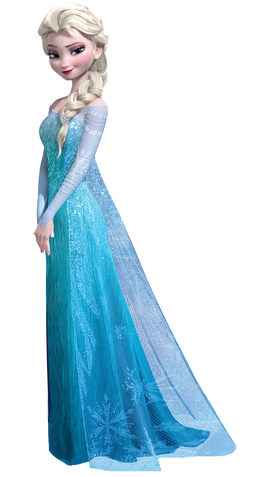
Let's talk about Elsa as well, the charming and powerful introvert. She's reserved, has been taught a bad habit of keeping her emotions to herself, and isn't forced to marry anyone. Her sister's princessly duties are dealt with, and so are Elsa's. It tears her up that she's hurting her kingdom and her people, but she doesn't know how to stop it. In order to deal with the story, though, she has to not only accept herself and her gift, she has to embrace it publicly and be okay with who she is. This is an awesome self-discovery story, very inspiring for anyone trying to 'come out' as an artist, a person who fits in the QUILTBAG categories, or anyone who has a gift that they don't know how to live with. There are naysayers and people who call her 'monster', but the whole thing is handled with a lot of grace and subtlety. That's good, because the two sisters actually get enough screen time for us to see how their personal stories progress without one of the two being sidelined.

Oh, and HOLY SHIT AWESOME MAGICAL POWERS THAT ARE ACTUALLY DEADLY. I don't need to say anything else about that.


Source. Sure, she looks cute, but fucking ice spikes, man. 

Jane Austen would be proud: how Frozen references Sense and Sensibility


I am a noted Jane Austen fan, and while S&S is not my favorite, I squeed when I realised that Frozen had lifted some of its plot from this excellent novel. The older, restrained, introvert sister Elinor? Sounds like Elsa. The young, impetuous sister who falls in love too fast, to her detriment? Marianne and Anna--that can't be a coincidence. If it is, I'll eat my hat (and my hat collection is fantastic, I'll have you know). There's also the fact that thematically, Elsa's introversion and emotional restraint backfire, while Anna's impetuosity and romantic nature also lead her into trouble. It was a nice dichotomy and a great reference. 

Oh yeah, the plot and the other things


I could spend this entire post talking about the fact that they used the 3D subtly and properly. It felt like it was really snowing, I caught myself wiping away water when it splashed, and I could have sworn the theatre got cold a few times. They used colour themes properly. Since the setting involved white people, Disney relaxed and went all out with the design. They almost never drop the ball on design, but this was still exceptionally beautiful. 

The music was better than it has been in any Disney movie for a long-ass time, with Idina Menzel's chops shown off to full advantage. (There was onion-cutting, as I said.) And oh god, they remembered how musicals work; the songs didn't feel forced, unlike in TPaTF. 

There were also references to my childhood favorite from Fox and Don Bluth, Anastasia. At one point, I looked at the tousle-haired, grumpy blond Kristoff and said to Andrey, "they made a Disney prince version of you!" Both male love interests and the bait-and-switch villain were sympathetic--subtly, they made the grumpy old British guy with the mustache both sympathetic and a villain--and they didn't fuck up the trolls too badly. There were satires on marriage, some important lessons about believing in yourself and not falling for love at first sight, and a really solid lesson on family that built on Brave's foundation. I don't even need to say that it passed the Bechdel, but hell, I'll give it points for that. Oh, and they worked in imperfection with the parents! 


Source.  I like to believe this guy actually gored those annoying fucking moose from Brother Bear to death in a cut scene, because this reindeer actually makes sense.

Okay, so 'perfect' might be a strong word...


I can't really ignore the whole cultural appropriation thing or the fact that Disney once again played it safe. While it has been confirmed that Kristoff is Saami, the portrayal of one of the indigenous peoples of the Scandinavian countries has been met with ire from both Tumblr and people of Saami descent. I can understand and sympathize with that--Disney does, after all, have a long and storied record of culture-mangling.

However, I think a lot of the angry Tumblrites missed something--Disney is making an honest effort in this case. A Saami composer was involved with the film, and Kristoff is an incredibly normal character. He is a reindeer herder, but there was nothing about him that--to my admittedly North American mind--flagged him as a horribly offensive stereotype. Not only that, he plays a love interest, not just a side-kick, and as noted above, he was an excellent character. So really, Disney mucked it up, but they're trying. They're actually trying now, you guys. Not to mention that they're implying a princess will be marrying this minority character from a population met with discrimination. Oh, and the actor? Yes, he's white, but he's the first openly gay voice actor to play a Disney prince.


Final Verdict?


If you haven't clued in that I honestly give this movie a perfect 10/10, let me make that explicit. I listed off the things that worked in a rushed paragraph at the start, but let me make it clear--this was pretty much a perfect movie. Half an hour of discussion with my fellow history-geek boyfriend, and the only real nitpicks were historical niceties like the incorrect (?) lack of guns for the approximately 19th century setting and some possible anachronisms with the paintings. And yes, they're both perfectly beautiful, but do we really need to go over the 'Disney makes girls look perfect' thing again? Extra points for the minimal showing of cleavage, though. I will also mention that the thing about Elsa remembering was sort of...cut, I guess, but enh, I can forgive them a dropped plot thread when everything else was so tight. 

So, is this a good holiday movie? Definitely. You can even watch it in summer, and you don't have to be in the mood for Christmas to watch it, either! 


*****

Thanks for dropping by the nest once again. Don't miss any of the phuquerie. Find Michelle on TwitterFacebook, and on Tumblr. More interviews and witty commentaries are coming. Keep checking back to see those surprise posts, too. This is your darling SciFiMagpie, over and out! 

Wednesday, 4 December 2013

Princess Movies, TNG: Disney's Continuation of Its Princess Franchise (Girlcember Part 2)

Hello hello!

Well, let's continue with Girlcember. Now, you might want to refer to this post if you're not sure why I'm mentioning really old Disney Princess movies, but in order to explain why Frozen is a significant achievement, I felt the need to go through the past. So, here's a quick rundown of other recent princess movies! Do note, for those of you who are sticklers, that this list has a proper count of which movies are 'official' princess movies and which ones 'don't count'. So, if you haven't watched some of these, be aware of


SPOILERS SPOILERS SPOILERS SPOILERS SPOILERS 


Now, with that out of the way, let's do a really fast run-down! Then, finally, on Sunday, we'll get to Frozen. 

Precursors, Part 3: Not Brave Enough


Oh, Brave. My Celtic heritage--Scottish, Irish, and French blood are all in my lineage--is something I'm proud of. I was pretty excited about a bow-wielding Scots princess. What I got was a box of tropes. While her relationship with her mother is excellent and well done, and Merida herself is pretty charming, the rebellious princess cliche kept slapping the audience in the face. It was handled well, including the beauty standards issues and the humanity of her parents, but that awkward ending where we're reassured that Merida will marry when she's ready kind of spoiled the whole thing for me. I loved her father's character, and her little brothers were actually done really well, but enh. 

I guess it comes down to that tropes thing and the lack of courage thing. Merida has her bow, sure, but basically it's love that saves the day. I don't even think she hurt the bear with her bow. Add in a Tarzan-level lackluster sound-track, and you have an awkward step down in quality from Pixar's usual faire. I know Merida is beloved on the internets, and I do like her, but there was so much more they could have done with this movie. 


Source. And that's even BEFORE we get to that damn Merida prettification fiasco.

Precursors, Part 4: Tangled--a bit too smooth, actually


I'm probably going to get hell for this one, too, but Tangled was another near miss. It's like Disney got drunk at the Xmas party and did its best Dreamworks impression. I mean, really. They had a strong Anastasia dynamic with Flynn--come on, tell me you can't see some Dmitri in there, and yes I know Anastasia is from Fox--and he comes off as the inferior male-pregnancy fanfic lovechild of Miguel and Tulio from Road to El Dorado (which is a much smarter movie than people think). I liked Rapunzel, especially when her hair was cut, but she's still...enh. She invented astronomy in her spare time and named her chameleon after a famous scientist and philosopher. Her superpower is hair parkour and wielding a frying pan as it was not meant to be...weld? I think it might be a sneaky reference to The Frying-Pan of Doom by Patricia Wrede. It's literally in TV Tropes, but I'm okay with the frying pan. Anyway--movie completely ignored that Rapunzel is a natural-born scientist. She got the crown and started experimenting with its purpose. She figured out that it could be used to heal and produce light. Someone get this woman a lab! But, of course, along comes a decidedly annoying dude and her dream becomes...him. 

And let's not talk about the embarassment of Mother Goethel. Shame on you, Disney, you can do better with villains, and you came so close. The music was wedged in, there were references to Shrek and The Little Mermaid shoehorned in (the boat scene), and over all...it was okay, even good in some places, but it felt forced. Like Hercules and other parody-toned movies, Disney is just no good at satirizing itself in a cynical way, and that really comes across here.

Fortunately, on Sunday we'll learn how Disney managed to learn from these mistakes for Frozen. And oh, thank goodness it did. We finally have an heir to the 90s Disney renaissance, and I'm pretty sure that Frozen might be able to bring a new one in. Why? You'll have to find out this weekend!


*****

Thanks for dropping by the nest once again. Don't miss any of the phuquerie. Find Michelle on TwitterFacebook, and on Tumblr. More interviews and witty commentaries are coming. Keep checking back to see those surprise posts, too. This is your darling SciFiMagpie, over and out! 


Sunday, 1 December 2013

A Princess and a Problem: Disney's Next-Gen Princess Movies (Girlcember Part 1)

Hello hello!

Sorry for the intermittent posts. You do not want to know how many manuscripts I have edited in the last couple of months. No, really, you DON'T.

Tonight, I got the chance to see Frozen with my boyfriend Andrey and his brilliant little sister. I was expecting it to be okay. Probably about Brave good, or Princess and the Frog good--that is, mediocre for Disney but not childhood-shatteringly bad.

What I got was a masterpiece that made my inner feminist jump up and down in glee, made my inner twelve-year-old jump up and down in glee, and my almost twenty-four-year-old outer self curse the bastard who had been cutting onions in the theatre.

Now, this is an analysis, so it goes without saying that there will be


SPOILERS SPOILERS SPOILERS SPOILERS SPOILERS 


...so turn back before it's too late if you haven't seen the movies yet! 

Right. Good? Good. 

I would love to gush about the movie, its design, and everything amazing, but in order to make sense of why it's so special, we need context. Serious context. Are you ready? Then let's kick off Girlcember with an analysis of why Frozen is so solid, and why its predecessors just didn't work. We're doing this in stages, and let's flash back to 2009.


Source.  So close, and yet so far.

Precursors, Part 1: The Princess and the Fail 


In addition to the numerous equality issues (link) regarding the portrayal of the African American MC--who spent most of the movie as a frog--TPaTF suffers from a mixture of both too much effort and too little. Disney's history with PoC--Princesses of Colour as well as People of Colour, in this case--is noticeably spotty. This movie, for me, had 'try-hard' written all over it. I was nervous but excited for the setting. I love jazz, equality issues, and Disney, so what could go wrong?

Well...everything, I guess. While Naveen was a noticeably excellent and well-developed hero, Tiana was kinda thin. She works her butt off, but the movie's endorsement of workaholic behavior, skirting around equality issues, and her excessively perfect personality just didn't make it gel. As with Ariel, she doesn't really grow or experience a serious challenge that requires her to change. Again, it's not bad, and it's worth marathoning, but the company was so scared of doing something offensive that it managed to be offensively bland instead. I appreciate that she was a hard-working and intelligent young woman, and that she earned everything she got, with the prince basically being a nice bonus. I liked that they had time and fantastic reasons to fall in love, and although it was inaccurate and a bit...ah, how do we put this?...stereotypical in the way it portrayed voodoun, I thought the various kinds of magic were pretty neat. That was a nice change, at least. That's a good description of the movie, though; 'nice'. But that's about it. 


 Source. Again, so close, but so far.

Precursors, Part 2: I Know It's Cheating, but Let's Mention Enchanted Anyway 


Enchanted came out in that really awkward period where Disney was trying to...I don't know, pretend its princess movies weren't a thing, I guess. There were piles and heaps of criticism of the princesses, particularly by White Women's Issues Weekly, but even I've done a post on issues with them.

I admit that I liked Enchanted, especially in the vicious bits of satire--I howl every time the rats and cockroaches and pigeons come up in that animal friend singing scene. I love the fairy tale prince. However, the queen, Nancy, and the single father love interest--I can't even be arsed to look up his name--were bland. The movie makes fun of Disney's heritage, but Giselle never does anything violent or really that subversive. Sure, she holds a sword and sort of accidentally knocks the bad CGI dragon off, but her purity is never questioned. I like the reversals and the satire and the whole-hearted goofiness of its parts, but it leans on tropes, and that injures the whole. I do like that it dealt with divorce, actual work, and differing ideas of beauty--Giselle, for example, sees the beauty in 'ordinary' women and manages to make the 'looking at the world with naive eyes' thing work. However, it plays the whole game too safe and yet manages to be too cynical in the same stroke. So, I like the movie, but like TPaTF, it's uncomfortable with itself.


So, I don't want to cram in too many ideas and mess up the length; let's tackle Brave and Tangled in the next post, and then, finally, we'll talk about Frozen and why I think it's the crowning achievement. 

See you soon!

*****

Thanks for dropping by the nest once again. Don't miss any of the phuquerie. Find Michelle on TwitterFacebook, and on Tumblr. More interviews and witty commentaries are coming. Keep checking back to see those surprise posts, too. This is your darling SciFiMagpie, over and out! 


Sunday, 4 November 2012

"I Can Fix It!": Or, the Magpie's Continuing Kudos to Disney

Hello hello!

Well, I wasn't going to suck up to Disney on purpose. I have an ambivalent attitude towards the company. Sometimes they do things that are very, very right. At other times, they screw up and make 'Latina' characters look white. This time, though, they mostly did things right. Here is my fairly glowing review of "Wreck It Ralph."

Let's start with a couple of caveats.

First, this isn't going to be a plot-based review, it's going to be analytical. I know plenty of people are already flooding the internets with their opinions on this one, so I'll be contributing mine in the most unbiased fashion I can muster.

Second, there will probably be spoilers.

All right. Feel forwarned enough yet? Without further ado, get your geek on, and let's talk about Wreck It Ralph.

Part 1: Geek Wankage Supreme With Pac-Man's Cherries On Top (Literally)

This is pretty self-explanatory. An inherent strength and weakness of Wreck It Ralph is that it is unabashedly targeted to geeks and nerds. With its arcade-game theme, Disney is making no bones about its target audience. This one is for 'us', the geeks, and if you're not at least somewhat familiar with classic arcade games or arcade-style games, you're not going to enjoy this nearly as much. Thankfully, since most people have heard of Mario, Sonic, Pac-Man, Mortal Combat, and the various kill-the-aliens/zombies games, even international audiences are probably going to have something of an idea of what's being referenced. Still, this movie is firmly rooted in pop culture to an extent I'm not sure I've seen before, travelling the line between fan-fiction and homage in a tap-dancing sort of way. I really can't decide whether it was a good thing or a bad thing that it flagrantly played to geek knowledge bases. It exists as a sort of shrine to the place these games have in our consciousness, and I'm going to let the professionals and history weigh in on whether this is a good or bad thing. Keep in mind that the film was in development starting in the nineties, and was only released now. Clearly, times have changed enough for it to be really marketable, and that says something. What, I'm still working on.


Source. I live for Wiki, seriously.


Part 2: Equality Epic Win Time

Okay. Now that I've gotten my first reservation out of the way, let's talk about geek culture a bit. It's fairly egalitarian, but still pretty ethnocentric to 'white' North American culture (though this is definitely improving). The cast for this one is definitely lacking visible diversity, which annoyed me. (That said, the short before the film, "Paperman", actually had not-entirely-whitewashed design elements for the characters, which was a nice little detail.) Most of the classic characters--when they were human at all--tended to be white, which you can't do much about, but the 'amorphous blob' and background characters should have had it mixed up a bit more.

Okay. I've mentioned that, and now I can glow and gush about the feminism epic wins. I don't think I need to mention that Jane Lynch is amazing in this, and an absolute scene stealer. The cast is fairly equal in female/male casting proportions, it passes the Beschdel (two named women must talk to each other about something other than a man) very easily, and best of all, the 'external' character, the gamer who sees some of the action going on--is a little girl. The little red-headed girl wears pink and is equally comfortable playing Hero's Duty, Wreck It Ralph, and Sugar Rush. It's so satisfying to see a tiny change like that, something that reflects the world accurately. There was a tiny bit in which two fat male geeks were rude to her and excluded her from 'Sugar Rush', too, which made me wonder if it was an intentional stab at the sexism in gaming.

Part 3: We Can Has Moral Complexity

I just mentioned the Sgt. Calhoun character, and I will again. She bears a second look just to emphasize that she's an ass-kicking woman who isn't made into either a man (her metaphors are hilariously feminine, and she still has a heart) or a mom by the end of the movie. I can't even tell you how happy that made me. Like Vanillope, Calhoun is sassy, and we lose nothing by two witty women in our main cast. Throw in an unexpected romantic path, and you have yet another proof that yes, there is hope for Hollywood after all.

Vanellope von Schweetz is an equal triumph; Sarah Silverman is very Sarah Silverman-y, though, and it's hard to get past. Even without that, the fact remains that this movie has a character with a 'disability', who is almost explicitly treated as a 'special needs' person, and referred to as a 'glitch'. Sure, the glitch turns out to be a superpower, and we have to deduct a half-point for that. Still, the fact that Vanellope is bullied and excluded by the other girls in a very realistic way was actually surprisingly moving.

Finally, I'm going to mention that the eponymous character, Ralph, is the one and only character I've seen in an 'accepting your place in the world' movie who didn't make me want to stab my eyeballs out with forks. I can't really compliment John C. Reilly's performance enough, but the way he stays true to the character's hopefulness while giving Ralph both bitter anger and darkness is brilliant. As well, the candy-car smashing scene that makes Vanellope cry might be one of the saddest fucking things I've seen in a while. I admit it, I teared up in the theatre.


Source. This is actually less sad than what happens when Ralph lies to Vanellope and disappoints her. LESS SAD.

Conclusion: Prognosis is Positive

I said I was going to be balanced, but I have to admit, for its flaws, this movie really swept me up. Sure, it speaks to 'my' subculture, but it also has a really solid story. The Candy Rush set is delightfully rich and well-imagined, to the extent that I was craving candy for the rest of the night. The blended elements are strange and creative enough to make things work. They managed to make unusual, original characters work in a strangely fused world. It's somewhat bogged down by referentials, but it's such a love song to video games that the references really make the movie. I can nitpick further on the equality issues and the feminism, frankly, but the rest of the implementation was very solid. The pacing is excellent, and designs and lighting really fit. There is a lot of love in the small details of this movie. It's a solid 9 out of 10 stars/rings/coins/mushrooms in my book. Stop reading my blog and go buy a lizard-loving ticket, you electric donkey-bottomed fools. Seriously. This is not a film you want to miss.

*****

Thanks for dropping by the nest once again. Don't miss any of the good kind of crazy. Find me on Twitter, Facebook, and on Tumblr. Don't forget to check back for short stories, more politics, analysis, scraps of science, and even some reviews. This is your darling SciFiMagpie, over and out!

Monday, 15 October 2012

First World Princess Problems: Disney, Entitlement, and the Hipster Movement

Hello hello!

I am back once again with the blog post I promised earlier this week. With a fairly sizeable American Apparel store on the way to work, hipsters are pretty visible as a part of my daily life. The movement wasn't one that I understood at first. I saw the fashion, heard some of the music--unless it was too obscure, of course--and set my brain to work, trying to comprehend it.


Source. This is pretty much half of your basic hipster wardrobe; however, fedoras, oddly-fitting 70s blouses, ludicrously high-cut pants, and chunky plastic jewelry are also mainstays. Oh, and those goddamn mustaches. Mustaches everywhere.


Part 1: Observing Hipsters

I could tell there was a trend going on, and I recognized the impact of Japanese fashion on its style, but there, my understanding ended. Thick-rimmed glasses and a mishmash of stylistic references to different eras that were combined into a decidedly unique look, generally involving Apple products. Hipster fashion was everywhere, growing each day, and yet, to be called a hipster was an insult. The look is praised and derided in the same breath. It has managed to retain an exclusive cachet even as overweight North Americans everywhere are trying to squeeze into sterility- and embolism-inducing skinny jeans.

Just in case you, dear reader, are confused by the term hipster, I'll provide a brief description of the word's application in most modern contexts. The current hipster look and attitude are stereotypically characterized by exclusivity, streamlined clothing cut for those with a lower-than-average BMI, expensive electronics, obscure music by mostly independent artists, and the traditional snarkiness every cool group displays at its zenith. Skinny jeans and an androgynous look are generally the norm, and a pseudo-worldly display of international interests combined with affected quirkiness are hallmarks of the attitude that matches the clothing.

Of course, this description is leaving out the history of the hipster, which is an evolving movement that takes its roots from Jack Kerouac and other Beat poets, as well as from Andy Warhol's Factory crew. Still, don't let the description fool you--most hipsters are, as with any trend, far less extreme than in typical descriptions, and quite a few people can make the fashions work without having to display the less tasteful aspects of the attitude.

I'm going to touch on a previous column, which dealt with cultural appropriation and skimmed over how to avoid it. I mention it because affecting 'tribal' styles without a specific ethnic origin and using 'first Nations inspired' designs, such as feather headdresses, are common to hipster styles. A lot of important touchstones for non-Euro-American cultures that happen to look cool get borrowed and recycled in the hipster look. I don't think I need to explain why using sacred or culturally sacred symbols for casual fashion is bad and pretty disrespectful.

Still, because I don't want to rehash what most of the internet has been bitching about for the last couple of years, I'm going to skip ahead to the part that involves Disney. We all love Disney, right?


Source. There's your overlap. You've been warned.


Part 2: Disney Princesses

A few friends of mine have started to rear their own offspring, and the rest--including me--still use this and any other excuse to enjoy some Disney nostalgia. There's no getting around it--ostensibly evil, money-grubbing, exploitative corporation or no, Disney is a company that makes a good kid's movie. I'm not going to get full-bore feminist on everyone's asses, and we'll talk more about why Disney is both very good and very bad another time, but the fact remains that good songs and good animation resulted in some good movies.

The princess movies in particular have done a surprisingly good job of surviving their over-marketing. In spite of being saturated with merchandise and sequels related to the roughly grouped stories based on carefully retold fairy tales, we aren't sick of them yet. The beauty of The Little Mermaid, Cinderella, or even the somewhat condescending Princess and the Frog film still remain, even with the faults of the films.

I hate to gut something that formed such an essential part of so many childhoods, and I hate to restate the obvious or oft-said even more, but the princess films have also done a fair bit of damage to our psyches. In addition to the body issues, the presentation of love as the end-all and be-all of life, and the easy solutions, the princesses generally had to put in only token effort to have the world delivered to their feet. Perhaps it is natural, then, that movies associated with white privilege and the style associated with white privilege have overlapped so neatly.

The thing is, the princesses always sought 'more', a certain meaningfulness to their lives that they just couldn't put in place. Belle was unfashionably intelligent; Ariel, curious about a culture she was restricted from interacting with; and Jasmine, unwilling to hide from the world once she'd gotten a taste of life beyond her castle walls. The older princess films were made in a time when marriage was the only thing that mattered, and the newer films have been made with Disney trying to compensate for its past failures, so they lack the soul-searching elements that made the 90s era Disney Renaissance films so good.


Source. More dress-up time, to give your brain a quick rest and some fashion candy.


Part 3: The Point

You were probably wondering how these two were linked, and whether the entire post was an excuse to show these drawings. (It wasn't, I promise.) The hipster movement's roots had to do with disaffectation with privilege, and its current manifestation is both reliant on Western wealth and Western discomfort with this wealth. Yes, we're currently experiencing a job crisis in America, but up here in Canada and down in the States, most people still have enough money for that iPhone, and will still make sure that their second-hand clothing is fashionably tight.

For young women at the moment, then, whether we're comfortably swaddled in the illusion of security that university provides or out and learning the joys of long-term work in retail, these films still resound. Those of us who were born into the 90s or 80s, we 'millenials', were promised the world. And, having gotten it, or having had it snatched away by , we want 'more', a thing we can't put a name to but keep searching for. Like the girls wandering around their family's gardens and singing about their discontent, many of us feel incomplete.

The hipster movement soothes these feelings nicely, with its concentration on aesthetics and arbitrary acceptance and rejection system. The stories that resounded with us as children still resound now, well after their appeal should have expired, for the simple reason that we are trying to find meaning, and failing.

At times like this, it's hard not to scowl and point to people like Malala Yousafzai, one of millions of girls who would kill for the educational opportunities that we grudgingly endure and even squander here. What the hell are we complaining about, one might ask, and not without reason. Privilege, though, and the easy access to money, social supports, and parental back-up plans, are their own traps. The disintegration of these backup plans as the economy has failed hasn't really fixed the problem of growing up in a world where life is easy and hard questions are optional.

Am I saying that the answer to our desire for 'more' is activism rather than indifference? Well, possibly. It certainly beats settling into that sufficient job and sufficient house and wondering why being able to afford most of one's wants just isn't satisfactory. The thing that gives someone's life a meaning may be something big, like getting equal educational opportunities for women, or it might be something smaller, like making art. Still, if there's one thing we can learn from the princesses and the hipsters, it's that ambient levels of wealth won't keep us happy, or keep us from looking for something more significant. Romantic love alone certainly isn't the answer, but there are answers out there. Looking, and looking beyond the next iProduct upgrade or temporary entertainment, is the only way to find that vague yet recognizeable quantity, "More". "More"--it's the new American dream.

*****

Thanks for returning and patiently waiting for your late Sunday night fix. You can get "more" --and by that I mean MOAR, of course--Twitter and on Tumblr. Don't forget to check back for short stories, more politics, analysis, scraps of science, and even some reviews. This is your SciFiMagpie, over and out!
Google+