About Me

My photo
Author of queer, wry sci fi/fantasy books.
Showing posts with label activism. Show all posts

Friday, 13 July 2018

Evil is Boring, and Other Unexpected Things

Like a chipmunk crouching in a forest next to a nuclear reactor, Canada is in close proximity to the slow-motion disaster that is the United States of America. With a president who coasted into office on a wave of electoral fraud constantly compromising the safety of the country's information and people.

A part of me - perhaps unbelievably - is a little embarrassed to be excoriating Trump as thoroughly as I am, even though it's nearly a universally understood truth at this point - and even though his party's legislation has directly resulted in the caging of immigrants and their children, and their detainment in concentration camps.

That said, I think one of the hardest things to understand about Donald Trump is that, inasmuch as he's basically as evil and villainous as it gets, he's not the kind of villain I was raised to to expect.

What is evil?


That's a complex question, but for our purposes, I'm going to reference both aesthetics and intentions. My personal stance on evil is that it's more of a verb than a noun. One's actions, weighed in the balance of their impact, as well as the current historical or contemporary perspective, tend to determine whether or not one is classified as evil. For instance, Winston Churchill tested mustard gas on Kurdish villagers before deploying it during WWII, and the otherwise admirable Franklin Delano Roosevelt, who created the "New Deal" and a number of important social security measures for American citizens, also was responsible for the internment of Japanese-Americans. Canada has its own examples of leaders with similarly mixed legacies. In the context of colonialism and that resulting violence, it's hard to canonize any leaders, especially those in the "New World."

That being said, Adolf Hitler's actions and his legacy are pretty good examples - nearly archetypcal examples - of what we see as evil nowadays. (Well, those of us who are not neo-Nazis, anyway.)

But do they look evil?


Between Disney and other fantastical films, very clear portrayals of "a villain" emerged - a villain was supposed to be stylish, attractive, usually or frequently non-white, damaged, and either coded-gay or overtly homosexual (sometimes asexual). In contrast, heroes - especially in the nineties - were usually laid-back slackers, usually white, straight, and male; always heterosexual, and both mentally and physically well, often athletic or extremely nerdy, and usually lacking self-confidence and/or social skills. Frequently, said heroes were disproportionately popular, due to some inexplicable "leadership quality," and I'm sure many of my readers will be familiar with the token reward girlfriends usually accorded to such heroes as a matter of course.

The state of the present


Much hay has been made of the idea that young white men grew up seeing themselves as heroes based on their birthright, and therefore, have not had to do anything to deserve that mantle. Said young and less-than-young men are also increasingly fond of mocking marginalized people who dare set boundaries on the portrayals of their cultures, sexuality, and themselves.

Given that white men and white women voted for Trump in droves, and have continually shuffled out of the way when held accountable for inequality issues, I feel it's fair to say that both the left and right have come to see straight, white, cisgender, heterosexual, and able people as - well, the "enemy," or at least a source of antagonism - and as a "persecuted minority," respectively. That said, from what I can tell black people and other people of colour don't really hate white people, not really - but centuries and decades of persecution and marginalization and abuse have led to a lot of pain and entirely reasonable resentment.

More recently, in addition to the many nigh-endless microaggressions and larger acts of violent discrimination perpetrated against people of colour, images of the cargo shorts-clad and tiki-torch wielding racist protesters trying to "defend their white heritage and children" are inescapable. For white queers, a similar dynamic exists with "the straights" - it's not that we hate straight people, but we exist in a constant state of trepidation, wary of that moment when a friend or relative will suddenly reveal that they hate people like us, or have no interest in preserving the rights of people like us.

Because narratives cut us out of the spotlight or cast us in antagonistic roles, queers and people of colour grew up fixating on minor characters and often, on villains. When I thought about it tonight, my heart cracked to realise that the people who were supposed to be the heroes fighting injustice - ordinary white men - seem to care little about our rights and their so-called birthright - and those who were always cast as villains had ended up being, well, the ones fighting for people's rights to marry, control their own bodies, vote, and not be incarcerated or killed on fatuous or fabricated charges.

Coping with it


On the other hand, I finally had the emotional resources and the chance to watch Black Panther recently, and I think the movie - which did not disappoint - offers both hope and some potential solutions. Martin Freeman's (hilariously) American CIA agent is overtly (and rightly) called a colonizer, but he learns to listen to Nakia and Shuri rather than questioning them or assuming he knows better. The movie nods to the historical reality of American interference in other countries' governments, but unlike Andy Serkis' character, he doesn't refer to the Wakandans as "savages."

The peaceful resolution at the end of the movie brings tears to my eyes as I recollect it. Conquest and murder won't make reparations for the sins of the past (and present). But resources and nurturing might, and will save the current and future generations - as well as enriching all of us.

And personally, that's the future I want. Let me be clear - as a scary leftist, all I want is for everyone in my city, my province, my country, my continent, and this world to be housed, fed, and safe; for people to be happy, healthy, and loved. That includes the straight, white, cisgender people, not just the marginalized.

I want to see what the world can be if we work together to take care of it. I want to see what kind of art we can produce when we have the opportunity to make it, and what we can discover if we put the resources towards the sciences. And from what I've gleaned from talking to anarchists, communists, socialists, and even many people on the liberal spectrum - that's what all of us want.

But to do that, we have to figure out what we're fighting for, and maybe, who we're fighting.

As a writer...


I was never prepared for this eventuality. Will Ferguson's Happiness (TM), a book in which the end of the world is wrought by a self-help book, had some excellent points about the banality of evil. I think a lot of us still think of evil as stylish and classy, but where in that schema do we place a tasteless human vuvuzela like Trump? The bland and smiling "worst teacher you had in high school" persona of Mike Pence has something of a place in the rogue's gallery of archetypes, especially in dystopian fiction. But how do we reconcile with the fact that the people we were taught to trust and idolize - for instance, cops and parents - are only too happy to hurt us?

Honestly? I don't have an answer, so I want to know how all of you feel about this. Reblog, comment, and answer - how do you feel about this reversal? How are you going to write about villains and antagonists?


***
Michelle Browne is a sci fi/fantasy writer. She lives in Lethbridge, AB with her partner-in-crime, housemate, and their cat. Her days revolve around freelance editing, knitting, jewelry, and nightmares, as well as social justice issues. She is currently working on the next books in her series, other people's manuscripts, and drinking as much tea as humanly possible.

Catch up with Michelle's news on 
the mailing list. Her books are available on 
Amazon, and she is also active on MediumTwitterInstagramFacebookTumblr, and the original blog. 

Wednesday, 4 October 2017

Dungeons and Representation: How a Podcast Did Good

Hello hello!

So anyone who follows me on Twitter - or anywhere, really - has probably noticed that I am majorly into podcasts. I've alluded to my love of tabletop RPGs on more than a few occasions, and as a fledgling DM (Dungeon Master - the non-BDSM kind, though there's a surprisingly large overlap between the two communities...) I like to take inspiration from the best.

Before I explore today's topic in detail, a few recommendations - in no particular order, Critical Hit, How We Roll, One Shot, Campaign, The Adventure Zone, and Dungeons and Randomness are all funny and wonderful programs that showcase both inclusive gaming (on and off the table, for the most part) and really, really good storytelling. Writers and geeks should check them out. Don't worry about the rules; these podcasts are almost all story-focused, so it doesn't get too mathy and crunchy.

With those recs out of the way, I'd like to focus on D&R in particular. Having recently completed its 200th episode, the four (!) groups sat down with the DM, Jason Massey to talk about their experiences.


What happened 


Now, two hundred episodes of anything is a trip, but I'm a binge-listener and a completionist, so it wasn't a big deal for me. However, the beginning of the series was pretty rocky. The first group to form, known as Group 1, was an all-male group of friends who'd met through the wrestling fandom. There are a lot of wrestling fans who also play D&D, for some reason, so that's not a problem - but the group dynamics were.

Beleagured DM Jason and hapless party leader Rob Wiesehan, playing tiefling warlock Malchus Grimnas, then spent about fifty episodes trying to rein in the murderous and careless shenanigans of this initial group. It's honestly a fascinating tour through toxic masculinity - players screw, rob, and murder their way across the land of Theria, and as Jason's worldbuilding becomes increasingly intricate and rich, most of the players enjoy being dicks more than they do abiding by the social contracts of D&D, to quote Rob.

What social contract? 


Here's the thing about Dungeons and Dragons and most other roleplaying games - it's pretty essential, as Rob explained, that the other members of your party are trustworthy enough to not murder you in your sleep, screw you out of things like healing potions, share resources, and fight on your side during battles - and not, say, engage in player vs player combat or act in needlessly antagonistic ways. Interestingly, a couple of the early players from the group seemed genuinely baffled about why it might be a bad idea to act like dicks and fight people who are supposed to be on their side.

Now, group dynamics are an inevitable part of human interaction. We're social animals, and that means we're liable to be jerks and conflict with each other, but it's totally possible to ride out those painful spasms and create a lasting D&D group. Sometimes people leave, which is why inviting a few more people than you think necessary is often prudent. But it's a very important and basic part of this system, and most systems, that you do not screw over the people who are on your side.

The fact that multiple players in Group 1 just didn't understand this is fascinating, and honestly, only seems to have happened because it was an all-dude group. Broish humour is fine, but ripping on each other, jockeying for leadership, and being unnecessarily and often destructively subversive often led to doom and disorganization.


Have some eye bleach: fan art of characters from the Adventure Zone, in Halloween costumes as *other* characters from The Adventure Zone - who are also lesbians. This picture has lesbians ^2. You're welcome. 


When it got better


Perhaps because of Jason's expert implementation of consequences in the storylines, to an extent that many traditional creators should follow, the actions of many Group 1 members caught up with them. It seems that murdering, betraying, and robbing people willy-nilly is kind of not great. While the other groups and players sometimes made ethically questionable choices in the storyline, they always weighed them carefully. Una Anhelada, a gutsy devil-may-care paladin played by Izzy Chadwick, often spearheaded these - but her seeming recklessness and impulsive nature still included concern, empathy, and care for both her party members and fellow players.

As time went on, the DM added more groups, each of which went through their own growing pains.  Holding auditions for new players meant screening and better integration of people, something important for a show, and interestingly, also brought a flood of lady players, as well as at least one non-binary and later trans male player. Not everyone there was white, either, which is a silent problem besetting many D&D games, but a welcome change here. Among the new blood was Brienne Marie, a delightful pixie of a person with a filthy sense of humour and a sparkling laugh. Quickly becoming Jason's platonic soulmate, her addition to the cast marks a sharp change in the show's style - very much for its benefit.

This isn't to say that GIRLS ARE ALWAYS BETTER, because a few of the new lady inductees were pretty irritating - and left quickly - but the most destructive players in the game were definitely all men. Their behaviour patterns had a lot in common, too - a determination to have their desires and goals met, often at the expense of the party; a refusal to accommodate others' needs and priorities, and toddler-like tantrums and antics when their requests were denied.

Back to Group 1 


Group 1 went from being the primary party in the setting to an exception.As the other two, then three, then four (! counting a bonus group made of existing players) groups quarreled and debated and resolved conflicts in satisfying and interesting ways, Group 1 remained somewhat stuck in the past. When party members finally began to murder each other, in a culmination of the rivalries and toxic dynamics, virtually only Malchus remained. Because the players either selfishly focused on their own gimmicks and jokes or sabotaged each other, often both, Malchus (and Rob, his player) were exceptional. As the group reformed once, then twice, it gained lady members and non-toxic male members - and underwent a drastic transformation.

Even as Malchus grappled with the impact of his actions, the group would discuss their decisions carefully and cautiously. Not exploiting others, picking up a dorky and endearing young NPC wizard-fighter (who subverts the trope of that combo brilliantly), and helping each other in heartwarming ways, Group 1 became radically different from its roots.


But Not All Men 


The thing is, men don't have to suck. Male and female players can both participate in toxic masculinity, but focusing on sharing the spotlight, resolving conflicts without in-character violence, not plotting and planning about other player characters behind their backs - and out of character - and above all, just not being awful dicks to each other, will all result in much better table experiences. It's fine to create evil or morally ambiguous, selfish characters. But it's vitally important and mandatory for people to keep their character personas and grudges separate from in-person dynamics, and to settle table conflicts as soon as they happen.

D&D is easy to get invested in. The shared storytelling, improv with dice, and creating a world are intoxicating and empowering. Add in the capacity to be something impossible or better than one is in the real world, and you have a heady brew - but it's easy to get emotionally invested in one's persona and the storyline. When everyone's invested, and at least somewhat working together, it's a hit of pure magic. But even if the characters are planning to double-cross each other, players at the table have to use boundaries and not harm each other.

Failing to do this results in Reservoir Dogs - like chains of revenge and can absolutely ruin friendships forever, because of the basic lack of respect they represent. But working with the other players and keeping in-character conflicts and rivalries separate from real life makes sure everyone at the table can walk away with a spring in their step and an easy mind.


***

Thanks for returning to the nest. Leave a comment and say hi! I want to hear from you. Keep up with the new releases by getting on the mailing list. Buy my books on Amazon, and keep up with me on TwitterFacebookTumblr, and the original blog. This is the one and only SciFiMagpie, over and out!

Saturday, 4 March 2017

Censorship and 'Censorship': Who Gets to Speak?

Hello hello!

In the increasingly surreal absurdist comedy that is current international politics, the issue of free speech has been awfully prevalent. With the new development of sensitivity readers and an outsized backlash to their existence, as well as cries of outrage over the cancellation of Milo Yiannopoulos' book contract, a lot of people have taken these as 'attacks' on free speech. Meanwhile, Beauty and the Beast is being banned from certain theatres because the character Le Fou will be openly gay.

There will be people who say that these actions are on par. Neil Gaiman, who I love and respect, wrote an essay to that effect about nine years ago.

There was a time when I would have agreed with that essay, because after all, who does get to speak? Is there really a difference between public censorship and government censorship? Is refusal of a business to deal with an individual really censorship at all?

The thing is, all taboo or unpopular comments are not created equally. The people who would like to have the freedom, or 'freedom' to support violence and harassment against others are eager to make the claim that they're doing so for the sake of provocation, but it's funny how they never stand up for, say, the gay or 'ethnic' people who are also saying socially unacceptable things.


"Censorship" versus lack of support 


Censorship refers to the practice of an official, government-led organization removing or culling content for the sake of a moral agenda. Refusal to allow a speaker or publish a book due to protesting is not government censorship, it's a decision for the sake of consumers. That's well-trodden ground and I don't plan on tramping it into smoothness yet again. Rather, I'd like to focus on the real issue - that all 'unacceptable' speech, as I'm going to call it, is not created equally and does not come from equally supported, safely-positioned, societally enshrined sources.

Who's the target? 


For a long time, the broad left and the liberal segments of the right have grappled with the idea that people want to voice and discuss things that aren't socially rewarded. Sometimes these things are simple, like, 'black people are treated badly', and sometimes these things are basically underage teen girl porn by famous authors.

There's a certain idea that's been prevalent since the 90s; namely, that offending people is automatically good or moral in some way. In television, from my understanding, there's a weird attitude of equality in terms of who is allowed to be targeted for offensive jokes, which gives the inaccurate idea that all groups have equal weight in choosing targets. With this idea, offending everyone is fine, even moral, because it 'makes people think' or 'shakes them up'.

But pretending that all ugly speech is created equally is a fallacy that has allowed the proliferation of hate speech and violence of various kinds. It comes from the same idea that everyone is born with the same opportunities and advantages, when that simply isn't the case. Black people in the USA die four years earlier than white people, Trans people experience disproportionate rates of mental illness and violence, leading to a shockingly low life-expectancy - roughly age thirty. Simply being born or developing a particular set of circumstances has a drastic effect on people's lives.

It's an ugly but empirically proveable fact that being a woman subjects one to greater risks of sexual violence and limits career advancement, that being transgender has the same results but multiplied, that being disabled in any way  results in a lower lifespan, that being a sex worker carries both danger and stigma, and that being a person of colour, or fitting into intersections of any of these groups, has a magnified effect of inequality. I haven't cited every one of these ideas to avoid turning my post into link soup, but it's not hard to find support for them.

Who gets to say what?


The problem comes from the fact that some people are used to hearing certain things on a regular basis, and some experience disproportionate harm from these things. A black woman listening to a "n---" joke from a fellow black comedian may experience commiseration in the context of talking about a shared experience. The same joke from a white comedian plays into historic and present inequalities, and even if it's intended in a friendly way, can reinforce those inequalities.

With that in mind, considering the audience targeted by a certain piece of art is essential to deciding on whether or not to support that art's expression. The time has come for us to choose which 'free speech' we're going to support, and I personally plan to use the audience and targets to determine the people I'm going to stand behind. The idea of 'punching up' compared to 'punching down' is unquestionably vital here. Sometimes intersectional nuances can make it difficult to choose a side, and in those cases, a full-force attack is less necessary than a careful, mediated conversation. But in a lot of situations, the people experiencing blocks and resistance tend to be those disempowered by social circumstances.


"But everyone protests things!" comes the counter-argument. "We need to be able to say awful things just in case..." 


In Canada, as well as many other countries, hate speech is punishable by law and considered separately from other forms of free speech and self-expression. In the US, that is not the case, and it's because of a refusal to acknowledge that saying ugly things about people who can be harmed by them is different than annoying people.

It's really worth considering why it's so important to demonstrate one's freedoms by vocalizing aggression or violence towards others. Since white people and men in general tend to be protected by social structures and the way laws are enforced, it's vital to realise that things that hurt our feelings seldom hurt us in ways that leave a lasting impact. Feelings do matter, but in the context of violence and poverty, refusing to be criticized because it's annoying seems awfully greedy.

What does this mean for writers? 


Those of us who create content play a role in creating culture itself. Instead of being upset about sensitivity readers, it's better to embrace them and appreciate their role in helping us improve our fiction and ensure its fairness. Sure, there will be times when an issue is nuanced and sticky and effects a couple of groups of people on the sharp end of prejudice, or when people from the same group have multiple differing opinions on content. For example, Asian people are divided over Madame Butterfly and Miss Saigon, which provide casting opportunities but reinforce prejudiced ideas. While it's seldom possible to please everyone, doing the best to satisfy most people, or at least the important people, is generally advisable.

As for situations where portraying a troubled or troubling character is 'part of a story', it's important to think about one's own 'artistic integrity' in the context of the social world we live in. Where have your ideas about this character come from? Art can feel like magic sometimes, but treating it as an uncritiqueable sacred cow both cheapens its quality and lets creators get away with not challenging themselves or their beliefs. At the end of the day, it's not easy to strive for equality, but it's the right thing to do in so many ways - and that's why I support some forms of challenging media and art, and refuse to support others. Milo Yiannopoulos can get phuqued.

***

Thanks for returning to the nest. Leave a comment and say hi! I want to hear from you. Keep up with the new releases by getting on the mailing list. Buy my books on Amazon, and keep up with me on TwitterFacebookTumblr, and the original blog. This is the one and only SciFiMagpie, over and out!

Tuesday, 13 September 2016

Why I Bailed on Activism

Hello hello!

As those who follow my Facebook, Twitter, and Tumblr antics may have noticed, I've really pulled back on content about human rights issues.

What the hell?


The problem is, I started to buy into a fallacy that plagues both conservative and left-leaning activists - being right is more important than making people happy. I definitely did this when I was younger, and hadn't yet learned argument mediation skills; as I've aged through the last ten years or so, I've learned that being right only feels good for so long.

Of course, that doesn't mean that bending over backwards to make people happy, the strategy I lived by in my early teens, is particularly wise, either. But for me, personally, as a person who was supporting activists and trying to spread word about certain ideas, it was too easy to lean on the comfort of moral superiority. I saw a lot of people I looked up to doing that, for one thing. As well, there's a really uncomfortable habit that people in radical left circles share with radical right circles - withholding affection and attention until the person interacting with them abides by certain behavioral patterns. If one is a teacher's pet, i.e. a person vulnerable to authority figures, it's very easy to become obedient or toe a party line, even when personal ideas may start to conflict with that.

Even the 'good people' aren't always...good. 


I've seen a surprising number of people - most white, but some people of colour as well - engage in really interesting rhetorical backflips in order to stay in line with others. For instance, being an activist but refusing to educate well-intentioned people under any circumstances. Education can be exhausting, but it's also the point of raising awareness. And yes, sometimes demands for education are used passive-aggressively, but leaning on facts and basic information can still result in productive conversations.

Another thing I've noticed is a tendency to focus on either guilt performance theatre or deliberately ignoring areas of non-disadvantage. So, a person who is genderqueer and asexual and from a middle-class background might underline their sexuality and gender identity, but avoid talking about finances or their own white privilege. Alternately, they might bemoan their own lack of "wokeness" and limitations imposed by said background.

Power structures and dynamics in such conversations can be complex at the best of times, and there are countless articles on how to navigate them. I do think communication issues and awareness of personal circumstances and limitations are important, but the hostility, defeatism, and pessimism of social activism really started to get to me.

It's funny, but sometimes it seems as though people are happy to slap down trigger and content warnings for things that affect them, but not willing to abide by the same requests when brought forward by others. I have a large number of now former friends who claim to be sensitive, motivated by change, and proactive in mental health issues, but who were all too happy to weaponize triggers when it served their purpose in an argument. Can't deal with an article on a given day? Clearly you're not that committed to The Cause, or endorsing prejudice against a certain group. Can't make a commitment because of a mental health issue? Citing your own depression is ableist!

You can probably see how that takes a toll on someone, or at least, on me.


Source


Bad social dynamics, the breakdown 


A comment can be a misstep in one case and highly offensive in another. When it comes to interacting with other people, situational cues are better than hard and fast rules. Since I've returned to giving people the benefit of the doubt, I've been able to make more inroads with discussions, and I certainly don't lose nights of sleep or cry over something that led to an argument.

One of the things I like about environmental activism is that there are clearer goals. Things can be measured. With social activism, sometimes people would look at a win and go, "this isn't enough". For a person with my background and mental issues, that turned out to be really toxic. I started focusing on negativity and terribleness too often, found myself stuck in endless argument loops that didn't seem to have a clear answer or solution, and sometimes, ended up on the sharp end of attacks when my own mental health issues meant I couldn't be perfectly objective about something.

 Beating oneself up accomplishes nothing, and being around people who encourage self-flagellation as an outlet for guilt is toxic. Constant pessimism is not realism, it's a bad habit of mental health. That's not to say that optimism is required at all times, or that people should sit down and shut up - but if all we do is punch sideways and downwards, what's the point of all this?


This blog post won't be good enough for some people, and may be a huge disappointment. And that's okay. But for the rest, know that I'm still on your side, on what I'm pretty sure is the right side of history as well. But I've been wrong a few times, and learned to move on, and I hope that other people who find themselves exhausted by the world will take comfort in this.

The thing is, I haven't changed any of my perspectives. In the world of writing, I will still be pursuing representation and fairness. I will write protagonists of colour, of queerness, and with mental health issues, and they will be protagonists rather than sassy supporting characters or tragic tokens. I believe in a better, fairer world. But I have also realised that, as my friend and mentor Katie de Long put it, I can't light myself on fire to keep others warm.

In any case, I have Black romance novels to edit, Afropunk beauty articles to share, and novels to write. I have fellow writers to support, friends to encourage, and other stuff to do. I've been trying to save the world too long, and now I've got to save myself.

***

Thanks for returning to the nest. Leave a comment and say hi! I want to hear from you. Keep up with the new releases by getting on the mailing list. Buy my books on Amazon, and keep up with me on TwitterFacebookTumblr, and the original blog. This is the one and only SciFiMagpie, over and out!


Wednesday, 31 December 2014

Feminist Fist-Fighting: How Teardown Culture Hurts Activism

Hello hello!

So this has to be one of the hardest entries I've ever had to write. First of all--how does one criticize teardown culture without it sounding like tone-policing or idea-policing? That's tricky. So, a disclaimer.

You are entitled to think whatever you'd like and say whatever you'd like, whether you are a feminist or not. However, no-one is immune from criticism. That said, all criticism should be taken in context of power structures--if you are criticizing someone who is less powerful or privileged than you are, you may want to rethink your stance. Having more privilege means your words will carry more weight. Be kind, and do not silence others. 

That paragraph is extremely important, and I'd like anything else said here to be taken with that context. After all, punching up is a lot harder than punching down, and it's oh-so-tempting and easy to take potshots at someone because what they say has made you uncomfortable. Or because they criticized someone you like--even if that person is in the wrong. (For the record, I can't help still loving Amanda Palmer...but I won't defend some of the dumb shit that's fallen out when she's opened her mouth.)

With that said, we kind of need to do something about this intra-feminist teardown culture thing.


What is teardown culture?


I've noticed that there have been a lot of articles lately about various feminists insulting other feminists. Now, obviously, people aren't perfect and their actions merit criticism. I love Amanda Palmer, but she's done some decidedly stupid and bad things. Apologized for them as well, but they did still happen. Criticism and critique are part of a healthy culture, so it's fine to leave room for them to happen.

What makes me uneasy is when I see people on my friendlist saying that "feminists are stupid because ___" (lately, Feminists Are Stupid Because they didn't like a man's shirt.) The most common one is that feminists focus too much on the small things, "microaggressions", rather than "big things". The problem with that is simple--small things add up to the big things, and microaggressions in conversations prevent dialogue about said big things. If you have a conversation and someone is undermining you constantly, framing things so that you look unreasonable and hysterical (hysteria itself is basically the most sexist diagnosis ever), the conversation about 'big issues' can't even happen. It's particularly bad when feminists do this to other feminists.

 I'm really, profoundly uncomfortable with Annie Lennox saying these kinds of bad things about Beyonce. As a white woman, people are going to listen to her more. Sinead O'Connor also tore a strip off Miley Cyrus a good long time ago, and as an older and more respected artist, people wrote Miley off as a dumb young teenager. (Admittedly, her response was incredibly tasteless and referred to O'Connor's bipolar disorder.) There are important discussions, and then there are things like what Lennox said, and those comments don't help. There are all kinds of arguments, and the people who get listened to are usually the white, able, rich, cis ones. You don't have to like it, but it's a fact--and it's demonstrated by things like arrest rates.


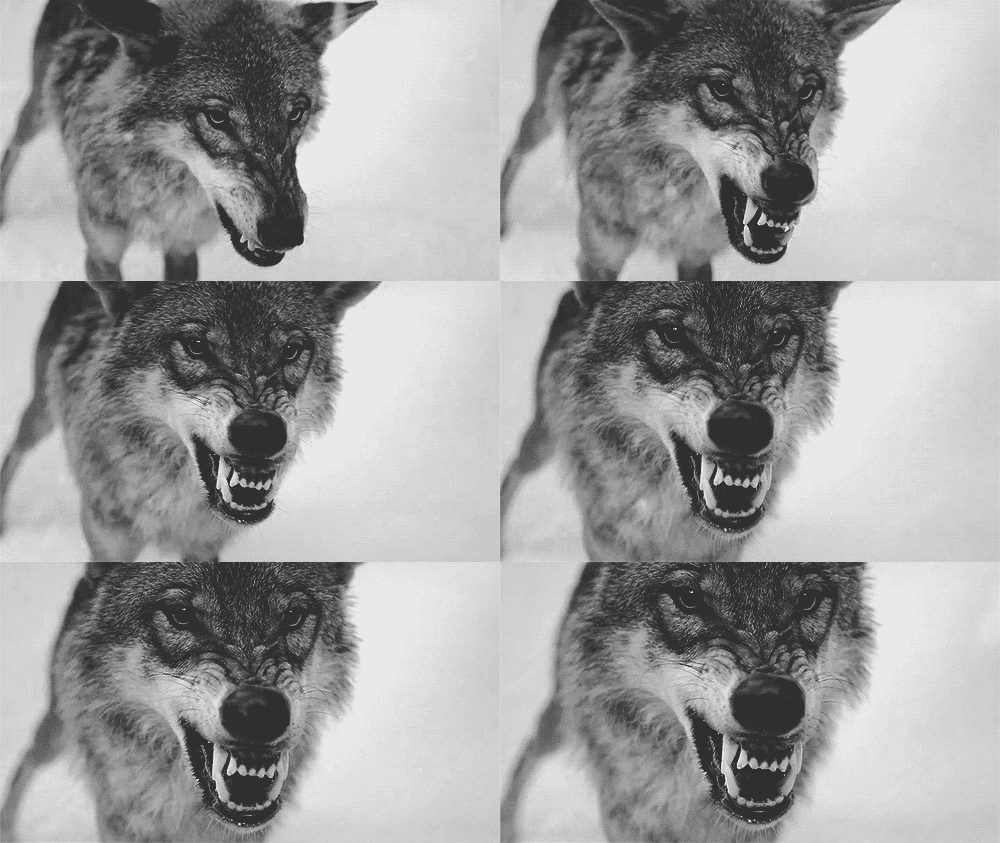
This wolf is displeased about racism too.

Calling people out is not a bad thing, but disowning them is bad


Believe it or not, people have different approaches to feminism, and that doesn't make their feminism bad. Someone might be more upset or more negative in tone; someone might have a focus on misogynoir, and another person might have a focus on trans rights for the disabled. None of these are wrong or inferior just because they involve a personal focus. Ideally, feminism should be intersectional and acknowledge many areas of inequality.

That said...not everyone is "there" yet. I personally ignored disability issues for a long time because I had some pretty unpleasant misperceptions about disabilities, both mental and physical. Then I met some people with various disabilities and ability challenges, and learned that they were not only gifted in certain ways, but really normal. However, if you'd asked me about this issue years ago, I probably would have said something ignorant and tasteless without meaning to.

Yes, people can be frustrating and disgusting and cruel--but they can also learn to do better. Sometimes a lesson won't register the first time, but will sink in later.


But...but...they might have less privilege, but they said something stupid! On the internet!


I've been there. Lots of times. Take a deep breath. Take another one, until you stop seeing red. Walk away from the computer. Now decide whether you really want to bump the person's comment so others can see it, regardless of your brilliant response. Type your brilliant response in another window or a chat program so you can get the poison out without looking like an impulsive idiot.

It's also worth remembering that people use the internet to vent, and can say things that are problematic on one level but emotionally justified on another. However, telling them to shut up and not vent can lead to more problems...especially because some people are often silenced in social situations. Women (and people who present as female) get it a lot, for example.

This is why tone policing is not actually just a fake problem. People do try to vent and explain their feelings, and sometimes end up being angry--even saying pretty unpleasant things. But when those are said in a safe space, particularly, calling them out on those comments may be the worst thing that you could possibly do. White feminists (yo) tend to get particularly upset when people say things that sound awful about, say, white people, cis people, men, etc, etc--but it's really important to put one's own feelings to the side and try to listen to the person's feelings. The reason someone says something that can be problematic is often rooted in bad experiences, particularly when the people they're talking about the majority culture.

So, to borrow an example from the links above, you might see a trans* or queer person ranting about cis scum. Not only is it not your job to tell them that "not all non-trans and non-queer people are like that", it's worth asking them if anything happened to them recently, and asking if they're okay. These rants never come out of the blue--and said person might well have had a friend beaten up in an alleyway recently for being a "tr---y".

The other thing is to remember that if someone's ranting about how men can be awful, how white people don't care, etc, etc--remember--it's not about you.  If you feel it's about you, ask the person in private. Failing that, take steps to make sure you aren't one of the people being targeted--i.e., try to listen instead of overreacting, for a start.


Okay, but this person--or public figure--is genuinely doing something wrong. Wat do?


Focus on actions rather than personal traits. Research things before you post them. Try not to pick a side obviously, if you can avoid it. Keep someone's feelings and perspective in context--what could have happened to them in life that made them think a certain way? Your positive experiences might have been someone else's trauma, or just unpleasant life events.

Sometimes, it's also just not worth commenting. I saw a discussion about how #BlackLivesMatter had been hijacked to #AllLivesMatter on Twitter; the person supporting #AllLivesMatter (which is what you'd call a derailing) identified themselves as black, gay, and HIV+. The person calling them out appeared to be male and was also black. Clearly, this complicates the issue, but the fact remains that #AllLivesMatter has derailed some of the conversation specifically about violence against African Americans. I could have chimed in...but my own perspective wouldn't have contributed enough to the conversation, and might have silenced its participants.


This is basically how feminism feels a lot of the time.


I'm incredibly triggered right now and I really, really need to address this! I'm upset!


Been there. Get out of that conversation and seek a friend or do some self-care activities. You won't be able to express your hurt feelings well in this state, and it may result in more trauma. Ultimately, you are more important than the person on the internet, but exploding on them could hurt you as well. You don't deserve that. Find a cat/dog/stuffed animal/scrap of fabric/wall/comfort item to stroke or lean against, get a drink of water, and close the window. Then delete your search history so you don't obsessively go back to the conversation and hurt yourself.


Seriously, dude, that was not cool. I need to call this person out. 


Okay, but be moderate and try to be as kind as you can. See above re: the learning process and the fact that people can be hurt. Sometimes, ignoring people is safest for your sanity, but if it's just not an option, try to focus on facts and avoid talking about personal faults. You'll look good and you might inform the people who are reading the comments but not saying anything. And avoiding a knee-jerk reaction is a good way to dodge a possibly day-ruining flamewar.

Above all, don't give into the temptation to say, "You're not a real feminist/activist/etc!" Even if you're thinking it, there is no possible way that will end well. We need to work together instead of competing in the Oppression Olympics ("I know you've had it bad, but (x) has had it worse! And I've had it worse than (x)!") or trying to play Who's a Better Feminist. Women (and feminine or queer-presenting people) are criticized more harshly than men. Men who stick up for these issues will generally be less harshly criticized because of the way power is structured here. That's good in terms of helping to signal boost things, but it's not as good on a micro level. Sometimes a person will get treated as an expert because of their social position rather than their skills.   That means that people who do have these advantages--such as, again, being white--should be careful and try not to abuse them.


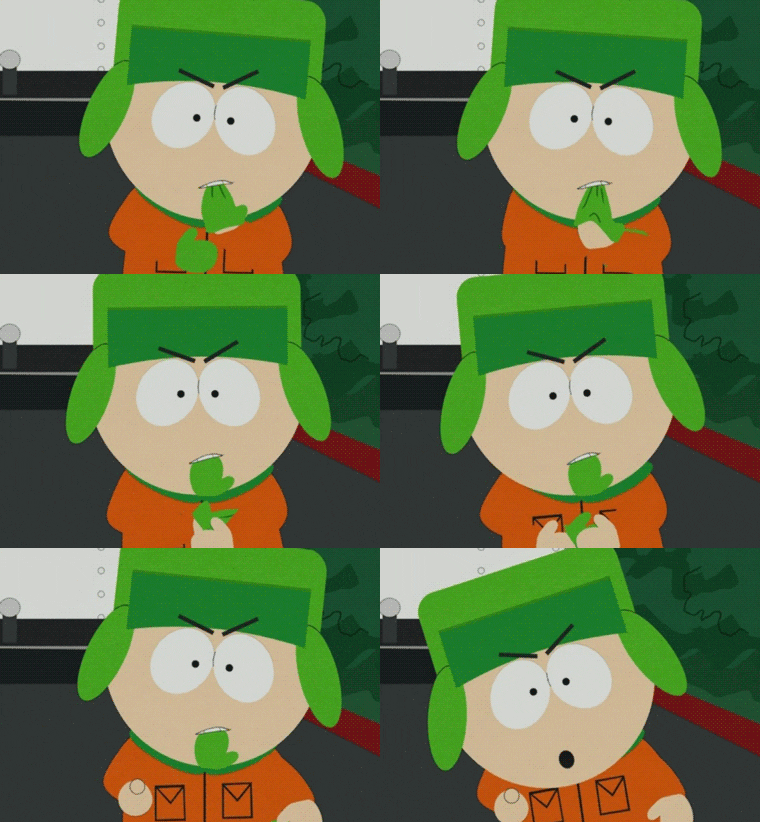
Even Kyle needs to punch people sometimes.

Okay, fine. Any last words?


Remember that people's words are informed by their lives. I'm pro-choice, but if someone is personally against abortion--as in, they are meh about the right to choose but couldn't bear to have an abortion themselves--it's not my job to try to convince them that having an abortion would be okay for them. Again, I can't stress enough that any online debates and discussions need to be informed by sensitivity to social privileges. Not being able to see someone's face or real name can soften the lines of privilege, but they don't disappear completely.

Basically, what it boils down to is this: Don't be a dick. Especially when the person you want to criticize has less societal power than you do. Also, don't pull a Benjanun Sriduangkaew.

*A quick note about language used in this post before we wrap up--I know the words "stupid" and "dumb" are sometimes seen as problematic because of the implications about low intelligence, etc, etc. Because they're in common use and the context is in debate, I've left them in the post. Let me know if you object to this or have questions/comments on the issue.*


***
Thanks for dropping by the nest once again. Leave your comments, rebuttals, and vehement agreements below. Don't miss any of the phuquerie. Find Michelle on TwitterFacebook, and on Tumblr, and find her work on Amazon. Check back on the blog to see when one of the irregular posts has careened onto your feed. This is the one and only SciFiMagpie, over and out! 


Tuesday, 11 February 2014

Human Centipede Syndrome: A Meditation on Internet Activism

Hello hello!

So, those of you who follow me on various streams--Tumblr, Twitter, etcetera--will probably notice a bit of a change in the coming months. I'm giving up on formally trying to pursue activism. I'm currently taking a week of (mostly) blacking out social media, and it's really helped me articulate a few things.

I'm twenty four, and I'm tired. I should not be this tired and exhausted at the thought of interacting with people I like, on platforms I like, about topics I like. I still care about diversity and signal-boosting alternative authors. I still plan to write about queer people and people of colour and the disabled. I still care about environmentally sustainable lifestyles and humane, fair treatment of animals (tasty ones included). I am still going to write about women doing things that they aren't supposed to or 'allowed' to do. This stuff does matter.

But I had to ask myself, as I stared at my Tumblr feed full of people arguing that Joan of Arc might have been bigendered, people tossing around the word 'patriarchy' as an insult, and the endless links on Reddt featuring people complaining about Muslims and women and basically anyone other than themselves--is all this negativity doing anything? Is screaming at people really going to get us anywhere?


Source. I love you guys too much to put actual screenshots from The Human Centipede up.

Who gets to speak?


There is a time to scream and there is a time to pick up your sign, write some letters, and take a stand. Screaming can be good. It's important and necessary. But there's too much of it going on. Add to the fact that a lot of the people doing the screaming are--like me--privileged, white North Americans. That also got me thinking--do I know enough to adequately represent the stuff I care about in public forums?

The answer was, frankly, no. I don't want to misrepresent people from other cultures, the trans* community, or anything else when it comes to issues that revolve around them. I can lend my support, but I can't speak for someone else.

The problem is that people (like me, admittedly) pick up a cause or choose to slam a celebrity for making a misstep without realising the importance of their actions. And then others fight against them, often saying pretty horrible things (the subReddit "Tumblr in Action" is a pretty fine example of social commentary gone awry, and let's not talk about "TalesofPrivilege", which is irritating and misogynistic enough that I don't want to link to it.) Is arguing with a bunch of neckbeards on The Escapist forum going to actually get more diversity into mediaeval settings? And furthermore, do I know enough to really talk about these subjects the way I'd like to?


Source. Opinions, on the internet.

What's the point?


Sure, on issues of mental health or sexual preference, I can speak, but I have professional experience on the first one and personal experience with both. And it's not a matter of being 'not strong enough' to take the endless feces-flinging from both the privileged masses and the hyperaggressive activists. It's about how I want to spend my time.

I am a writer. That means I need to write. I'm also an editor, which means I need to help make other writers' books better. Will an essay on pop culture, the internet, the teeth of Neanderthals, or sci fi help me develop the skills for making good art? In short, yes. Yes it will. Will screaming at people en masse or clicking reblog on a hundred posts or wandering through the endless crap swamp that is Jezebel help me make good art? Nope.

So, what's going to change? There's going to be more phuquerie. I'd rather laugh than scream, and I'd rather comfort than kill. When something matters, I'll still be there with sword drawn and banner flying, but I'm going to save that for the occasions where it's really merited. I'll reach out to people, not just shout into a void.

Here's the raw version of what I was feeling, before I could articulate it more clearly, previously published elsewhere.

"Stop.


Stop telling me to wear makeup. Stop telling me to cut my hair. Stop telling me to watch my mouth when I really am being insulting. Stop telling me to not talk about my genitals. Stop telling me to talk about my genitals. Stop telling me to tag things that passingly mention hard topics. Stop telling me to ‘check my privilege’ as though spewing a magic phrase at me will make me a better and more conscious human being. Stop telling me to not be a feminist. Stop telling me to be a feminist. Stop telling me my activism is annoying. Stop telling me my activism is boring. Stop telling me not to wear dresses. Stop telling me to wear dresses. Stop telling me to cover up. Stop telling me I need Jesus. Stop telling me not to swear. Stop telling me you think I’m too PC or that I’m being diverse for brownie points. Stop telling me something is ‘too diverse’. Stop telling me to campaign 24/7. Stop telling me it doesn’t matter. Stop telling me I should feel awful for liking something. Stop telling me it’s stupid to criticize pop culture. Stop telling me I’m a bad atheist. Stop telling me magic isn’t real. Stop telling me creationism is legit and should be taught in science classes. Stop telling me I am irredeemable. Stop telling me I am lost. Stop telling me there is something wrong with me. Stop telling me I don’t know what it’s like. Stop telling me to be polite before I have opened my mouth. Stop telling me I’m normal. Stop telling me I’m a freak. Stop telling me I’m crazy. Stop telling me my sexual orientation is imaginary. Stop telling me I’m deviant. Stop telling me I’m not deviant enough. Stop telling me I’m obese when I just want to listen to music on Youtube. Stop telling me how to lose fifty pounds with this one weird old tip. Stop telling me my personality is more beautiful than my body. Stop telling me how to have sex. Stop telling me being an introvert makes you special. Stop telling me extroverts are king. Stop telling me you think queers are less than human. Stop telling me you think cis people are less than human. Stop telling me to tag things. Stop telling me it will be fine. Stop telling me it’s my fault. Stop telling me that rape is deserved. Stop telling me pregnancy is deserved. Stop telling me you miss the days when racism was the norm. Stop telling me to smoke weed. Stop telling me not to smoke weed. Stop telling me sex workers are just nasty lazy hoes. Stop telling me that you know better because you are white and male. Stop telling me I am too sensitive. Stop telling me my junk is a political statement. Stop telling me to calm down. Stop telling me to get angry. Stop telling me to just be happy.
Stop. Telling. Me. What. To. Do."

*****

Thanks for dropping by the nest once again. Don't miss any of the phuquerie. Find Michelle on TwitterFacebook, and on Tumblr, and find her work on Amazon. Check back on the blog to see when one of the irregular posts has careened onto your feed. This is the one and only SciFiMagpie, over and out! 

Tuesday, 21 January 2014

Breaking News; The Underlighters

Hello hello!

So, I've been talking to a few people about this book, and just, the reactions...I can't even...


I mean, intellectually I knew that representation was important because people need to see themselves in books and on screen...but the impact on actual human beings is just...it's earthshaking. The reaction from some people at hearing that someone cared about putting queers, people of colour, and physically challenged people in a book...well. The gif is there for a tongue-in-cheek attempt to cover the heartwrenching feelings. I expected mild interest; I didn't expect slightly teary notes of gratitude. I really didn't expect to be cutting onions myself.

So yeah. Expect my books to be loaded with actual human beings, not just the minority of white straight people that we paradoxically see on TV most of the time. I'd resolved to do it anyway...but now that I know how much it means to people? Consider it set in stone. (Hope this doesn't bite me later. I'll do my best for it not to, though.)

Here's Underlighters again, of course.

And here are some books involving diverse characters (by diverse authors, too) that have shaken my worldview. These are all the ebook editions--because I want you to go shopping but I don't want to break your wallet.

Neon Lights (ZigZag Claybourne) http://www.amazon.com/Neon-Lights-Zig-Zag-Claybourne-ebook/dp/B004UH0ORI

Whores (Nic Wilson) http://www.amazon.com/Whores-intended-factual-account-gender-ebook/dp/B009FLCJ18

Ghost in the Machine (Corinne Kilgore) http://www.amazon.com/Ghost-Machine-Corwint-Central-Agent-ebook/dp/B009UFHA0O

Brown Girl in the Ring (Nalo Hopkinson) http://www.amazon.com/Brown-Girl-Ring-Nalo-Hopkinson-ebook/dp/B00AG0P5VS

Wolf at the Door (J Damask) aka blackwolfchng​ http://www.amazon.com/Wolf-Door-The-Adventures-Volume/dp/9810713258

On the same note...I'm reading "The Night Circus" by Morgenstern right now. I want to love it, but apparently Tumblr has just broken me, period. I like it, don't get me wrong, but it's the 19th century (and early 20th century) and it's a circus with no damn black people and one Asian; our main characters are basically all straight, too. Considering that the book makes a point of showing that these characters are people who don't quite fit in society, I'm annoyed. It's well-written and all that (though in third-person present tense, which I dislike), but where the hell is the diversity?

Anyway, thank you all for your love of my book. Y'all need to go shopping and check out those authors.

*****
Thanks for dropping by the nest once again. Don't miss any of the phuquerie. Find Michelle on TwitterFacebook, and on Tumblr, and find her work onAmazon. Check back on the blog to see when one of the irregular posts has careened onto your feed. This is the one and only SciFiMagpie, over and out! 

Wednesday, 15 May 2013

To Go Boldly Where We’ve Gone Before: Is Sci-Fi Truly Egalitarian?


Hello hello!

Sorry this one took so long; I slept through a bunch of the weekend.

I know I've been laying on the somewhat negative and critical posts lately, and yes, this is going to be another. There's a good reason for this: I love science fiction. Deeply. It's been an adventure and an escape, a set of connected worlds I can play with. I love urban fantasy just as much. These are my worlds; and you, reader, if you enjoy these genres, you are one of 'my people'. There is darkness here, and struggle, and there are wondrous things.

However, I love these things too much not to examine them honestly. Much as a good relationship means improving yourself and helping your partner continue to be a better person, genres necessarily need to be criticized in order to keep developing. When they stagnate, they die. When they change...we find new and amazing things.


image

Source. This is a marvellous example of feminist sci fi with a damn cool setting, dreamy prose, great characters, and non-traditional partnerships. It even inspired some of my own work. 


I've praised 'my' field before for its generally progressive approach and open-mindedness. Sci fi is where you go to read about transhumanism, inter-species tolerance and multiculturalism, environmentally conscious dystopias, and a plethora of political approaches to interplanetary government and domination. If you can think of an idea, it's been done in sci fi: liberal and conservative ideas alike are featured here, sometimes mixed together. Science fiction is driven by fantastic elements and factual ones, and it's a big, broad, wonderful genre to play in.

However, it also has its downsides. A lot of sci fi tends to be geared towards white and western people, and particularly men--however, female cast members and minorities are generally visible, at least; a lot of sci fi is set in a post-national world. Think of Star Trek, which was definitely trail blazing in this area. Diversity is a given. Women shoulder guns and lead commands alongside their male comrades and no-one gives it a second thought. Representation of LGBTQ people could use some work, but for a starting point in a genre, I'd still argue that sci fi is mostly ahead of the game.


image


Source. This is on my 'TBR' (To Be Read) list. 


So where's the problem?


What I want to know is, why is a genre that's known for forward-thinking attitudes and powerful, strong female characters so reluctant to let the romantic side of things out? Sure, I can think of several television shows offhand that featured strong romantic plots--my favorites being Farscape, Futurama, and Doctor Who--but writing about love is another matter. Search for 'sci fi romance' and you'll have a tough time scraping up listings. It's 'not cool' and 'not allowed' for men to indulge in their romantic sides, and I don't really need to reiterate the complaints of female authors who fail to get recognition from publishers and advertisers. Anything that's just a bit too far off mainstream appeal doesn't really get the press, and readers who really might enjoy hearing about it often miss out as a result. 


image
Source. This one is one of the only true science fiction romances I've ever heard of. 


Why do you care? You're not exactly a squishy romance type. 


Well, it's true, I'm not. BUT--that doesn't mean that it shouldn't exist, or that romance and intellect necessarily have to be polar opposites. There is a lot of room for a human interest story that explores cultural clashing or transhumanism or a myriad of wonderful topics. However, the lack of romance suggests that the field's traditional distrust of women and quiet rejection of us hasn't been ameliorated yet. The way publishers and marketers are uncomfortable with 'ethnic' books or 'queer' books speaks for itself, too: sci fi can push boundaries, but only so far as society's comfortable in handling those pushes.

That deserves to be fixed. Women (a majority of the population, I might add) have a lot to contribute to sci fi; not to mention the amazingly different and wonderful perspectives that genderqueer people also bring. The field is already tantalizingly open to non-mainstream groups, but when it comes to advertising their publications, minority groups just fall off the map. A quick glance through bestselling names on Amazon's sci fi list reveals page after page of decidedly Anglo-Saxon and masculine names. However, what if things go the other way? What if it's completely (or at least balanced) with a lot more minority voices and female perspectives?

image
Source. I absolutely love this author's style. It completely stunned me: I had no idea Afrocentric stories were a thing, and in spite of lacking the cultural perspective and 'ins'--I love them!


Is there an 'overload' point for feminism and other types of activism?


To put it bluntly:  no, but yes. It's quite possible to go overboard in the correction zone and make an exaggerated attempt to balance everything that compromises the quality of the book. The message and characters may be good, but overemphasis and lack of humour can really kill the efficacy. It's a bit like some of the posts I've seen on Tumblr about the subject of activism: minority complains about mainstream, sometimes makes jokes about death and murder of mainstream, complains more and is unfriendly, and then wonders why mainstream is not listening to them. Since I do belong to a couple of minority groups and I interface with a lot more, but also belong to several mainstream categories, I've seen both sides of this divide and it's rarely pretty. So, I'll grant that a story with the wrong tone could be incredibly grating to read.

However, the number of cases where overcorrection has been a problem that I've seen so far has been exactly one. That's right, one; and the only interesting part of the moody, pretentious book was the alt-sexuality angle--which, by the way, was basically irrelevant to the pseudointellectual plot. Fortunately for you, dear readers, I can't remember the title of the damned thing, and I'm quite positive it was donated to a second-hand bookstore some years ago. (Hilariously, I recall the author being white and male. It's not always the activists you'd expect...)


Individual writers sometimes comment obnoxiously, but I've never seen a story really suffer for a lack of white people or hetero sorts or other societally conventional types. Ever. For one thing, they're so incredibly rare that the market is far from flooded, and for another, there are so many 'traditional' stories already weighing that scale down, I can't see oversupply ever being an issue. Being someone who tends to write on the light end of that scale, of course, I'm obviously a bit coloured in perspective. Point is, we would need many years' worth of writing to compensate for even half of a quarter of the mainstream hero stories. 


image

Source. This one was a recommendation from a friend.


FIX IT FIX IT FIX IT FIX IT 


The fix for this is simple: stop reading my post and go read some books by 'non mainstream' authors. Expand your boundaries a bit and edge outside your comfort zone. That's all it will take to change things. I'm not saying that we need to burn every book by a white, straight male: I have a whole bunch of books that are dearly beloved and fall into the 'mainstream author' category. All that really needs to happen is a little more openness and some experimentation.

This is sci fi. This is a speculation on our future. Let's make it inclusive, multicultural, and vibrant: it can only make the world more awesome. 


And, I'd be a bit of an arse if I didn't include a link to my own attempts to write 'better' science fiction.


image
Source. 


*****
Thanks for dropping by the nest once again. Don't miss any of the phuquerie. Find me on TwitterFacebook, and on Tumblr. More interviews and witty commentaries are coming. Keep checking back to see those surprise posts, too. This is your darling SciFiMagpie, over and out! 

Saturday, 30 March 2013

Love Hurts: Why Modern Romantic Comedies Inevitably Suck

Hello hello!

Time for more thinky bits. I know y'all love it when I analyse things, and for a change, I'm going to focus on something I hate instead of something I love. Namely: modern romantic comedies. 


Why do I hate them, personally? Sure, I'm a cis (that is, 'happy with my born sexual identity') white female, but I always preferred action and explosions for a dumb flick over something a couple of chocolates and a frilly bow short of estrogen poisoning. Romcoms, like the ones that proliferated in the 90s, are an insult to intelligence, the characters are shallow...well, I could go on about the whys, and I'm about to. It's not that I don't like love stories--I do, in fact, and often write a bit of romance into my plots. 

What may surprise you, then, is that I absolutely love Jane Austen. I've touched on this before, as well as my abiding love for the Brontes. In fact, I'm fond of a lot of 19th century literature, and a bit of an Anglophile (although I love French and Russian literature from the same era to exactly the same extent). So--how, you ask, can I like the original queen of the genre's writings, and race to Netflix and the internet whenever I hear that Pride and Prejudice or another Austen work has been adapted or re-adapted? Shouldn't I be shrivelling up like a salted slug at the mere thought of romance? 

I was watching a few reviews tonight on ThatGuyWithTheGlasses.com, a favourite site, when the answer hit me: modern romantic comedies totally deserve my ire because they're broken, and have been for years. Many serious romances are also pretty phuqued, but it's the comedies that are really boiled dry, and I finally know why. 

A brief note before I get into things--I'm going to focus on what I know, which is confined to English-language romances, mostly American and Hollywood-based. The issues I bring up may not be relevant or fit for a critique of Chinese, Indian, African, or other international romantic comedy films (which, unfortunately, I haven't had a chance to see many of), and certainly not the far more intelligent romantic comedies I've occasionally seen coming out of Europe.  I'd love to see some of the romances and romantic comedies of other countries, so if you have recommendations, please mention them in the comments. 


Source. It's only romantic because there are no nocturnal predators. In neolithic times they would have been so dead. 


A bit of background (pink background)


Just in case you've been fortuitous enough to escape one of the many lackluster rom-coms that have come out in the last couple of decades, let me save you a bit of work. From Meg Ryan to Julia Roberts to Katherine Hegel, we've had a number of stars make their careers based on rom-coms. Sex and the City milked an entire series of movies and a TB--I mean, TV--show from it, and there have been many other TV shows as well. From the 1980s to the 2000's, an absolute rash of films powered by these and lesser stars came out to appeal to pink-wearing period-suffering female cliches everywhere. 


The formula


The formula is simple: man and woman meet. Man and woman fight, often because they are competing over something. Man and woman may also be longterm friends who suddenly realise they're perfect for each other. Token love interests crop up to add complications. Woman's friends do girly things. Man's friends make misogynistic remarks. Man and woman are attracted to each other and sometimes sleep together. Awkwardness/personality faults/some contrived competition drives a wedge between them. It appears all is lost, but then a last minute save of some sort (usually the man's apology and rarely the woman's) fixes all. Harmony is restored and the couple dwells blissfully in ForeverDatingLand. 

It tends to be loaded with cliches and very poor. The movies are also notoriously repetitive. And yet, older versions of the same story are often charming, or at least bearable, for all their faults. Modern romantic comedies, like 500 Days of Summer and Kissing Jessica Stein, are also starting to move in a different direction. 

I'm ignoring the escapist side of things, such as the fact that romcoms and romances usually feature wealthy and attractive people that the audience wishes they could be/knock boots with, for the simple reason that most media has something of a fantasy element to it. I can't use magic or ride a steam-powered horse in real life, either, so that vicarious element averages into other genres as well. 


Source. As we all know, this is how people dressed in the 19th century. At all times.


Let's drop the history. 


The problem with romantic comedies, compared to their source material, is a temporal and societal one. Back in the days of Austen and her contemporaries, firm and rigid social rules determined the fate of women in the middle and upper class. Fail to follow them, and exile and disgrace--the sort that could ruin a family financially and socially--inevitably occurred. A woman's marriage meant everything, determining not only her own future and that of her children, but influencing that of her family, as well. Marrying for love wasn't really that common--one married for duty and love was supposed to develop. The rise of the middle class and the Industrial Revolution changed things, making people more prosperous, and cultural shifts led to a greater emphasis on freedom of expression. 

It's no coincidence that the many women in factories and even in the upper classes started to get uppity. The beginnings of women's rights and suffrage started here; dragging women into the workforce and out of the countryside changed everything. 

These societal clashes were very important in romantic books of the time, too. Tess of the D'Urbervilles is a fine example of a woman helpless to and aware of the dis-empowerment forced by her social class. Mansfield Park, one of my favourites, is all about the inequality within a household. Of course, Jane Eyre is another prime example of the same, as is Wuthering Heights (which is also about faeries and changelings, by the way. I should post about that for you guys some time). If you ended up at a disadvantage or made a simple misstep, boom, that was it. For the rest of your life. It provided a lot of tension, and because the issues are serious, the books resound with us to this day.


Say what? What do you mean by 'broken'?


The problem is--and here, I admit I'm conflating romances and romcoms a bit--modern stakes just aren't the same. The older books generally tend to have real antagonists, and a better understanding of human nature. Even when modern comedies are rather good, they still avoid the really uncomfortable issues implied or explicitly explored in older works. Instead, they play contemporary issues for drama to an exaggerated extent (hello, Nicholas Sparks), rely on illnesses, or make mountains out of molehills. 

Women had little to do except marry up. Now that we have careers and independence and enough money to be wasteful, or almost enough, the issues that made earlier works so urgent are basically gone. Things that would have been social death in a previous era are now mere inconveniences at worst, and that makes the social awkwardness in movies feel forced at best and terribly shallow and annoying at worst. We're allowed to talk, albeit poorly, about uncomfortable subjects now, and to really appreciate the stakes in a previous era's romance, one must understand that openness was verboten. Sex is usually offscreen, or goofy, or perfected for romantic comedies, and is almost never raunchy or kinky in a realistic way. 

In addition to easy fixes and simple solutions, romcoms skim over real emotional issues and avoid long term repercussions, focusing to psychotic exclusion of reality on the gratification of the romance. While a lot of women who read Austen kind of ignore this, the appeal in her books is that everything has repercussions and that all the small actions are followed up on later. The romances determine the women's life paths, and their interactions with other characters all pay off. The overarching human stories--somewhat touched on--that involved things not at all related to the LOVE STORY actually threw it into greater focus. People remember Elizabeth's sisters as much as they remember Elizabeth and Darcy, and there's a reason for that. 

Modern stuff has simply recycled the formulas used previously without understanding why they work. From the rote formulas, they copied the stories' details and took diligent notes, but failed to get across the soul of the story and the real conflict. Simply, they're a mix of unrealistic and unhealthy ideas with a fatal dose of anachronism. That's why they suck, empirically speaking.


Source. This would accurately reflect the fact that romance isn't a tidy affair.


How do we fix it? 


For starters, diversity would be nice. White people inevitably and sickeningly dominate the romantic scene. My Big Fat Greek Wedding explored culture clashing, and was reasonably smart and fun, but we need a lot more of that--preferably without condescending racist subtext. Adjusting the expectations for the female and male lead--such as the male lead's generally useless career and role--is also needed. 

Fortunately for us, the industry is starting to respond to the fact that romantic comedies are kind of a dead market. Only 19 of the hundreds of films coming out in 2013 are romances, and of the comedies, only a couple are remotely romantic. Having realised that chicks like guns and action and plots as much as guys do, the market is finally dead. We're still dealing with poor representation of women in action movies and mostly whitewashed casts, and with the majority of films (even from feminist Joss Whedon) failing the Beschdel test ( a) two female named characters b) talk to each other c) about something other than a man), the death of romcoms hasn't done much on its own to move us forward.

Interestingly, Twilight and 50 Shades of Grey, much as I have previously mocked both, have helped us get away from traditional romcoms, replacing them--and much of romance--with paranormal romance and BDSM and more erotic fiction. It's a somewhat lateral move, but the fact that women are more comfortable with these decidedly less passive and more aggressive displays of sexuality is probably a good thing. They still play into the same cliches as their predecessors, though, for the most part, so the real effect of the shift has yet to be seen.  

So, in summary of things to fix--a plot that deviates from the classics and gives female characters some agency, and gives men actual desires and feelings (rather than making them wish-fulfillment machines) would be great. Also, more lesbians and more gay men who don't just do hair or interior decorating or serve as hetero women's pets. Everything focuses on people between the ages of sixteen and thirtysomething, with a few rare exceptions, so we could stand to see a few more (dignified) comedies and films about middle-aged and old people. Queering up the joint would be a lot of fun, but anything not dealing with hetero white people usually gets confined to film festivals. Glee, of all things, and other media, are sloooowly bridging the gaps between 'alt' sexuality and 'normal' sexuality (can you see me wincing over the internet?) but we still have a long way to go. 

Fortunately, a few of these films do exist, so you can still cuddle up with a love story and you won't absolutely have to turn your brain off. 


Source. Those candles and rose petals should be used, not just sit there for decoration. You can do some fun things with a little hot wax... 


My recommendations 


I like my romances to be more complex and dark, as well as to have a lot more context and content than your average Harlequin in film or TV form. Here's a mixed list of a few of the romantic movies I've seen and liked. 


1) One of the best romances I've ever seen has to be Be With Me, a Malaysian mostly-silent film about intertwining storylines that's truly beautiful and moving. 

2) Across the Universe also earned points from me for not only having a stunning visual design, but addressing human flaws, multiple sexual issues, identity, and the ugly side of the 60s in a nicely stylised way. 

3) Mambo Italiano was an uncomfortable but memorable and realistic little Canadian comedy about an Italian-Canadian boy who has to deal with being gay and a painfully funny emergence from the closet. 

They're available on the internet and Netflix, so go enjoy them when you have a moment. 


*****

Thanks for dropping by the nest once again. Don't miss any of the good kind of crazy. Find me on TwitterFacebook, and on Tumblr. Watch out for my fantasy-themed spring: interviews with fantasy authors, content related to fantasy films and reviews, and some political commentary--the phuquerie you've come to expect from me. Keep checking back to see those surprise posts, too. This is your darling SciFiMagpie, over and out! 

Google+