About Me

My photo
Author of queer, wry sci fi/fantasy books.
Showing posts with label mental health. Show all posts

Saturday, 16 May 2026

Silence is Choking Me

 I had plans, last year, to try and write a post a week and publish a chapter of my finished trilogy a week.

That hasn’t exactly happened, but I’m trying to break through the feelings that have kept me silent and frozen, and well, that starts with a few words on a page, so here goes.

Oh, and this post comes with songs that inspired and fit its vibe. Let me know if you like that, because I might start including more song embeds and soundtracks to posts.

Never mind the whole “parenting takes time” thing – the real problems I’ve been struggling with are two primary issues.

1)       Everything is unbelievably hard and absurd

https://music.youtube.com/watch?v=0Zz4UG7nA3Q&si=6MoXUbaqbskegi3B – this song keeps playing over and over in my head periodically.

It’s not exactly revelatory to mention that, you know, the world order has been upended and norms have been disrupted further than we thought possible. Nor is it particularly shocking to hear a millennial lamenting, but hey, that’s what I’m gonna do – reflect on how I feel about where We, as a society and maybe as a species, are at right now.

So obviously, this comes with the caveat and blinders of being a white North American from Canada, but the fact that we’ve all just kind of gotten used to what ecologists and scientists are referring to as “ecocide” [citation] is um, a trifle fucked up? Just a little bit. One of my cousins, whom I love dearly, posted about this recently.

Ecological issues are deeply important to me, but I’m often unable to focus on them because of the sheer existential dread and grief that comes with trying to think about them. I’m certainly not alone there, but I want to remind people who are trying desperately not to think about the climate crisis and water issues and plastic pollution and methane levels and deforestation – you are not alone in being scared as fuck, and upset, and angry.

https://music.youtube.com/watch?v=v2e6nVHfXa0&si=XyY1DlX9hN9FFt8B

But there is an upside to this. Doomerism is the weapon of the elites against us, and it’s also a vast, inaccurate scientific oversimplification. Have things gotten worse? Well, yeah. I’m not going to sugarcoat that. But a hundred small things make a difference, and there is no point at which we should just throw in the towel. Yes, things can get worse, but they can always get better, too. Every inch we fight for counts. Every tenth of a degree centigrade that we keep from advancing matters. Every species we protect and give a chance to rebound, matters.

Nature is more resilient than we think. This is not a video game, where we fail at a number of conditions and the game is just fucking irreparably over and lost. It’s not even that we still have “a chance,” it’s that we have thousands of chances. And we should not, and cannot, squander them.

This entire screed also applies entirely and completely to the political situation we’re dealing with. Democracy is not fucking dead, and billionaires and the elites are not invincible. And yes, it’s hard not to give up sometimes, and yes we need to take breaks and focus on joy to survive – but friends, there is so much more fight left in us than we realise. We just might have to try some different strategies. I’ll be talking more about politics in a post soon.

2)       Oh hey, apparently I’m more disabled than I realised

So another fun thing I’ve been grappling with is a number of health issues that – I haven’t been ignoring, I’ve just been unaware/haven’t realised how much I was struggling with them. Reader, I recently went and applied for some specific programs and initiatives, government things. Without getting into the precious and specific details of my diagnoses, it wa truly humbling, shocking, and in every way upsetting to realise just how much I’ve been dealing with, without…really realising or understanding the extent of my own problems.

It’s so easy to fall into default expectations of physical ability, especially if any or most of your disabilities present invisibly. I kind of thought the whole mental illness and autism things were bad enough, but hey, apparently there’s more I’ve been struggling with, and having to describe it for bureaucratic purposes really put it in ugly, ugly perspective.

So honestly, I’m grieving right now; over what I thought I could do and time I’ve lost, and I’m trying to adjust my expectations of my future. I don’t have any conditions that are immediately life-threatening or degenerative – to my knowledge, and so far – so in some ways, I do count myself as very lucky. But it’s still not what I envisioned and what I expected, and adjusting to that is goddamn hard.

So that’s where I’m at, but I have too many long-form thoughts and poems and stories percolating to be silent for long. But hey, I don’t want this post to be entirely either a) a bummer or b) kind of toxic, hopeless complaining, so I’m gonna close with a list of some things that are bringing me joy right now.

3)       The comforts and remedies

I’m lucky to have really good friends and relationships in my life, and I haven’t really had any friction from the people who care about me or socialise with me over my struggles. I’m really grateful for that. I recently finished an absolutely epic-length play-by-post roleplay game based on the Monsterhearts 2 roleplaying game system, a Powered by the Apocalypse build, and it was very fulfilling and deeply satisfying. We’re doing a few little epilogue-y things, but the actual game and a bunch of emotional stuff is pretty wrapped up.

That said, many of the same people and a couple of new faces are also involved in a second play-by-post game with a different system and storyline, involving Triangle Agency (which is a really cool system and game in terms of its design; strongly recommended!) and that’s been a blast. These games have been absolutely essential to my sanity and morale over the past couple of years, and I’m so grateful to have made some excellent friendships and deep bonds with my tablemates.

In terms of my other creative pursuits outside of writing, I’ve had a pretty good time with my knitting and jewelry-making; my wife and husband got me a chasing hammer and a new set of flush cutters for wire for Mother’s Day, and my god, having the right tools can make such a huge difference. I’m also pushing myself a bit with some market appearances this summer, like the local South Country Fair, and that’s pretty exciting.

Here’s a couple of pieces I’ve made (May 15th, 2026, hot off the bench) and some in-progress knits.

on a steel bench block, three pendants. A curling silver and labradorite pendant rests against a gunmetal sword. Below it, on the left side, a triangular bit of green sea glass sits in a silver wrap. Last, a pendant made up of a white, grey, and small clear bit of sea glass, also all wrapped in silver, rests. on a steel bench block, surrounded by supplies, three bracelets sit outstretched. all of them feature small rounded blobs of glass caged in wire and made into chain links. One is periwinkle and rose gold, one has multi-coloured glass and silver, and one has silver and tiger's eye quartz, also in softly rounded, tumbled chunks The last one has larger chunks of turquoise blue transparent glass set in silver wire. .outstretched across a desk is a rectangle of fluffy patchwork colours in bright pastels including pink, lots of yellow, white, blue, purple, and aqua - many of the chenille/fleece yarns have small flecks of other colours in them. The rectangle will be folded in half and stitched partially to form a bolero shrug. (This was a progress shot, but the bolero is now finished, and extremely soft and fluffy, btw)

I’m also enjoying parenthood a lot more than I feared; my son is absolutely wonderful, and a very kind, sweet, bright little creature, full of spirit and curiosity, but also immensely helpful. I couldn’t be a parent without the support structures of my spouses, and I’m so grateful that I get the chance to have this, and to have such a fantastic kid. I was so terrified that I’d hate parenthood, especially this toddler stage – and sure, sometimes it’s very hard work and tiring, but I’m inexpressibly happy and relieved that my greatest fears have been proven utterly wrong.

So that’s all for this post, but expect some political posts and a musing on the ends of, among others, Good Omens Season 3 and some other media properties coming soon, plus some more poetry.

***

A writer and artist, Michelle Browne lives in southern AB with xer family and their cats. She is currently working on the next books in her series, other people's manuscripts, knitting, jewelry-making, and drinking as much tea as humanly possible. Find xer all over the internet: *Website * Amazon * Substack * Patreon * Ko-fi * Instagram * Bluesky * Mastodon * Tumblr * Medium * OG Blog * Facebook

Tuesday, 12 August 2025

Fix Your Life: Notes From Reconstruction

Fix Your Life: Notes From Reconstruction

 So, I don't really do self-help, for a variety of reasons, but I've had this article jangling around in my head for a minute. 

I'm in the middle of working on a bunch of health conditions, and changing my lifestyle and habits to actually try and improve or manage them, and I couldn't help but think about how deeply ineffective and frustrating most self-help tends to be. 

This, then, is a quick rundown of techniques I've been relying on and making use of while I've been trying to improve my functionality. 


Where I started 

For some context, I've been struggling with really terrible burnout from my editing practice for a few years now. Life stuff happened, it was bad; it left me with mental health scars. I won't bare every inch of my soul for the internet, but suffice to say that the Tolstoy quote about how unhappy families are unhappy in their own way is not that accurate. Trauma can follow exhaustingly repetitive patterns between people's lives. It's not particularly exciting or salacious, although there were a few dramatic moments here and there. 

What matters is, I got better, and I got back to editing, but I also got worse. As anxiety and depression paralysed me and depression weighed me down like pocketfuls of stones, I couldn't finish projects, letting down clients and friends one by one. I dragged my feet, though, terrified to change my career and lose all the progress I'd made. 

I'd been suspecting I was burnt out for years, but I was too scared to let go. My wife's pregnancy, two house moves, and our son's birth let me delay the decision, even though I'd already made my mind up in private. Then I had a mental health backslide a couple of months ago, my partners got together and insisted I deal with my shit, and well, I had to do exactly that. 


What I'm doing 

For most of my life, I've struggled with body image and weight issues, with a glaring exception - in the first year of university, I had to bike to school every day and was also swimming regularly, and it made a stark difference in my mental health. Accepting that I needed to work out regularly whether I liked it or not, but not worrying about weight loss or gain, has been shatteringly effective. I've also changed my language around working out, avoiding the term "exercise", which is too loaded with trauma and negative associations for me personally. I considered my options and went with biking and swimming, with a surprise addition of some gardening, which I really enjoy; in addition to some housekeeping and chores, which I was already doing, of course. Biking and swimming make me feel fast, strong, and graceful, and having physical ways to move that make you feel good is absolutely vital. 

You will not fix your life by suffering. You'll just exhaust yourself and end up in the same place you started, or worse. Find ways to move your body that are a) safe for your physical constraints, b) cost-effective, and c) sustainable for you personally. One person's torture is another person's pleasure, and vice versa. Don't just do what everyone says you should do if you absolutely fucking hate it. 

I'm also in four different kinds of therapy right now, doing a short-term intensive for three months, which I'm about halfway through right now. It's pretty tiring, and yes, it can take a lot of time each week. Finding therapy and groups that work for you is essential. Again, it's not going to be easy, but there's a difference between difficulty and pain. Free therapy groups are abundant online and more available locally than one might suspect, and I have to admit that group counselling has been surprisingly helpful. The dominant approach is called Dialectical Behavioural Therapy, an improvement on Cognitive Behavioural Therapy, and it's working really well for me. 

Subsequent to the therapy thing...I'm using mindfulness a lot, and for me, it's working well. Now, mindfulness is actually a hazardous technique for some people, and can worsen their mental health, but many others benefit from it. However, it actually refers to a bunch of techniques. For me, that's colour breathing, grounding, and exercises to create sensory awareness of my body. Sometimes fully tensing all muscles and releasing them can really help. Point is, mindfulness involves a variety of concrete techniques and approaches; it isn't just a sort of vague mindset thing. It's a bunch of stuff. Try things, carefully. Those therapy groups often talk about techniques with more expertise. 

Frustratingly, the whole thing about scheduling has also been proven true. It's often told to neurodivergent people that we need to schedule our shit, and...yeah. I use a digital calendar app to block off my time and handle both regular obligations and appointments. For instance, I have reminders about when to scoop our cats' litterboxes, my therapy sessions, and my intended swimming times all colour-coded out. Adjust your reminders' frequency to help you actually pay attention to them. 

Self-care often gets described as either really unpleasant, important tasks like doing the dishes and scrubbing the toilet and making phone calls, or as a sort of fuzzy, vague, indulgent thing, like baths and eight kinds of skincare. However, it's a balance of these things. The most important thing I'm finding is re-framing what I consider a reward or a treat. 

Very recently, I've been shifting the perception of a treat from physical rewards to actual time. Setting aside my little chunk of time to read a book and have a little snack and a cup of tea, or to draw some words for my daily drawing challenge, has immensely enriched my life. The way I even have time for those things is that I've had to identify where I was wasting time. Doomscrolling can take many forms, and it's important to remember that our phones and social networks and apps and Netflix and games and such are designed to keep us watching. Spend time on people, things, and actions that either make you happy or challenge you. 

Another thing has been moderating the content I take in more carefully. I'm limiting some of my interactions with politics, because quite frankly, a lot of people are just fucking using the news to self-harm, and I don't want to be one of them. To quote Propaganda the rapper and activist, tapping out is vitally fucking important right now.

I will never advocate for people to wrap themselves in a bubble of ignorance either. Completely disengaging from the news is really dangerous. But limit your exposure, and especially if you're on multiple social networks - for god's sake, don't try to be politically focused and active on every single one of them. That's a shortcut to burnout. Internal boundaries are required for survival. Don't let anyone guilt or shame you into thinking otherwise. They're not respecting their own limits, and they'll end up paying for it or hurting other people along the way. 


Caveats 

There are several important components that are making this possible for me. One is, frankly, financial support from my parents and partners. Now, I realise that's not doable for most people, but I'm not going to be one of those people who pretends they've hauled their asses up by their bootstraps with no help or support. My family isn't wealthy, but the small amount of money and more generous supportive time, has been a huge advantage. My unconventional family structure with my partners also makes things a hell of a lot more doable and accessible. 

One of the most important components of this whole thing is just time, period. I'm lucky enough to live in Canada, where we have a flawed but still extant social service and safety net. I also have health insurance that covers my therapy. Being white and having an English-speaker name means I get the benefit of the doubt in a lot of situations. I think about these things a lot, and I'm grateful for them. 

We're often taught to be ashamed of privilege, rather than practical about it. If you have it in any area of life - and most people have it in one or two ways - lean on it and use it. Play into it, if you can do so without harming yourself mentally. Use privilege as a ladder for yourself, and then extend the same help to others who don't have it. 

That said, it's important to get your shit together enough to survive, and balancing that with community care and help is tricky. I'm not going to say "fuck everyone else, save yourself" because frankly, that's also bad for you, but it's also really important to learn your limits and know how much you can do without hurting or exhausting yourself. 

What should you do?

Still, if you find yourself in need of help direly, the best thing I can suggest to anyone is to stop trying to do it alone. If you have a few poor friends, band together. If you're living alone, move back home or find some kind of co-living situation. A bunch of disabled people working together, or family or friends, can patch each other's holes both financially and situationally.

 If you already have roommates, family, or housemates, moving to a cheaper living situation or talking to the landlord about a rent reduction might be necessary. Changing living situations to be around people who will actually support you might also be necessary. I know some people find the thought of living with others unbearable, but if it's a choice between living with others and dying alone, find a way to make it work. Have boundary and alone time talks. It beats working yourself to death for an illusion of independence.

I cannot recommend enough that, wherever you live, you take advantage of any resources available. Rent relief, affordable housing programs, any kind of food stamps, free therapy groups, and outreach centres. There are no prizes for not using the social safety net, while it still exists. 

Furthermore, the social workers I know have made it clear to me that their programs actually live and die on participation. Even if the waitlists are long, it's much better to get involved, because then local, provincial/state, and federal programs see that *the resources are being used, and therefore need to be funded.* Yes, I know what's happening in the USA right now, but they haven't actually destroyed the entire system *yet*. 


But Magpie, I can't do any of this stuff. 

Now, for those who are looking at this list and going, "I don't have a safe home, I don't have a regular diet, I don't have supportive people..." 

The truth is, your life is already in the process of collapse, and my type of recovery plan is not right for you right now. What you need is to work on stabilizing your living situation. You absolutely cannot fix your shit right now, and that has to be okay. I'm sorry to be the one telling you. However, some of these tips - utilizing program resources, talking to friends and family to pool resources, scheduling, and getting movement in - are all doable. Working through the panic and overwhelm is important. 

If you have any type of privilege or resources you can lean on, without harming yourself, use them. There's no sense in feeling guilty about it, and remember that what people think of you doesn't have to reflect who you are inside. Again, I stress that there's a line here about self-harm - other trans folks will know this line well, because it's common for nonbinary people to have to portray themselves as binary-gendered, for instance - but as long as drawing on a systemic or familial resource isn't actively hurting you, it's okay to do it. To be even clearer, approaching abusive family members for help is probably a bad idea, but may be required in survival circumstances. 

It's often said that "nobody can save you but you," and while that's got elements of truth to it, it's also completely wrong. Support networks of various kinds - systemic infrastructure and interpersonal ones - are the only way out. 

You have to ask for what you need. Yes, I know that's fucking scary. Yes, it means figuring out what you need. But it beats dying slowly and suffering all the way down.

The quick and dirty summary 

To fix your life and mental health issues, you need: 

1) Financial support - a stable place to live and food to eat, plus therapy fee coverage if applicable

2) Emotional support - people who will support and enable you to change and make changes 

3) Health plans - these are going to be different for every person, but movement is a basic need. Find a safe and sustainable way to move your body regularly. Figure out food supplies and needs. Same with meds or other therapy access. Procrastinating on health issues does not make them go away, and in fact, can make them get worse. They also won't make waiting lists for appointments get any shorter. 

4) Scheduling - I know, it's annoying and overwhelming, but you gotta do it. 

5) Advantages - if you have any form of privilege that you can use without causing yourself mental or physical distress, use it. 

6) Self-knowledge - this is fucking hard, and comes inch by inch, but you have to learn your own mental and physical constraints. What can you do sustainably? What help can you give others without tiring yourself out? 

7) Boundaries - limit your news exposure and pick a few areas you care about. Overwhelm and witnessing suffering can be a form of digital self-harm. People will try to convince you that this is cowardly, but it's not your job to perform enlightenment or empathy. Also, you can't know everything, and trying will exhaust you. Consuming media is not the same as actually doing shit for your community, whether local or global. Supporting and helping others is essential for building mental health, but you also have to nourish yourself. 

I realise a bunch of these need to be tailored and adjusted to each person's situation. I definitely have a bad-faith Tumblr/old Twitter ghost in my head arguing with every single point, but this is the best I can do to dole out some survival advice. 

I'm going to end with some media recommendations - for news, I really like Cool Zone Media's podcasts; It Could Happen Here, Behind the Bastards, Hood Politics, There Are No Girls on the Internet, and Better Offline are probably my favourites. I also like the journalistic coverage from Some More News, Vox's Today Explained, What Next from Slate, and Frontburner from CBC. 

For non-news, I'm really enjoying enjoying working through all the albums I've been meaning to listen to over the years, including new music from artists I already like and exploring artists whose songs catch my ears. I've been making absurd numbers of playlists, so if that's your thing, check out my Youtube and see if anything intrigues you. 

Oh, and I've gotten back into actually reading books for pleasure, which is amazing. I'll probably have an article about modern gothic horror coming out soon, because that's what I'm fixated on right now, but everything I'm reading has been wall-to-wall bangers. You can follow my reviews on GoodreadsAmazon, or Storygraph, but please be aware that I am *NOT ACCEPTING REVIEW REQUESTS* for books. 

A writer and artist, Michelle Browne lives in southern AB with xer family and their cats. Xe is currently working on the next books in her series, other people's manuscripts, knitting, jewelry-making, and drinking as much tea as humanly possible. Find xer all over the internet: *Website * Amazon * Substack * Patreon * Ko-fi * Instagram * Bluesky * Mastodon * Tumblr * Medium * OG Blog * Facebook *

Monday, 2 January 2023

for you page :)

I'm slightly above average at a handful of things
Not good enough for brilliance but 
Too good to ignore
In an era where skills must be monetized 
But the effort of monetizing work is a hidden burden 
Lurking behind a hill, blotting out a sunset
I'm coming to hate my art

I can string bright glowing glass and sparkling stones 
With iridescent shells to make a necklace 
It's not good enough
I can knit fluffy soothing yarn or soft chenille or 
Perky daring colorful novelty fibers into
Improbably cosy sweaters 
It's not good enough
I weave descriptions and worlds from dust 
And imagined shadows into aching glory
It's not good enough
I can sing trembling lines of poetry and melody
from silence and stillness into colour
It's not good enough

To survive under capitalism 
What happened to the starry future skies 
We used to dream up,
With mechanized wonders and lives of leisure 
And brilliant new attractions and follies
Everything is either popular, for rich people, or carefully faked

I hate my art because
I'm not famous on tiktok
Because at some point art has started to feel like
Palliative care for the soul 

And regardless of skill 
I'm too ugly to go viral 

***

A writer and professional freelance editor, Michelle Browne lives in Lethbridge, AB with her partners-in-crime and their cats. She is currently working on the next books in her series, other people's manuscripts, knitting, jewelry-making, and drinking as much tea as humanly possible.

Find her all over the internet: *Website * Mailing list * Magpie Editing * Amazon * Tumblr * Mastodon *Facebook * Medium * Twitter  * OG BlogInstagram * Paypal.me * Ko-fi
 

Monday, 12 December 2022

Migraine static gender

 Migraines lead to strange dreams 

I slept and dreamed of strange monstrosities, hideous creatures

tangled in the arms of conventional beauties 


my gender is something like a magpie, something like an omen 

but though I have no tusks or claws 

I slouch, my belly hangs low, I am hirstute


Tangles of dark curling hair fall to my shoulders 

or float above my head


If you asked me to embrace a monster, 

my arms would be open wide 


if you called me a beauty 

I would hide my face in shame 

at the lie.

Tuesday, 5 January 2021

New Year, Same Me - But Different

 Well, the good news is that I'm not dead, as you can tell from this post existing. The other good news is that I've been writing a lot. Book 3 of the Meaning Wars is done, Book 4 is also now done and out to beta readers (but if you're interested, I can always use more!), and book 5 is 2/3rds done. In addition to that, I also am 60K of 100K into a coauthored book with a friend of mine, Anna Lewis, set in her series about a nigh-immortal pirate who's about to get his first taste of therapy in five hundred years. 

That probably sounds like a lot more writing than I've done in the last few years, and that's completely correct. However, I haven't been running my online text-based D&D game, and as you all know, my blog's been on hiatus. 

2020 Bad

But the last few years has been A Lot - Trump's presidency and the related empowerment of authoritarian leaders across the world, issues around trans rights and especially Black and Brown lives and existence - it's been hard, especially over 2020, to feel as though my words have any merit, weight, or meaning. Stepping aside and letting PoC talk is rarely a bad thing, but self-doubt latching on to that was maybe not great.

I mean, in 2016, two artists I value deeply passed away - Leonard Cohen and David Delamare. People die, that's just how that works; I personally don't want to die ever, if I can help it. (Blog post upcoming; yes I've thought this through extensively, shush.) Other artists died, too. Britain and India and Brazil empowered disgusting right-wing leaders. There were more incidents of racist, transphobic, misogynistic, and homophobic gun violence than I care to list here. But as much as Trump's inauguration and the resulting ripples up here in Canada have felt like living in a state of war, the pandemic has been closer to living under war than I've ever expected to feel. None of us were prepared. And yet, somehow, 2020 had a lot of personal development bright spots for me. 

So why now? Why not just write a farewell post and give up blogging, for example? Well...

I never stopped having things to say

2016 to 2020 has been a disruptive period for the world, and from late 2014 to 2020, it was pretty rough on me as well. The fact that a hard period in my own life synced up with global events just made everything going on sort of more relatable in a way. 

For example, I often fall asleep to politics podcasts because a) sometimes mildly boring things and comforting voices are great, and b) knowing that bigger problems than my own exist is oddly soothing. And c), knowing what's going on in the world gives me a sense of agency, whether illusory or valid. 

However...

A lot of the posts I started to write were rather short. Because I've primarily written my blog posts and articles in a full-length format, I sometimes wait far too long to actually express them. This might also be the cause of something else I dislike - the tendency for people to read my work, but not reply to it, perhaps because it's *too* complete and exhaustive. 

So this year, I want to try something different. I will be putting out more posts again (certainly more than once a month; I'd like to go back to the weekly post schedule I had/aimed for previously). But my posts might be scattered-sounding, less comprehensive, and messier. Above all: probably shorter and less complete. We'll see how it goes; if I hate it, I'll probably try something else, but I've been thinking about it for a few days, and I feel surprisingly good about it. I might also go into more personal topics than I have in the past - but the probability of this turning from an analysis/commentary/writing blog into, I don't know, a skincare and lifestyle blog, is extremely low. I might even stick some more poetry up here, since for some reason, people don't seem to hate it.

Sometimes, Productivity is Self-Care

This is a tricky topic at the best of times, because capitalist propaganda/training says that we should only feel good about ourselves if we're doing things and making money. But as many writers about "self-care" have observed, there's also more to self-care and building good mental health habits than buying heavy blankets and colouring books, making overnight oats, or taking baths with artisanal bombs and essential oils. Those things are all fine, great, and can be part of recovery too - but for myself and many others. 

Towards the end of 2020 - especially after the election in the US brought in a change of power, and a light seemed to break through the clouds - I finally started to kick some bad habits and feel like perhaps, maybe, the world is not doomed after all. I started the process of kicking some deep-seated bad habits as well, and that's already shaken my world at its foundations.

I have so much more to write about this, but I'm going to let this content breathe and start on my next post instead. 

Hope 2021 is off to a survivable start for people! Let me know in the comments how you got through 2020, and what you're hoping for in 2021. 

***

Michelle Browne is a sci fi/fantasy writer and editor. She lives in Lethbridge, AB with her partner-in-crime and their two cats. Her days revolve around freelance editing, knitting, jewelry, and learning too much. She is currently working on other people’s manuscripts, the next books in her series, and drinking as much tea as humanly possible. Find her all over the internet: * OG Blog * Mailing list * Magpie Editing * Amazon * Medium * Twitter * Instagram * Facebook * Tumblr * Paypal.me * Ko-fi


Friday, 23 August 2019

Instagram: A Thot Experiment

Recovering from mental health problems to any extent is kind of a weird feeling. Being able to function again - or more - is strange enough that I'll have to talk about it at length some time, but I haven't refined those thoughts yet.

However, I have been able to clean and move things around, and dress differently - and that's changed my perspective. So, to the best of my ability, here's some stuff I've noticed and some advice I've gathered.


How's it look? 


It makes a big difference to feel good about where you live, and watching DIY videos often show me nicely decorated spaces. In addition, tiny house and interior decorating videos often provoke not envy, but provide inspiration.

Tumblr and other visual-media based social networks, Facebook included, are notorious for inspiring envy. Instead, it should inspire fellowship and aspiration. I like haul videos and diy videos - have learned a few tricks, and just making the jump from seeing to trying something can make a huge difference.

A great way to improve your surroundings affordably is to use Facebook Marketplace, Kijiji, or thrifting. This can take time, but it's about the same as shopping online, and can often be much cheaper. You'd be surprised what you can find, and it's often in good shape.

Some basic suggestions 


Tiny houses are cool not because they're small, but because they make use of innovative storage  techniques. Any space - including, say, a mobile home or extremely modest two-bedroom apartment - can feel big and clean if you plan it out.

Make use of nooks and crannies, and get as many shelves as you can. Remember, wall decorations don't have to be pictures - you can stick up a rack to hang jewelry, or stick floating shelves up for even more storage, or to display a curio like an enameled plate.

A healthy way to change up or enrich your space is to add some plants; spider plants or succulents have become popular because they endure even the most forgetful gardener. However, fake plants are a good way to split the difference on this.

The secret sauce of good decorating appears to be color-coordinating your space as best as you can and using lots of baskets and boxes for storage. It keeps things from looking messy and makes it easier to clean. Of course, you still have to organize the contents, but it's progress.

We all love blankets and pillows, and blankets and throw pillows are a great way to both make a place look seasonably comfy and add some decor. If your couch has been attacked by a cat or your furniture otherwise needs repair, a throw blanket also hides a lot of sins. Rotating them by color is a good idea, and a relatively easy way to both redecorate and maximize your comfiness.

Fabric is a fundamental of organizing and decorating space, and adding or changing your curtains can make a huge difference. Thrifting or reusing scarves or panels of fabric is a good way to fancy up a space. Got something with a cool pattern? It's now a wall-hanging, and it'll reduce the echo in your space, too.

Maybe you don't have a curtain rod. No problem. Sticking up curtains with rounded pins from a dollar store is a great way to make the thumbtacks look fancier without having to install hardware.  As well, a thin curtain makes for a surprisingly great room divider. It can also be used to soften a harsh light, as in the case of the blue curtain over my very yellow office light. Anyone with mobility issues might need a friend or partner's help to get curtains up, but they can add a lot of privacy and help create changeable "mini-rooms."

Also, don't feel constrained by the intended purpose of a room. A living room can be a dining room, and anything can be an office - even a storage closet. With the addition of shelves for clothes, a storage closet can also (if you're a clothes horse like me) become a walk-in closet.

Walls are your best friend; when it comes to decorating or moving things around in a room, start at the walls and work inwards, trying to leave the middle free. Be aware of the traffic of each room. As long as you can all move around, what else matters?

Isn't decorating exhausting? 


This may sound like a lot of work, but the key is working with whomever you live with you get it done. Whether you have roommates, a spouse, children, extended family, or all of the above, it's important to be allies in making your living space mutually pleasant.

It's also a great way to bond with people and feel allied with one another. It's much easier to be agreeable when you feel united and as though you have things in common. Talking about what you like to look at is a good way to start on this.

What's this got to do with Instagram?


Instagram - along with, to some extent, TikTok, Snapchat, and other visually-based social media platforms - is known for its performative aspects. But when we look at people doing stuff, showing off and sharing their best moments, what we should take away is not envy, but aspirations and strategies.

I've never had this envy problem for some reason, but I think I've figured out why. My approach to seeing other people's vacation photos or selfies is fundamentally different. What I take away from Instagram is simple - wanting to go on adventures, take pictures of myself and friends, bake things, and make things.

Instead of envy, try to think of how to make things happen in your own life. Neat makeup technique? Just try it, and laugh off the mistakes. Pretty drawing? It's worth trying to copy it or draw something different, even if you think you'll fail. Failure builds the bones of skill. And above all, do your best ot go outside. Adventures don't have to be expensive - you can take pictures of a walk around your neighborhood, through your favorite park, through a new park, or try a new cafe. Another great way to feel fancy is make yourself a little pack lunch. maybe it's just some veggies and a sandwich, but if you cut it up and arrange it nicely for yourself, it will feel special
.
Enjoy the moments that compose undertaking an action. Taking pics of yourself smiling or while doing even ordinary activities, like having a coffee with friends or walking the dog, will help you remember times more and make them seem brighter both in the present and the future. Little goals, like getting a mirror in the hall or putting up some curtains, can make a huge difference.

And remember - it's never too late to do something nice that you've been putting off. Self-care doesn't have to cost money to be useful or valid. Sometimes, it's as simple as switching out your pillows and blankets and putting up a little fall decor - because you finally can.


***
Michelle Browne is a sci fi/fantasy writer and editor. She lives in Lethbridge, AB with her partner-in-crime and Max the cat. Her days revolve around freelance editing, knitting, jewelry, and learning too much. She is currently working on other people's manuscripts, the next books in her series, and drinking as much tea as humanly possible.

Find her all over the internet: * 
OG Blog * Mailing list * Magpie Editing * 
Amazon * Medium * Twitter * Instagram * Facebook * Tumblr * Paypal.me * Ko-fi

Tuesday, 13 September 2016

Why I Bailed on Activism

Hello hello!

As those who follow my Facebook, Twitter, and Tumblr antics may have noticed, I've really pulled back on content about human rights issues.

What the hell?


The problem is, I started to buy into a fallacy that plagues both conservative and left-leaning activists - being right is more important than making people happy. I definitely did this when I was younger, and hadn't yet learned argument mediation skills; as I've aged through the last ten years or so, I've learned that being right only feels good for so long.

Of course, that doesn't mean that bending over backwards to make people happy, the strategy I lived by in my early teens, is particularly wise, either. But for me, personally, as a person who was supporting activists and trying to spread word about certain ideas, it was too easy to lean on the comfort of moral superiority. I saw a lot of people I looked up to doing that, for one thing. As well, there's a really uncomfortable habit that people in radical left circles share with radical right circles - withholding affection and attention until the person interacting with them abides by certain behavioral patterns. If one is a teacher's pet, i.e. a person vulnerable to authority figures, it's very easy to become obedient or toe a party line, even when personal ideas may start to conflict with that.

Even the 'good people' aren't always...good. 


I've seen a surprising number of people - most white, but some people of colour as well - engage in really interesting rhetorical backflips in order to stay in line with others. For instance, being an activist but refusing to educate well-intentioned people under any circumstances. Education can be exhausting, but it's also the point of raising awareness. And yes, sometimes demands for education are used passive-aggressively, but leaning on facts and basic information can still result in productive conversations.

Another thing I've noticed is a tendency to focus on either guilt performance theatre or deliberately ignoring areas of non-disadvantage. So, a person who is genderqueer and asexual and from a middle-class background might underline their sexuality and gender identity, but avoid talking about finances or their own white privilege. Alternately, they might bemoan their own lack of "wokeness" and limitations imposed by said background.

Power structures and dynamics in such conversations can be complex at the best of times, and there are countless articles on how to navigate them. I do think communication issues and awareness of personal circumstances and limitations are important, but the hostility, defeatism, and pessimism of social activism really started to get to me.

It's funny, but sometimes it seems as though people are happy to slap down trigger and content warnings for things that affect them, but not willing to abide by the same requests when brought forward by others. I have a large number of now former friends who claim to be sensitive, motivated by change, and proactive in mental health issues, but who were all too happy to weaponize triggers when it served their purpose in an argument. Can't deal with an article on a given day? Clearly you're not that committed to The Cause, or endorsing prejudice against a certain group. Can't make a commitment because of a mental health issue? Citing your own depression is ableist!

You can probably see how that takes a toll on someone, or at least, on me.


Source


Bad social dynamics, the breakdown 


A comment can be a misstep in one case and highly offensive in another. When it comes to interacting with other people, situational cues are better than hard and fast rules. Since I've returned to giving people the benefit of the doubt, I've been able to make more inroads with discussions, and I certainly don't lose nights of sleep or cry over something that led to an argument.

One of the things I like about environmental activism is that there are clearer goals. Things can be measured. With social activism, sometimes people would look at a win and go, "this isn't enough". For a person with my background and mental issues, that turned out to be really toxic. I started focusing on negativity and terribleness too often, found myself stuck in endless argument loops that didn't seem to have a clear answer or solution, and sometimes, ended up on the sharp end of attacks when my own mental health issues meant I couldn't be perfectly objective about something.

 Beating oneself up accomplishes nothing, and being around people who encourage self-flagellation as an outlet for guilt is toxic. Constant pessimism is not realism, it's a bad habit of mental health. That's not to say that optimism is required at all times, or that people should sit down and shut up - but if all we do is punch sideways and downwards, what's the point of all this?


This blog post won't be good enough for some people, and may be a huge disappointment. And that's okay. But for the rest, know that I'm still on your side, on what I'm pretty sure is the right side of history as well. But I've been wrong a few times, and learned to move on, and I hope that other people who find themselves exhausted by the world will take comfort in this.

The thing is, I haven't changed any of my perspectives. In the world of writing, I will still be pursuing representation and fairness. I will write protagonists of colour, of queerness, and with mental health issues, and they will be protagonists rather than sassy supporting characters or tragic tokens. I believe in a better, fairer world. But I have also realised that, as my friend and mentor Katie de Long put it, I can't light myself on fire to keep others warm.

In any case, I have Black romance novels to edit, Afropunk beauty articles to share, and novels to write. I have fellow writers to support, friends to encourage, and other stuff to do. I've been trying to save the world too long, and now I've got to save myself.

***

Thanks for returning to the nest. Leave a comment and say hi! I want to hear from you. Keep up with the new releases by getting on the mailing list. Buy my books on Amazon, and keep up with me on TwitterFacebookTumblr, and the original blog. This is the one and only SciFiMagpie, over and out!


Monday, 18 January 2016

Stirring a Tail Wind in the Doldrums: Beating Writer's Block

Hello hello!

It's been a long time. Since I last shared Katie's post in November, I had to deal with health issues for both myself and my partner, and after that, a move to another city. Add in my high and still piling-up editing queue, and you have a recipe for a blog disaster--a long, cold period of abandonment.

I considered abandoning my blog entirely. It's not unheard of, and it happens to a lot of blogs and bloggers--to many writers, as well. On that topic, I'm now months behind on my publishing schedule.

What was I to do? Merely navigating to my blog or my writing folders stirred self-loathing's embers and the sickly smoke of guilt. A close friend of mine, over at SarahDimento, went from two hours a day (!) devoted to writing, down to only fifteen minutes, and then fell off the wagon a bit. It's an epidemic, especially at this time of year, and for anyone who suffers from Seasonal Affective Disorder or depression.

But being a writer means that even when writing is not physically or mentally possible, an itch and a tickle remain. They can only be ignored for so long. And then, too, this is the season of resolutions. The Romans saw it as a grim time of year, to look back to the past and consider one's behaviour, and many of us lose ourselves in guilt over broken self-promises and holiday indulgence.

The only way to break the cycle is to refuse to indulge in guilt, and just try to do better without self-condemnation. Since I can only assume that some of you are struggling with your writing goals as well--or have no idea where to start with goals.

Wat do?


I have a list of prompts I give my editing or coaching clients. Here are a few of them to chew on and to get you started. These are great for short stories, but can also be thrown into the middle of a story if you're stuck. Of course, they can also then be deleted if you don't like the results, but don't worry about quality--start with trying to write. Behold!

  • What could a dying man possibly want as his dying wish?
  • A lightbulb just broke, and it is the worst thing that could have happened. Why?
  • Your character is locked in a bathroom stall. How did they get there, and why are they there?
  • Your character's mother is right behind them, and this is terrible. Why?


But maybe that's not enough. 


What else can you do? Take 'er easy on yourself. Try a 'no zero' thing. Write at least one word a day. That is right--literally just one word. Or, one word a week, if it's a bad week. If you do a whole sentence, guess what? You just broke your daily quota; that's what! Words can be in your blog, journal, or a story file. Basically, Facebook, Twitter, emails, and texts don't count--it's tempting to count those communicative mediums, but try not to cheat.

One word is too easy, but short stories sound too hard. 


You can also try free assocation--just write strings of nonsense, following whichever words come to your head, in whichever order. These sometimes bear fruit, and it's a good idea to keep a prompt scrapbook for times when a short story idea crops up.

The newspaper, if you can still find one, can also be a goldmine. Online blogs and compilers are pretty good, too, especially if you follow weird news streams. Personal ads and Craigslist are particularly interesting places to browse for a short idea. Any conspiracy theory site can be an excellent leaping-off point, and just because you're Netflixing, doesn't mean you can't take some notes.

What if the notes don't do anything? 


Don't worry about it. The discipline required is what you are trying to build, and the point is to overcome guilt and self-loathing, as well as a sense of failure. The one thing that won't keep you creating and working is focusing on everything that hasn't happened.


Hell, last week I could barely Netflix. It was bad. Today? Today is good. So keep on truckin'; writing isn't a sprint. It's a marathon. And you know what's the secret about marathon running? Sometimes y'walk.

And if you can't write, doodle or colour. Just put that pen on paper.


***
\Thanks for returning to the nest. Leave a comment and say hi! I want to hear from you. Keep up with the new releases by getting on the mailing list.Buy my books on Amazon, and keep up with me on TwitterFacebook, Tumblr, and the original blog. This is the one and only SciFiMagpie, over and out! 

Saturday, 20 September 2014

Press 'X' for Prejudice: Mental Health in the Gaming World, Part 2

Hello, hello!

A note before we get underway: I will be referring to and linking to descriptions of various disorders. If you identify with these symptoms and experiences, you may want to consult a specialist. I am not a diagnostician or psychiatrist, and you probably aren't either, so don't diagnose yourself based on a few links on the internet. 


Okay, so, with that done--let's get back to the tea in China, as my mother says. As a reminder, the issue was  this article. I agree, but not completely. Last week, we broke down what mental health issues mean, and this week, we'll talk about it in relation to gaming.


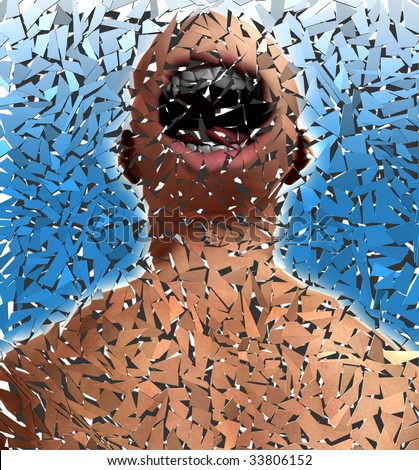
Source. I know it's got a watermark. But a broken screaming mirror-head was too cool to resist.

What does this have to do with gaming? 


As mentioned, games love to use insanity as a device. Sometimes it's portrayed really badly and inaccurately--but sometimes, that's actually okay. Lovecraft's monsters have less to do with schizophrenia than they do with tapping into the psychedelic experiences caused by substance use (a theme in a few of the stories, actually) and tapping into the fundamental fears of childhood. Anyone who's cuddled up under the covers, clutching a pillow or toy frantically, trying to avoid breathing or moving--paralysed by fear of imaginary beasts under the bed, in the hall, or in the closet, can understand where Lovecraft is coming from. Then, too, the insane and unworldly logic of dreams and the bizarre things our minds combine influence a lot of games. The stuff my own brain has come up with as a result of the unusual serotonin and dopamine levels experienced during REM ended up inspiring a series and a whole bunch of short stories. In a way, video games are not playing on real mental health disorders, but on the vagaries of healthy minds when they stray in dark directions.


But...but...what's wrong with that? 


The issue is that people might be getting the wrong idea about how mental health works from these games. Obviously, there's also the problematic (push the buzzer because I said the 'p' word, do it, I dare you) treatment of mental health issues everywhere else in the media, too. People are gradually becoming more aware of it, especially with all the shootings in the States lately, but the problem is what you might call a "piling on" effect. Sure, books often have better depictions, but not everyone reads a lot, and not all books are accurate about the matter, either. And just because everything else is crappy, doesn't mean games should aim for the lowest common denominator in quality.

Mental health issues do not make someone violent just because they exist, for the most part. But gaming is just beginning to figure that out. I don't think we need to keep heroes homebound for weeks--though montages would handle the problems with that nicely--but it should be an option, shouldn't it? It's a challenge for writers, but challenges in writing keep one sharp and improve storytelling abilities.

Another consideration is representation, which has a very positive effect on self-perception and long-term success. People mock Tumblrites for self-diagnosis, but anxiety and other disorders actually appear to be more prevalent than we expected anyway. So while the internet might not be the best way to figure out if something is wrong with you, sometimes it's a good place to find help. Sometimes. And by offering better depictions in games, there is a chance that gamers will find ways to deal with their own demons.


Do we need to fix it? 


Well, actually, yes. There needs to be more of a crowbar between the fictionalized depictions of insanity, which are artistic, and the portrayals of real disorders. It would be nice if more writers and artists actually spoke to people with mental health issues and flipped through the DSM list to get a better idea of what they're trying to depict. One game that actually humanized people with mental health issues pretty well and dealt with therapy (in a very metaphorical way) was Psychonauts, mentioned above. Dead Space and Mass Effect 3 actually touch on PTSD, but don't really resolve it. Also, mental health issues tend to magically dissolve until they're needed for plot reasons, and they really don't work like that in real life.

Things are changing, however; just the fact that Depression Quest exists is a massive step forward. Thisthisthis, and this may be relevant to your interests if you're looking for realistic games. I will warn you that the last one is so creepy, I noped out part of the way through.

So, on that perky note, I can only say--sweet dreams, readers. Remember--real life is even more terrifying than anything that could possibly happen in a game.

*Edit*--a wonderful and very articulate article about video games and the potential they have to teach people compassion appears here.


*****
Thanks for dropping by the nest once again. Don't miss any of the phuquerie. Find Michelle on TwitterFacebook, and on Tumblr, and find her work on Amazon. Check back on the blog to see when one of the irregular posts has careened onto your feed. This is the one and only SciFiMagpie, over and out! 

Google+