About Me

My photo
Author of queer, wry sci fi/fantasy books.
Showing posts with label ableism. Show all posts

Monday, 17 May 2021

Changing Words is Hard

 Using the right words is not especially easy. I should know; I help people do that for a living. I also try to make words do things to say stuff and express my feelings. 

Content warning: I allude to slurs in this piece, citing a couple of them, and also discuss ableism.

Sometimes those feelings are angry, contemptuous, dismissive, or that sort of thing. It's useful to have ways to belittle or express aggression towards people - say, for political reasons, or to express helplessness, fear; there's a constellation of reasons to embrace both negative emotions and negative communication. 

When that happens, it's easy to reach for words like "idiot," "moron," "stupid," and other things. But the origins of these words and their deployment in modern speech is often against people with disabilities - or those perceived as inferior. In the same way as calling someone "blind" to express that they're actually being stubborn, making a bad decision, or deliberately ignoring something is actually inaccurate, it also demeans people with visual impairments. 

There's been a popular push to stop using slurs - first and most easily, of course, is the n word (with or without a hard r on the end; if you don't know which word "the n word" is, you're probably beyond my help). The word "retard" and "faggot" are also falling out of use, and have been for the better part of a decade, for good reason. The latter and the n word are used rarely and in acts of reclamation by particular communities - but that's a different matter, and not one that requires policing - least of all, by a white woman, even a queer one. 

The type of language I'm talking about encompasses more than the most infamous slurs, though - it includes more ordinary words, which can easily pass unnoticed for those unaffected by particular traumas.

Why bother?

This probably sounds like needless nitpicking - I'll be honest, I've had that exact thought in the past - but the way we use words and language shapes the way we think. More educated people than myself have talked about this at length.

Although I have sometimes grumbled about this very topic, it ultimately aligns with my principles to avoid ableism and try to reshape my language. One can have a bit of emotional attachment to words - the sharp slap and sting of particular insults and curse words is very pleasing and useful. But what are humans if not innovators? It's one of our primary advantages as a species.

Sometimes it's also useful to reach backwards and time and see if there's anything to offer - generations of teachers have made use of this particular list to engage students' attention, and frankly, it works pretty darn well. Some of these do definitely fall in the "derogatory language" pile, insulting perceived intelligence and whatnot, but a lot of them are pretty darn fun, satisfying, and useful. 


Who cares about this? 

A lot of people, actually. I'm far from the first person to talk about it, but I thought bringing my own perspective to things - and being honest about my own limitations in adopting better language - might benefit some people. I've peppered references and links throughout my essay, as usual, but a quick search of ableist language on Google will reveal millions of hits and articles. A lot of people care about this.

The fact of the matter is, existing with a marginalization or multiple marginalizations makes the world feel like a hurricane of gravel. One gets inured to the storm, but that doesn't mean one's tolerance for pain is endless or infinite. And if we can reduce that careless pain for others - and refine the precision of our own language, expressing more in the process - is there really a downside? Sure, there's some inconveniences, and it's not always comfortable to examine our own internalized prejudices, but the benefits ultimately outweigh the costs. Yes, it's more work. Yes, it's uncomfortable. But not watching friends' shoulders tense up after a casually-deployed slur is rewarding.


Is this censorship?

In a word, no, but let me explain why. First of all, the process of censorship refers to government or organizationally-sanctioned or rejected terminology. In addition to the fact that different groups will reject and accept particular terminology - for instance, conservative groups tend to avoid queer-affirming language when they discuss things like anti-trans legislation - the intent here is to provide tools for anger that do not cause additional harm. 

There is a strong difference between internally rejecting the use of something and being forced to do so by an external body or power. Choosing the words we use is very different from being told we can't use particular words. 

Interestingly, none of the sources or sites or people I've talked to about this issue were against swearing; neither did they express a refusal to tolerate emotional anger or angry expressions. 

To provide yet another comparison, it's a bit like using a focused attack rather than an area-of-effect attack in Dungeons and Dragons - to quote a common internet witticism, "an arrow may have your name on it, but a fireball is addressed 'to whom it may concern.'" Why use a fireball, and risk the chance of friendly fire damage, when we can precisely target our opponent or the source of our frustrations? 

I certainly can't think of a good reason to casually inflict harm on people I care about, and if I can insult someone just a little better, it's going to be more satisfying. 

***
Michelle Browne is a sci fi/fantasy writer and editor. She lives in Lethbridge, AB with her partner-in-crime and their cats. Her days revolve around freelance editing, knitting, jewelry, and learning too much. She is currently working on other people’s manuscripts, the next books in her series, and drinking as much tea as humanly possible.
Find her all over the internet: * OG Blog * Mailing list * Magpie Editing * Amazon * Medium * Twitter * Instagram * Facebook * Tumblr * Paypal.me * Ko-fi


Saturday, 20 September 2014

Press 'X' for Prejudice: Mental Health in the Gaming World, Part 2

Hello, hello!

A note before we get underway: I will be referring to and linking to descriptions of various disorders. If you identify with these symptoms and experiences, you may want to consult a specialist. I am not a diagnostician or psychiatrist, and you probably aren't either, so don't diagnose yourself based on a few links on the internet. 


Okay, so, with that done--let's get back to the tea in China, as my mother says. As a reminder, the issue was  this article. I agree, but not completely. Last week, we broke down what mental health issues mean, and this week, we'll talk about it in relation to gaming.


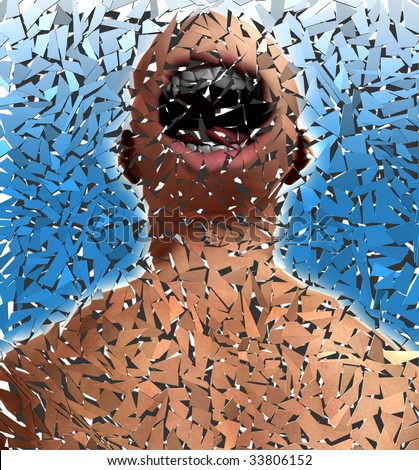
Source. I know it's got a watermark. But a broken screaming mirror-head was too cool to resist.

What does this have to do with gaming? 


As mentioned, games love to use insanity as a device. Sometimes it's portrayed really badly and inaccurately--but sometimes, that's actually okay. Lovecraft's monsters have less to do with schizophrenia than they do with tapping into the psychedelic experiences caused by substance use (a theme in a few of the stories, actually) and tapping into the fundamental fears of childhood. Anyone who's cuddled up under the covers, clutching a pillow or toy frantically, trying to avoid breathing or moving--paralysed by fear of imaginary beasts under the bed, in the hall, or in the closet, can understand where Lovecraft is coming from. Then, too, the insane and unworldly logic of dreams and the bizarre things our minds combine influence a lot of games. The stuff my own brain has come up with as a result of the unusual serotonin and dopamine levels experienced during REM ended up inspiring a series and a whole bunch of short stories. In a way, video games are not playing on real mental health disorders, but on the vagaries of healthy minds when they stray in dark directions.


But...but...what's wrong with that? 


The issue is that people might be getting the wrong idea about how mental health works from these games. Obviously, there's also the problematic (push the buzzer because I said the 'p' word, do it, I dare you) treatment of mental health issues everywhere else in the media, too. People are gradually becoming more aware of it, especially with all the shootings in the States lately, but the problem is what you might call a "piling on" effect. Sure, books often have better depictions, but not everyone reads a lot, and not all books are accurate about the matter, either. And just because everything else is crappy, doesn't mean games should aim for the lowest common denominator in quality.

Mental health issues do not make someone violent just because they exist, for the most part. But gaming is just beginning to figure that out. I don't think we need to keep heroes homebound for weeks--though montages would handle the problems with that nicely--but it should be an option, shouldn't it? It's a challenge for writers, but challenges in writing keep one sharp and improve storytelling abilities.

Another consideration is representation, which has a very positive effect on self-perception and long-term success. People mock Tumblrites for self-diagnosis, but anxiety and other disorders actually appear to be more prevalent than we expected anyway. So while the internet might not be the best way to figure out if something is wrong with you, sometimes it's a good place to find help. Sometimes. And by offering better depictions in games, there is a chance that gamers will find ways to deal with their own demons.


Do we need to fix it? 


Well, actually, yes. There needs to be more of a crowbar between the fictionalized depictions of insanity, which are artistic, and the portrayals of real disorders. It would be nice if more writers and artists actually spoke to people with mental health issues and flipped through the DSM list to get a better idea of what they're trying to depict. One game that actually humanized people with mental health issues pretty well and dealt with therapy (in a very metaphorical way) was Psychonauts, mentioned above. Dead Space and Mass Effect 3 actually touch on PTSD, but don't really resolve it. Also, mental health issues tend to magically dissolve until they're needed for plot reasons, and they really don't work like that in real life.

Things are changing, however; just the fact that Depression Quest exists is a massive step forward. Thisthisthis, and this may be relevant to your interests if you're looking for realistic games. I will warn you that the last one is so creepy, I noped out part of the way through.

So, on that perky note, I can only say--sweet dreams, readers. Remember--real life is even more terrifying than anything that could possibly happen in a game.

*Edit*--a wonderful and very articulate article about video games and the potential they have to teach people compassion appears here.


*****
Thanks for dropping by the nest once again. Don't miss any of the phuquerie. Find Michelle on TwitterFacebook, and on Tumblr, and find her work on Amazon. Check back on the blog to see when one of the irregular posts has careened onto your feed. This is the one and only SciFiMagpie, over and out! 

Wednesday, 17 September 2014

Pass the Prozac: Mental Health in the Gaming World, Part 1

Hello, hello!

A note before we get underway: I will be referring to and linking to descriptions of various disorders. If you identify with these symptoms and experiences, you may want to consult a specialist. I am not a diagnostician or psychiatrist, and you probably aren't either, so don't diagnose yourself based on a few links on the internet. 


So, this post has been a long time coming. So long, in fact, that I got the idea from working on the Psychonauts review a while back. Yeah, I know. That was a while ago.

Why pick it up again, then? Partly it was that the idea refused to die. I really like fictionalized depictions of madness--before I got into Lovecraft, there was Shakespeare, and before him, Diana Wynne Jones actually covered it pretty well in her series, too. And video games love using artistic renderings of madness.

Then I saw this. And though it's well-intentioned, I don't think the writer understands mental health issues as well as they think they do. The comments section betrays a lot of the same misunderstandings, though it's not as bad as, say, Youtube. How dare I say that, though? On what basis can I claim to have a good understanding of mental health--in the real world, not just in fiction?


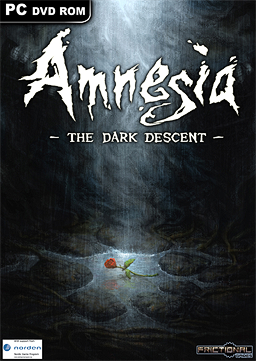
Source. Not shown: an accurate representation of actual retrograde amnesia or the horrible face-melty monster. You're welcome.

How about some background? 


Before I let myself become a writer, I thought I had to be a child psychiatrist or psychologist. I like kids, after all, and I like helping people; it seemed like a good use of my skills, curiosity, and intellect. Then I actually completed my degree in Addictions Counselling. That included not only lab experiences with undergoing forced counselling and forcibly counselling other students--the emotional equivalent of The Hunger Games--but practical classes in neuroscience and a lot of time working with the DSM-IV. I hated the degree by the end of it, but I stuck it out to the finish line.

In "the real world", I've also worked with two government organizations that provide funding to people with disabilities--including front-line service that involved a lot of patient interaction. They were both great experiences, though I have to admit I'm glad I get to work on editing instead. I wasn't working as a counsellor in either position--my degree ruined that for me--but I was interacting with patients and families regularly.

Then there's the real life stuff. Close friends, family members, my partner--all of them have struggled with mental health issues of various kinds. And hell, so have I. I've learned that sanity and mental health--actual health--are a matter of taking things day by day sometimes, of figuring out how triggers work and how to avoid situations with certain kinds of stressors. Sometimes just waking up is a victory.

So, without getting into serious specifics--I know what mental health encompasses pretty well. But what does that have to do with the depiction of insanity in video games and art?


Is the insanity we see in art realistic? 


This isn't as straightforward as it sounds. The answer is "no, but yes."

There are elements of Lovecraftian or Shakespearean madness that reflect the experience of a psychotic breakdown or psychotic episode (as in cases of schizophrenia). The hallucinations, both visual and auditory; the paranoia and fears of persecution; the "word salad" that results when the brain and tongue are at war. Sometimes these visions and hallucinations are vicious and aggressive, and sometimes they're actually more benign--mostly outside the West, in countries with better social support systems and more communal values. Here, the high levels of isolation and rather vicious social dynamics tend to make people feel very isolated, and the metaphorical demons in their heads are very aggressive. It's not much of a stretch to say these things are probably linked.

However, "insanity" often encompasses a lot of things. Narcissistic Personality Disorder, the megalomaniac's mainstay; Antisocial Personality Disorder, and other, less 'by the book' forms of aggression and psychotic behavior are all referred to as "insanity". If a character is "crazy", they'll do anything. Interestingly, Post-Traumatic Stress Disorder-type symptoms are also used as motivation. Horribly mangled versions of Disassociative Identity Disorder  are also popular choices to represent "insanity".


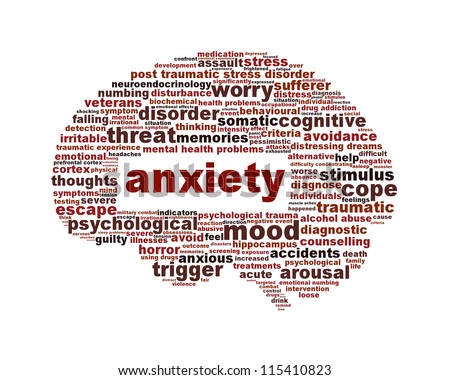
Source. Yeah, I know. Watermark. But it's a great picture.


Does a mental health disorder make someone violent and evil? 


Short answer: no. While some illnesses can contribute to violent behavior, it seems like life trauma has a much bigger impact on violence as a response to hallucinations or perceived aggression from others. However, the jury is still out on this; we are trying to understand what causes violence as a response or defense mechanism.

However, just having a mental health issue is not going to mean someone is "crazy". Between 10 and 20% of Canadians and Americans will experience a mental health issue at some point in their lives, the most common being depression and/or anxiety. Phobias are also extremely common. This means that mental health issues are actually normal parts of the human experience. We don't necessarily cope with them very well, and we tend to pathologize them and isolate people who have them--but they're far from uncommon.

So, does a mental health issue make someone violent? Occasionally, yes. Evil? Absolutely not. Hurting people can make them hurt other people, though. In fact, abuse of various kinds can basically induce mental health issues, including anxiety and depression, as well as PTSD. The thing is, abusers often have mental health issues and a history of pain themselves, so it's complex. In any case, painting people as monsters won't solve the problem, and certainly won't cure people. In fact, most mental health issues can't be cured, only treated, but some of them are easier to live with than others.

So...what about gaming? Does all of this misinformation have a negative affect on gamers, or is it relatively innocent? Next time: we get back on topic and talk about this in the context of gaming!

*****
Thanks for dropping by the nest once again. Don't miss any of the phuquerie. Find Michelle on TwitterFacebook, and on Tumblr, and find her work on Amazon. Check back on the blog to see when one of the irregular posts has careened onto your feed. This is the one and only SciFiMagpie, over and out! 

Tuesday, 11 February 2014

Human Centipede Syndrome: A Meditation on Internet Activism

Hello hello!

So, those of you who follow me on various streams--Tumblr, Twitter, etcetera--will probably notice a bit of a change in the coming months. I'm giving up on formally trying to pursue activism. I'm currently taking a week of (mostly) blacking out social media, and it's really helped me articulate a few things.

I'm twenty four, and I'm tired. I should not be this tired and exhausted at the thought of interacting with people I like, on platforms I like, about topics I like. I still care about diversity and signal-boosting alternative authors. I still plan to write about queer people and people of colour and the disabled. I still care about environmentally sustainable lifestyles and humane, fair treatment of animals (tasty ones included). I am still going to write about women doing things that they aren't supposed to or 'allowed' to do. This stuff does matter.

But I had to ask myself, as I stared at my Tumblr feed full of people arguing that Joan of Arc might have been bigendered, people tossing around the word 'patriarchy' as an insult, and the endless links on Reddt featuring people complaining about Muslims and women and basically anyone other than themselves--is all this negativity doing anything? Is screaming at people really going to get us anywhere?


Source. I love you guys too much to put actual screenshots from The Human Centipede up.

Who gets to speak?


There is a time to scream and there is a time to pick up your sign, write some letters, and take a stand. Screaming can be good. It's important and necessary. But there's too much of it going on. Add to the fact that a lot of the people doing the screaming are--like me--privileged, white North Americans. That also got me thinking--do I know enough to adequately represent the stuff I care about in public forums?

The answer was, frankly, no. I don't want to misrepresent people from other cultures, the trans* community, or anything else when it comes to issues that revolve around them. I can lend my support, but I can't speak for someone else.

The problem is that people (like me, admittedly) pick up a cause or choose to slam a celebrity for making a misstep without realising the importance of their actions. And then others fight against them, often saying pretty horrible things (the subReddit "Tumblr in Action" is a pretty fine example of social commentary gone awry, and let's not talk about "TalesofPrivilege", which is irritating and misogynistic enough that I don't want to link to it.) Is arguing with a bunch of neckbeards on The Escapist forum going to actually get more diversity into mediaeval settings? And furthermore, do I know enough to really talk about these subjects the way I'd like to?


Source. Opinions, on the internet.

What's the point?


Sure, on issues of mental health or sexual preference, I can speak, but I have professional experience on the first one and personal experience with both. And it's not a matter of being 'not strong enough' to take the endless feces-flinging from both the privileged masses and the hyperaggressive activists. It's about how I want to spend my time.

I am a writer. That means I need to write. I'm also an editor, which means I need to help make other writers' books better. Will an essay on pop culture, the internet, the teeth of Neanderthals, or sci fi help me develop the skills for making good art? In short, yes. Yes it will. Will screaming at people en masse or clicking reblog on a hundred posts or wandering through the endless crap swamp that is Jezebel help me make good art? Nope.

So, what's going to change? There's going to be more phuquerie. I'd rather laugh than scream, and I'd rather comfort than kill. When something matters, I'll still be there with sword drawn and banner flying, but I'm going to save that for the occasions where it's really merited. I'll reach out to people, not just shout into a void.

Here's the raw version of what I was feeling, before I could articulate it more clearly, previously published elsewhere.

"Stop.


Stop telling me to wear makeup. Stop telling me to cut my hair. Stop telling me to watch my mouth when I really am being insulting. Stop telling me to not talk about my genitals. Stop telling me to talk about my genitals. Stop telling me to tag things that passingly mention hard topics. Stop telling me to ‘check my privilege’ as though spewing a magic phrase at me will make me a better and more conscious human being. Stop telling me to not be a feminist. Stop telling me to be a feminist. Stop telling me my activism is annoying. Stop telling me my activism is boring. Stop telling me not to wear dresses. Stop telling me to wear dresses. Stop telling me to cover up. Stop telling me I need Jesus. Stop telling me not to swear. Stop telling me you think I’m too PC or that I’m being diverse for brownie points. Stop telling me something is ‘too diverse’. Stop telling me to campaign 24/7. Stop telling me it doesn’t matter. Stop telling me I should feel awful for liking something. Stop telling me it’s stupid to criticize pop culture. Stop telling me I’m a bad atheist. Stop telling me magic isn’t real. Stop telling me creationism is legit and should be taught in science classes. Stop telling me I am irredeemable. Stop telling me I am lost. Stop telling me there is something wrong with me. Stop telling me I don’t know what it’s like. Stop telling me to be polite before I have opened my mouth. Stop telling me I’m normal. Stop telling me I’m a freak. Stop telling me I’m crazy. Stop telling me my sexual orientation is imaginary. Stop telling me I’m deviant. Stop telling me I’m not deviant enough. Stop telling me I’m obese when I just want to listen to music on Youtube. Stop telling me how to lose fifty pounds with this one weird old tip. Stop telling me my personality is more beautiful than my body. Stop telling me how to have sex. Stop telling me being an introvert makes you special. Stop telling me extroverts are king. Stop telling me you think queers are less than human. Stop telling me you think cis people are less than human. Stop telling me to tag things. Stop telling me it will be fine. Stop telling me it’s my fault. Stop telling me that rape is deserved. Stop telling me pregnancy is deserved. Stop telling me you miss the days when racism was the norm. Stop telling me to smoke weed. Stop telling me not to smoke weed. Stop telling me sex workers are just nasty lazy hoes. Stop telling me that you know better because you are white and male. Stop telling me I am too sensitive. Stop telling me my junk is a political statement. Stop telling me to calm down. Stop telling me to get angry. Stop telling me to just be happy.
Stop. Telling. Me. What. To. Do."

*****

Thanks for dropping by the nest once again. Don't miss any of the phuquerie. Find Michelle on TwitterFacebook, and on Tumblr, and find her work on Amazon. Check back on the blog to see when one of the irregular posts has careened onto your feed. This is the one and only SciFiMagpie, over and out! 
Google+