About Me

My photo
Author of queer, wry sci fi/fantasy books.
Showing posts with label feminism. Show all posts

Monday, 1 March 2021

Why Stupid Little Things Matter

 If you've been on the internet for a few minutes, or a few years, it's quite easy to notice that sometimes - or, actually, often - people who purportedly agree with each other can have quite unpleasant dust-ups. Why does that happen so often in political discussions?  

Content warning for talk about sexual assault and graphic, frank language in this one. 


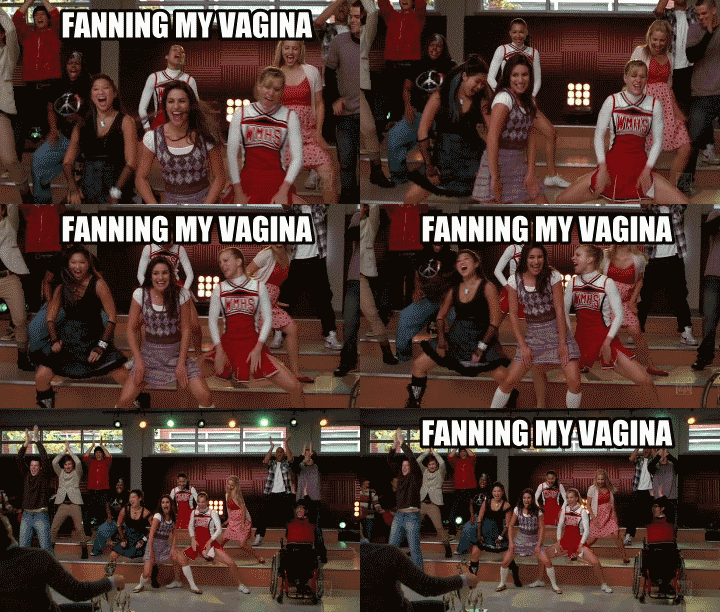
Source. 


I was talking to a few friends about this regarding an article, when - to everyone's surprise - one person declared that she didn't think the clothes were appropriate, actually. 

There was some consternation, so I thought I'd step in and do my best to sort out the misunderstanding. In the process, it occurred to me that it's a useful lesson for fellow discoursers and debaters in general. 

Why teen girls (and people) should wear whatever they want without consequences


It's rather important to question the knee-jerk impulse to say, "cover yourself" to a woman. Quite frankly, we should run our society well enough that people can walk down the street naked without someone saying they're "asking for it." Prevention and self-defense certainly help, but they're treating the symptoms, not the cause.

Because - if you will pardon the reducto ad absurdum - it's not that hard to end up naked on accident in public. And the problem is not a sexual display of any sort, but rather, of predatory behaviour.
I shall use an allegory (which does not map perfectly for human beings, but hear me out). Blaming the hare for being too plump and delicious entirely alleviates the dog's role in catching the damned thing. And the solution is not to plug every rabbit-hole, but rather, for the hound to exercise discipline and restraint. 

(Note that this example is deployed in response to the prevailing imagery of Men at Large as predators, and Women at Large as prey. Even setting aside the binary casting it enforces, it's not at all accurate, but it's certainly invoked a lot. My use here is intended to be subversive of that trope, not affirming.)


But isn't she "asking for it"?


The issue is not "asking for it," but of people hearing a request from silence - as when someone is merely existing in their presence. "Asking for it" ought only to be a thing when one is, genuinely, asking for it. And I assure you, if it's power-play and dominance that people crave satisfaction in, there are rather healthier and more consensual ways to attain it. If one wishes to be distracted by lace, I can think of any number of places to do so. But if lace alone in the mere proximity of a breast is enough to "enormously distract" a teacher's assistant, they need to either masturbate more or less, and either way, it's not the teenager's problem.

But the reason to protect people wearing sexy clothes - or nothing at all, or anything - is that these so-called "safer" activities provide no actual harm-reduction, and place the responsibility on victims. When, as shown in rather a lot of circumstances, that doesn't particularly reduce instances of violence. So it not only says - as someone graphically put it - "rape the other girl," it also circumscribes freedom and actions, to no real benefit, while also effectively condoning predatory actions by making room for them. The way to reduce incidents of sexual assault is to talk about and debunk rape myths. 

Actually preventing sexual assault is hard - but the responsibility keeps falling on women (and non-cis-men in general). Despite their increased risk of exploitation and assault, due to societal prejudices, trans people and people of colour experience assault at much higher rates. But people are so often much more willing to modify the behaviour of everyone except perpetrators. 

Of course, that plays into a whole mythos of men-as-predators, semi-feral creatures enslaved to their impulses; some sort of wild thing that Women have to Tame, entreat, or otherwise cajole into civilization. It benefits no one and harms everyone - but it lurks beneath the skin of this "cover yourself" rhetoric, breathing and panting and refusing to die. 

So how's this relate to discourse?


Well, most of the time, stating outright that "all men are predators" is distasteful even for conservative crowds. Some morally-bankrupt mouthpieces are happy to proclaim things like that - but as Barry Goldwater and Richard Nixon revealed about the Black Civil Rights movement in the States, it was far easier to make ideas palatable by presenting them softly, in avoidant language. Even though they basically effected the same changes. 

Don't get the idea that I'm some sort of saint of discourse and philosophical discussion; I have that inner conservative, that knee-jerk reaction to things, just like anyone else. So to deal with those apparent contradictions between my reaction and my stated values, I try to figure out where they're coming from. And then I ask, 'wait, do I actually have to think this?" 

Because that's the beauty of it - if we like, we can decide to not do something, even though we've been told it's important. And anything that makes us happier, freer, and safer, is definitely good. 

However, that subtextual language of hints and implications utilized by conservatism (and politics in general) tends to foment confusion and conflict when those values are questioned. Thus, saying, "I don't like this," about any leftist or liberal idea, can result in quite a dust-up - because normally, soft implications are used to support particular ideas at large, the sort of ideas that can't politely be stated in public or private conversations. 

That's why people don't have much room for disagreement on the topic, I think - only, most of us don't necessarily pick apart every bit of the clockwork to figure out how it all clicks together. Emotions move faster than thoughts, and fingers are faster than lips. An implication that suggests a major moral disconnection can be very upsetting, and reduce the sense of tranquility and safety in a group. And of course, it's much harder to organize, both offline and online, when people aren't sure they can trust each other.

I usually defuse situations by restating common values, then explaining what I, or we, are hearing from the disagreeing party - and clarifying to see if that's the meaning they intended. Using passive-voice language can be terrifically helpful, because it removes blame by reducing personalization. In a work of fiction, that's boring, but in a discussion verging on an argument, it can be friendship-saving. 

However, sometimes the call comes from inside the house. How do we reconcile conflicts in our beliefs? 

How to survive disagreement - with yourself


Remembering that opinions are not sacred or sacrosanct is rather important; at least in the West, it's often invoked as an argument ender - "it's just my opinion." Nobody's questioning your right to your opinion, but having an opinion doesn't mean anyone's obligated to agree with it. But it's important to question what, and why, we're defending something. Does it actually benefit us? 

"I don't like it for myself" is one thing, and even "I don't like it on you" is another; both are fine, but "I think it's bad and therefore this is fair" has implications. It might not seem terribly important, but right-wing politicians rely on this sort of sentiment when they're pushing through anti-abortion and anti-birth control access bills. "Young, slutty girls" are a famous, easy target. And talking about "young, slutty girls" is substantially more acceptable than the corollary - an idea that men are rapacious, sexually-starved monsters. It's dehumanizing on both sides, and of course, it's just not true. And there are better ways.

So ultimately, "I don't like it, but I respect her choice to just exist in it" is an important distinction to make. Choice feminism is sort of tricky, because we all Live in A Society, of course. You certainly don't have to wear that combo! But we have to stick together and let anyone who wants to wear a thing, wear it unmolested - because the alternative is reinforcing that big, ugly brick wall of rape culture. 

And those ideas harm our bodies, our minds, and even our spirits. I honestly believe that humans are pretty good, and over all, tend towards altruism - and something that harms each other less will only benefit all of us, especially since the thing we're giving up sucks. 

What do you think? How do you reduce conflict between factions who mostly agree with each other? 

***
Michelle Browne is a sci fi/fantasy writer and editor. She lives in Lethbridge, AB with her partner-in-crime and their cats. Her days revolve around freelance editing, knitting, jewelry, and learning too much. She is currently working on other people’s manuscripts, the next books in her series, and drinking as much tea as humanly possible.
Find her all over the internet: * OG Blog * Mailing list * Magpie Editing * Amazon * Medium * Twitter * Instagram * Facebook * Tumblr * Paypal.me * Ko-fi

Friday, 27 April 2018

Marvel's "Infinity Wars" is Trash and Maybe You Should Skip It

I'll cut to the chase today.

This post is absolutely loaded with

SPOILERS SPOILERS SPOILERS SPOILERS SPOILERS


for "Infinity War", which came out last night. Read no further if you are dead-determined to see this movie.

So: first, it does follow the comic storyline, and I am aware of that - but comics are not a golden, unquestionable authority, and previous movies have deviated from or altered the canon as necessary, so insisting that it follow canon religiously is absurd (and not even possible).

Still, at no point does this excuse the fact that the heroes who die are those coded as queer, the less-than-alpha males, the people of colour, and the women - Loki, Gamora, Scarlet Witch, Drax, Black Panther, Nick Fury, Maria Hill, and others. Sure, they'll probably be brought back to life using the time reversal in the comics, and yes, there are movie franchise sequels in the works for several of these, but that doesn't make this okay. Bucky and Spiderman do die, sure, but they're "softer" - and coded queer (especially frustrating since Marvel's sacrificed queer representation for the sake of that green, green foreign release money in China and Russia).

While a dictator occupies the White House and trespasses on laws of his land, while ICE agents and police officers haul out people of colour from their homes, while sex workers face persecution under SESTA/FOSTA, and while women live under policies that make it easier to die than get an abortion or reproductive health options, we cannot use genocide as a plot device.

Sure, it's supposed to be tragic, but having Thanos magically genocide half of the universe - the queer, non-white, non-rich, non-male half - is not escapist. It's cruel at best and triggering at worst.

But there's more to this problem. As the writers gleefully and clumsily skip past the actual implications and work of smoothing out the romance between Peter Quill and Gamora, heading straight to on-screen smooching to show progression, Gamora becomes tragedy bait. Gamora is sacrificed and fridged by her abuser, Thanos - making the story she and Nebula have undergone all about Thanos and Peter. Even if her death is undone, the twist here is appalling and irresponsible to survivors of abuse.

The heroes who live are white, male, powerful, and apparently, less disposable. Sure, Captain Marvel is coming, but distracting us with a new toy to make us forget the ones we lost only works on toddlers.

So, no - even though Thor: Ragnarok was exultant and wonderful, even though Black Panther was a revelation, even though Guardians of the Galaxy vol. 2 was wonderful and subtle in many ways - I'm not sure I can stay with Marvel. To have marginalized people used as trauma porn for the development of the societally empowered characters is too much for me. It throws out the work of those movies.

In short - maybe Infinity Wars won't upset you, and maybe you can enjoy it, but if any of this sounds like it will reduce you to tears or a panic attack, give this one a miss.

Friday, 3 November 2017

In and Out of the Closet: A Fat Girl's Personal Style Journey

Content warning: this article deals with body image issues that may be triggering for some readers. Discretion is advised.

I am a member of the Disney Generation. This is hardly a revolutionary claim or point to make, but for a fat femme girl, who's also bisexual, it comes with invisible baggage and fears.

 Full skirts, improbably round breasts, delicate waists, paneled gowns, shimmering fabric, vibrant colours, and jewels shaped my idea of not only desire, but also royalty. Studying history from a young age, I saw rich fabrics, precious treasures, embroidered and lined gowns, and I admired it. Drawing endless pictures of dresses and gowns, often with surprise cut-aways and deep decolletage, I both desired them and wanted to be them. Formal garb was both my ambition and my most secret hope, but it was also something I believe impossible for myself. 

Fat girl life


My mother's body image issues left a deep impact on me, and readily transferred over to my own. I had always been sort of tall, but wished I was taller. Hating my muscles and fat, seeing the curves as proof of a lack of fitness - I didn't grow up within a corset, or with bound feet, but the cage and constant pressure of the BMI chart was just as strangling and hobbling.

In the 90s and 2000s, flatness and muscle and bones were the beauty ideal. I used to daydream about surgery and liposuction and waking up with a body that moved, looked, and felt different. For years, I tried to get by on 1000, 1200, or whatever number of calories per day would work - inevitably failing when encountering food, of course, or when sabotaged by my mother, who'd encourage me to 'live a little' and eat a salty or sweet treat, caving in to her own cravings. But soon, it'd be back on the wheel of nagging to exercise, not for the joy of movement, but to deal with the shame of my flawed body. 

  In this way, I spent my teens and a good portion of my twenties - trying different techniques to shed stubborn pounds that were as good as nailed to my flesh - due, unbeknownst to me to hormonal imbalances. I learned to like certain things, and aspired to climb buildings and corners and walls and roofs, assuming that only by losing weight could I attain those literal high hopes. 

At the same time, in the back of my mind, fashion and clothes I liked were often weighty. Elegant layers, oversized cuts, voluminous skirts, corsets swooping in to hug a waist I didn't think I had - these were things I associated not with femininity alone, but with being regal, imperious, and respected. Later, I became intrigued by swooping, voluminous clothes - Jedi robes, Amidala's gowns, even oversized boxy cuts in music videos. Finding ways to mingle these elements with layers has led to an unexpected but perfect style intersection for me.

#outfit #selfie #clinic #spoonielife

A post shared by SciFiMagpie (@scifimagpie) on


I stopped confining myself to things I 'could wear', and started experimenting with revealing my skin, taking inspiration from slimmer models as necessary and trying out a variety of looks. Overly modest circle skirts, sarongs with jeans underneath, a million skin-tight black turtlenecks, black and white tiered skirts, fishnets and lacy patterned tights, steampunk leather corsets, knitted sweaters and business-like skirts. Eventually, I achieved a more defined and coherent look, featuring cocoon sweaters, leggy wrap dresses, layered corset-cut vests, flowing circle skirts, and oversized scarves - where I'm at these days. Older style elements make their way into clothes, but I dress with more deliberation, strategy, and joy these days, not seeking to hide my shameful corpse under oversized tie-dye t-shirts and baggy jeans or in ill-fitting and suiting button-up shirts. 

The personal is political - pencil skirts included


I've hit a point where I can not only incorporate a variety of influences, but I receive social praise for my skills in doing so. I've begin to feel like I inhabit my own body, that it is not broken, ugly, or in need of repair. The vibrant body-positivity movement has helped this immensely. Then I saw this

At first, I simply ignored it, because I didn't understand it and couldn't relate to it. But after talking about it with a friend, a sort of Pod People-like realisation snapped over me, and I considered that yes, most fat women ARE dressing according to this code. Pretend it's 1950 or face a return to the same old standards and shames. In my retail days, I had to wear carefully coiffed and chosen outfits and makeup, while my very tall, slim manager wore pilling sweaters and got not a word of criticism about it.

Chatting with my friend Katie de Long, who is also both a ferocious feminist and enthusiastic fashionista, I was dismayed and alarmed by the through-line of this pattern. In her words [edited slightly to remove my part of the conversation],

"...There are societal biases that make it MORE needed for fat women to prove their femininity.
No one ever thinks of the "hot curvy girl" as being draped in loose, structural clothes.
They see her va-va-vooming in a waist-training corset and full face of makeup. Anything that "erases" the figure or the curves is seen as undesireable, even if it fits properly and is well-tailored.
I think another thing is that plus sized women are trained to hide their size. We see Christina Hendricks or Amy Schumer's curves as being desireable.... so long as they're in a close-fitting pencil dress. 

But I do admit I'm pretty prey to that shit too. I avoid wearing loose clothes, wear things too tight rather than too lose.... and get really sexual, lots of cleavage, short skirts, slit-up-to-there, etc. I love exaggerated shapes. So I've always hated really drapey clothes, or close-fitting clothes that don't highlight the figure (fuck you, leggings).

Plus, and I know this is victim-blamey, my first semester of college featured a police officer advising the girls in the freshman class to NOT wear loose clothes because it's easier for a rapist to get them off, even without scissors.
So for me, when I wear loose clothes, I have really nasty panic attacks about the idea of someone peeling them off me without my consent. When I wear tight clothes, I feel confident, that they'll have to use scissors, which is more likely to give me an opportunity to either get away, or seize the scissors and take out an eye. As well, my style's fuckyou femme, so for me [as a rape survivor], I feel like my gender and the violence I've suffered because of it is erased when I put on loose, minimalist designs."


What to wear?


At the end of the day, even though clothing choices are fraught with danger and hidden signalling that can be hard to understand, finding a way to express oneself through attire can be very important. From talking to my nonbinary "enby" friends, I've gotten even more insight into this. What strikes me as funny and maybe even uplifting is that my experiences with feminism and trauma have taken me in a circle. Instead of pretending to be a man, or having no identity at all, or seeing my childhood dreams as unattainable, I've been able to make my innermost desires come true.
There's an old saw idea that feminists are ugly, hairy, unconventionally feminine, fat, and basically undesireable. But taking back a sense of inner worth has given me the tools to fight my inner ugliness, wear makeup without feeling as though I'm faking something, and stop hiding my inner exuberance. There is freedom in ugliness and invisibility, and a merit to reclaiming or defying constraints - but at least for me, there is more joy in this new, permissive ground.

Ultimately, I hope that my experiences can make people feel a little better about their own secret desires and hopes. A lot of hay has been made about how 'style has no size', but there's still fierce debate about 'who can wear what'. But simply wearing what one wants isn't as easy as it sounds, and takes time. If you need it, take this as official permission to try out that thing, regardless of your gender. You are not 'too old' or 'too fat' or 'too thin'. 

You are enough. 

And it's okay if it doesn't look right at first. What matters is that your clothing expresses who you want to be. 

Additional reading:

A Nigerian designer using fashion and style to explore feminism and self-expression

Information about the cost of existing in a female body and/or having periods and breasts

The ways we judge women and how it affects their careers 

***

Thanks for returning to the nest. Leave a comment and say hi! I want to hear from you. Keep up with the new releases by getting on the mailing list. Buy my books on Amazon, and keep up with me on TwitterFacebookTumblr, and the original blog. This is the one and only SciFiMagpie, over and out!

Wednesday, 4 October 2017

Dungeons and Representation: How a Podcast Did Good

Hello hello!

So anyone who follows me on Twitter - or anywhere, really - has probably noticed that I am majorly into podcasts. I've alluded to my love of tabletop RPGs on more than a few occasions, and as a fledgling DM (Dungeon Master - the non-BDSM kind, though there's a surprisingly large overlap between the two communities...) I like to take inspiration from the best.

Before I explore today's topic in detail, a few recommendations - in no particular order, Critical Hit, How We Roll, One Shot, Campaign, The Adventure Zone, and Dungeons and Randomness are all funny and wonderful programs that showcase both inclusive gaming (on and off the table, for the most part) and really, really good storytelling. Writers and geeks should check them out. Don't worry about the rules; these podcasts are almost all story-focused, so it doesn't get too mathy and crunchy.

With those recs out of the way, I'd like to focus on D&R in particular. Having recently completed its 200th episode, the four (!) groups sat down with the DM, Jason Massey to talk about their experiences.


What happened 


Now, two hundred episodes of anything is a trip, but I'm a binge-listener and a completionist, so it wasn't a big deal for me. However, the beginning of the series was pretty rocky. The first group to form, known as Group 1, was an all-male group of friends who'd met through the wrestling fandom. There are a lot of wrestling fans who also play D&D, for some reason, so that's not a problem - but the group dynamics were.

Beleagured DM Jason and hapless party leader Rob Wiesehan, playing tiefling warlock Malchus Grimnas, then spent about fifty episodes trying to rein in the murderous and careless shenanigans of this initial group. It's honestly a fascinating tour through toxic masculinity - players screw, rob, and murder their way across the land of Theria, and as Jason's worldbuilding becomes increasingly intricate and rich, most of the players enjoy being dicks more than they do abiding by the social contracts of D&D, to quote Rob.

What social contract? 


Here's the thing about Dungeons and Dragons and most other roleplaying games - it's pretty essential, as Rob explained, that the other members of your party are trustworthy enough to not murder you in your sleep, screw you out of things like healing potions, share resources, and fight on your side during battles - and not, say, engage in player vs player combat or act in needlessly antagonistic ways. Interestingly, a couple of the early players from the group seemed genuinely baffled about why it might be a bad idea to act like dicks and fight people who are supposed to be on their side.

Now, group dynamics are an inevitable part of human interaction. We're social animals, and that means we're liable to be jerks and conflict with each other, but it's totally possible to ride out those painful spasms and create a lasting D&D group. Sometimes people leave, which is why inviting a few more people than you think necessary is often prudent. But it's a very important and basic part of this system, and most systems, that you do not screw over the people who are on your side.

The fact that multiple players in Group 1 just didn't understand this is fascinating, and honestly, only seems to have happened because it was an all-dude group. Broish humour is fine, but ripping on each other, jockeying for leadership, and being unnecessarily and often destructively subversive often led to doom and disorganization.


Have some eye bleach: fan art of characters from the Adventure Zone, in Halloween costumes as *other* characters from The Adventure Zone - who are also lesbians. This picture has lesbians ^2. You're welcome. 


When it got better


Perhaps because of Jason's expert implementation of consequences in the storylines, to an extent that many traditional creators should follow, the actions of many Group 1 members caught up with them. It seems that murdering, betraying, and robbing people willy-nilly is kind of not great. While the other groups and players sometimes made ethically questionable choices in the storyline, they always weighed them carefully. Una Anhelada, a gutsy devil-may-care paladin played by Izzy Chadwick, often spearheaded these - but her seeming recklessness and impulsive nature still included concern, empathy, and care for both her party members and fellow players.

As time went on, the DM added more groups, each of which went through their own growing pains.  Holding auditions for new players meant screening and better integration of people, something important for a show, and interestingly, also brought a flood of lady players, as well as at least one non-binary and later trans male player. Not everyone there was white, either, which is a silent problem besetting many D&D games, but a welcome change here. Among the new blood was Brienne Marie, a delightful pixie of a person with a filthy sense of humour and a sparkling laugh. Quickly becoming Jason's platonic soulmate, her addition to the cast marks a sharp change in the show's style - very much for its benefit.

This isn't to say that GIRLS ARE ALWAYS BETTER, because a few of the new lady inductees were pretty irritating - and left quickly - but the most destructive players in the game were definitely all men. Their behaviour patterns had a lot in common, too - a determination to have their desires and goals met, often at the expense of the party; a refusal to accommodate others' needs and priorities, and toddler-like tantrums and antics when their requests were denied.

Back to Group 1 


Group 1 went from being the primary party in the setting to an exception.As the other two, then three, then four (! counting a bonus group made of existing players) groups quarreled and debated and resolved conflicts in satisfying and interesting ways, Group 1 remained somewhat stuck in the past. When party members finally began to murder each other, in a culmination of the rivalries and toxic dynamics, virtually only Malchus remained. Because the players either selfishly focused on their own gimmicks and jokes or sabotaged each other, often both, Malchus (and Rob, his player) were exceptional. As the group reformed once, then twice, it gained lady members and non-toxic male members - and underwent a drastic transformation.

Even as Malchus grappled with the impact of his actions, the group would discuss their decisions carefully and cautiously. Not exploiting others, picking up a dorky and endearing young NPC wizard-fighter (who subverts the trope of that combo brilliantly), and helping each other in heartwarming ways, Group 1 became radically different from its roots.


But Not All Men 


The thing is, men don't have to suck. Male and female players can both participate in toxic masculinity, but focusing on sharing the spotlight, resolving conflicts without in-character violence, not plotting and planning about other player characters behind their backs - and out of character - and above all, just not being awful dicks to each other, will all result in much better table experiences. It's fine to create evil or morally ambiguous, selfish characters. But it's vitally important and mandatory for people to keep their character personas and grudges separate from in-person dynamics, and to settle table conflicts as soon as they happen.

D&D is easy to get invested in. The shared storytelling, improv with dice, and creating a world are intoxicating and empowering. Add in the capacity to be something impossible or better than one is in the real world, and you have a heady brew - but it's easy to get emotionally invested in one's persona and the storyline. When everyone's invested, and at least somewhat working together, it's a hit of pure magic. But even if the characters are planning to double-cross each other, players at the table have to use boundaries and not harm each other.

Failing to do this results in Reservoir Dogs - like chains of revenge and can absolutely ruin friendships forever, because of the basic lack of respect they represent. But working with the other players and keeping in-character conflicts and rivalries separate from real life makes sure everyone at the table can walk away with a spring in their step and an easy mind.


***

Thanks for returning to the nest. Leave a comment and say hi! I want to hear from you. Keep up with the new releases by getting on the mailing list. Buy my books on Amazon, and keep up with me on TwitterFacebookTumblr, and the original blog. This is the one and only SciFiMagpie, over and out!

Saturday, 4 March 2017

Censorship and 'Censorship': Who Gets to Speak?

Hello hello!

In the increasingly surreal absurdist comedy that is current international politics, the issue of free speech has been awfully prevalent. With the new development of sensitivity readers and an outsized backlash to their existence, as well as cries of outrage over the cancellation of Milo Yiannopoulos' book contract, a lot of people have taken these as 'attacks' on free speech. Meanwhile, Beauty and the Beast is being banned from certain theatres because the character Le Fou will be openly gay.

There will be people who say that these actions are on par. Neil Gaiman, who I love and respect, wrote an essay to that effect about nine years ago.

There was a time when I would have agreed with that essay, because after all, who does get to speak? Is there really a difference between public censorship and government censorship? Is refusal of a business to deal with an individual really censorship at all?

The thing is, all taboo or unpopular comments are not created equally. The people who would like to have the freedom, or 'freedom' to support violence and harassment against others are eager to make the claim that they're doing so for the sake of provocation, but it's funny how they never stand up for, say, the gay or 'ethnic' people who are also saying socially unacceptable things.


"Censorship" versus lack of support 


Censorship refers to the practice of an official, government-led organization removing or culling content for the sake of a moral agenda. Refusal to allow a speaker or publish a book due to protesting is not government censorship, it's a decision for the sake of consumers. That's well-trodden ground and I don't plan on tramping it into smoothness yet again. Rather, I'd like to focus on the real issue - that all 'unacceptable' speech, as I'm going to call it, is not created equally and does not come from equally supported, safely-positioned, societally enshrined sources.

Who's the target? 


For a long time, the broad left and the liberal segments of the right have grappled with the idea that people want to voice and discuss things that aren't socially rewarded. Sometimes these things are simple, like, 'black people are treated badly', and sometimes these things are basically underage teen girl porn by famous authors.

There's a certain idea that's been prevalent since the 90s; namely, that offending people is automatically good or moral in some way. In television, from my understanding, there's a weird attitude of equality in terms of who is allowed to be targeted for offensive jokes, which gives the inaccurate idea that all groups have equal weight in choosing targets. With this idea, offending everyone is fine, even moral, because it 'makes people think' or 'shakes them up'.

But pretending that all ugly speech is created equally is a fallacy that has allowed the proliferation of hate speech and violence of various kinds. It comes from the same idea that everyone is born with the same opportunities and advantages, when that simply isn't the case. Black people in the USA die four years earlier than white people, Trans people experience disproportionate rates of mental illness and violence, leading to a shockingly low life-expectancy - roughly age thirty. Simply being born or developing a particular set of circumstances has a drastic effect on people's lives.

It's an ugly but empirically proveable fact that being a woman subjects one to greater risks of sexual violence and limits career advancement, that being transgender has the same results but multiplied, that being disabled in any way  results in a lower lifespan, that being a sex worker carries both danger and stigma, and that being a person of colour, or fitting into intersections of any of these groups, has a magnified effect of inequality. I haven't cited every one of these ideas to avoid turning my post into link soup, but it's not hard to find support for them.

Who gets to say what?


The problem comes from the fact that some people are used to hearing certain things on a regular basis, and some experience disproportionate harm from these things. A black woman listening to a "n---" joke from a fellow black comedian may experience commiseration in the context of talking about a shared experience. The same joke from a white comedian plays into historic and present inequalities, and even if it's intended in a friendly way, can reinforce those inequalities.

With that in mind, considering the audience targeted by a certain piece of art is essential to deciding on whether or not to support that art's expression. The time has come for us to choose which 'free speech' we're going to support, and I personally plan to use the audience and targets to determine the people I'm going to stand behind. The idea of 'punching up' compared to 'punching down' is unquestionably vital here. Sometimes intersectional nuances can make it difficult to choose a side, and in those cases, a full-force attack is less necessary than a careful, mediated conversation. But in a lot of situations, the people experiencing blocks and resistance tend to be those disempowered by social circumstances.


"But everyone protests things!" comes the counter-argument. "We need to be able to say awful things just in case..." 


In Canada, as well as many other countries, hate speech is punishable by law and considered separately from other forms of free speech and self-expression. In the US, that is not the case, and it's because of a refusal to acknowledge that saying ugly things about people who can be harmed by them is different than annoying people.

It's really worth considering why it's so important to demonstrate one's freedoms by vocalizing aggression or violence towards others. Since white people and men in general tend to be protected by social structures and the way laws are enforced, it's vital to realise that things that hurt our feelings seldom hurt us in ways that leave a lasting impact. Feelings do matter, but in the context of violence and poverty, refusing to be criticized because it's annoying seems awfully greedy.

What does this mean for writers? 


Those of us who create content play a role in creating culture itself. Instead of being upset about sensitivity readers, it's better to embrace them and appreciate their role in helping us improve our fiction and ensure its fairness. Sure, there will be times when an issue is nuanced and sticky and effects a couple of groups of people on the sharp end of prejudice, or when people from the same group have multiple differing opinions on content. For example, Asian people are divided over Madame Butterfly and Miss Saigon, which provide casting opportunities but reinforce prejudiced ideas. While it's seldom possible to please everyone, doing the best to satisfy most people, or at least the important people, is generally advisable.

As for situations where portraying a troubled or troubling character is 'part of a story', it's important to think about one's own 'artistic integrity' in the context of the social world we live in. Where have your ideas about this character come from? Art can feel like magic sometimes, but treating it as an uncritiqueable sacred cow both cheapens its quality and lets creators get away with not challenging themselves or their beliefs. At the end of the day, it's not easy to strive for equality, but it's the right thing to do in so many ways - and that's why I support some forms of challenging media and art, and refuse to support others. Milo Yiannopoulos can get phuqued.

***

Thanks for returning to the nest. Leave a comment and say hi! I want to hear from you. Keep up with the new releases by getting on the mailing list. Buy my books on Amazon, and keep up with me on TwitterFacebookTumblr, and the original blog. This is the one and only SciFiMagpie, over and out!

Friday, 6 May 2016

Podcasts and Horror Writing: Some Observations

Hello hello!

In the last six or eight months, I've fallen in love with podcasts. I started off just listening to Welcome to Night Vale, courtesy of Tumblr, and The Thrilling Adventure Hour soon followed after they ad a crossover. Following Mara Wilson's Twitter feed led me to I Don't Even Own a Television. From there, I started to poke around, and talked to a few friends, like Louisa (blog link). I got hooked on Sawbones and Oh No, Ross and Carrie. My Brother, My Brother, and Me became my nightly comfort, the McElroy brothers' voices lulling me safely to sleep. Listening to a happy, healthy family kibitz and bond over Yahoo answers and social niceties  has made dark times that much easier to endure, and helped me step back into the light.

Of course, I seek more than comfort and the joy of new information. These days, I often enjoy horror rather than fearfully avoiding it, and one of the best creepy podcasts around has to be Lore. As always, however, one can only binge-listen to a cast for so long before running out of episodes, and I sought alternatives and supplements to my fix. The HP Lovecraft Literary Podcast caught my attention as well, and after I'd run out of episodes of that--no mean feat, but I tend to listen obsessively to shows I enjoy, rather than just taking them in once a week or every two weeks--I had to find more horror and fiction podcasts.

Where did I go next?


I haven't finished them or listened to much of them, so I will not yet link Psuedopod, Drabblecast, or Knifepoint Horror, but they come well-recommended. TANIS and The Black Tapes are also moderately popular, though have mixed reviews. Perhaps one of the best known is the Reddit-sourced NoSleep podcast, based on the subreddit of the same name.

I have not yet completed the podcast's run of back episodes, but my favorite episodes of NoSleep, and the ones I consider the best, are the following. I have included notes about the entries.

Episode 1--the very first story is perfectly chilling and one of the most unnerving I've ever heard.
Episode 3--the first story is the best, once again.
Episode 7--only We Don't Talk about Sarah, though.
Episode 8--My Best Friend's Grandmother; again, the others are meh.
Penpal Part 1--generally, both parts are an interesting and suspenseful mystery, but see below.
Penpal Part 2
Episode 14--the whole thing is pretty great.
Episode 18--both stories are rather good, but the last one is remarkable.

Normally, I wouldn't include so many links, but I want readers to understand my sources and references before I shovel conclusions over them like so much grave dirt.

What is it about horror? 


I've come to like horror because it allowed me to frame my own demons in a more useful way, and to get in touch with the dark side of my imagination. Many authors have written about the appeal of horror, and I would be redundant to ask why the world of shadows and fear calls to so many.

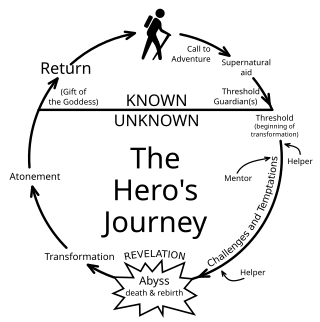
I would suggest, however, that in addition to expressing personal darkness, the appeal of horror is partly in how it inverts some expectations. Most stories involve things ultimately going right; horror is about things going wrong. The Hero's Journey structure (see below) becomes inverted, and often foreshortened abruptly by disaster.


Source. This is allegedly what all stories come back to.


In a horror story, the hero's journey still occurs, but there's no guarantee of redemption, just further horror and loss. Readers, viewers, and listeners derive a weird comfort from facing their fears about the worst thing that could possibly happen.

Meet the new boss? 

The exciting thing about the NoSleep podcast is that it's a trove of unknown and developing writers, rather than old hands and established experts. Sometimes the writing is mediocre or amusingly inept, but the variety is a real pleasure.

These authors tend to use an X-Files sort of sensibility--setting mysteries in the local environs, even in office buildings, subdivisions, and backyards. Narrators/protagonists are often relatively innocent, rather than being guilty of violence before the narrative's events take place. Surprise encounters dominate most of the events, or narrators become the victims of more powerful and often abusive, stalking forces.

Unreliable narrators are common, and it is often difficult to determine whether the main characters have a loose grip on reality or are truly experiencing paranormal events. This is enhanced or exacerbated by circumstances of shyness and social isolation; protagonists are usually lonely, ordinary nebbish types--not just Everyman sorts, but updated ones, often labouring under the kinds of crappy jobs that so many Millennials and Gen Xers take.

But not everything is intriguingly updated. With many modern sensibilities come unwelcome old friends.


...Same as the old boss.


No, what I want to know is--why does horror reinforce so many old ideas? The NoSleep podcast is a particularly interesting example of this, because the writers are culled from Reddit. Reddit is mostly populated by young men, under the age of forty. 

One might not expect that so many younger men would reinforce gender stereotypes as strongly as these writers do, but an interesting thread through even my favorite stories tended to be gender essentialism. Female characters were usually mothers, were depicted as more fearful and physically weaker than male characters, and tended to be subjected to far more violence.

Female antagonists, however, are common, and usually tend to be lurking spectres or haunted children. They present menace but rarely enact the actual violence. Other antagonistic forces are often either genderless or somewhat male-coded, and tend to be far more violent.

This being said, lady writers do occasionally contribute, and often focus on issues of mental health and abandonment, or lack of physical safety. Stalking also crops up. These elements are really interesting, and I'd love to see more of them. Perhaps the next seasons will deliver that!


***

Thanks for returning to the nest. Leave a comment and say hi! I want to hear from you. Keep up with the new releases by getting on the mailing list. Buy my books on Amazon, and keep up with me on TwitterFacebookTumblr, and the original blog. This is the one and only SciFiMagpie, over and out!


Wednesday, 24 February 2016

Why I Hate Men

Hello hello!

Before I get down to brass tacks, two notes apply. First, I will be talking about harassment and violence in this post, as well as sexual assault. Second, when I talk about men, I am referring to cis and mostly heterosexual men. My experiences with trans men are more limited, and further, trans men do not have the systemic access to power that their cisgender counterparts do.

If you don't know what "cis" and "trans" mean, go here! Or even here. I will also be talking about patriarchy and male privilege, so before you tell me those things don't exist, please click on the links and do some research, so we can all save some time.

I hate men. 


First of all, #NotAllMen. For one thing, my romantic partner is a man, and some of my closest friends, the people I trust most in the world, are men. But still--in the space of a few years, I've gone from decrying criticisms of patriarchy and saying that patriarchy isn't a real thing, to actively participating in misandry and criticizing popular masculinity without remorse or apology--as much as possible, anyway.

How did that happen? How did a nice, egalitarian woman end up "hating men"? 


Well, feminism has definitely played a role in it, but there's more to it than that. It's given me a lens and a mirror, to reflect on and inspect my own feelings and thoughts. What I slowly discovered was that there were an endless number of habits I'd taken on that were solely for the sake of keeping men comfortable in conversations.

And more, I wasn't the only woman doing this--we were all doing it. From automatically defending men in conversations about rape and abuse, to citing "but I know so many decent guys", to folding into and agreeing with men's opinions whenever they piped up about a topic--even if those opinions disagreed with our own. If a man was upset, I, or someone else, would immediately try to comfort and console him. That doesn't sound like a big deal, but when you add all of that up, it results in a lot of emotional labour.

It goes deeper, too. Take those tendencies away from the allegedly banal setting of Facebook, and contextualize them within relationships. It's hard not to agree with one's father out of a sense of filial duty, even if one disagrees. Worrying about a partner's needs over one's own, even when they would willingly listen to your objections or requests.

As I started to notice those habits of my own, I noticed them in the women around me, too. People who don't fit in the rigid and limited gender binary, such as my trans friends and friends who don't like gender labels, STILL had many of the same habits of consoling men and being timid about expressing their own opinions.

This sounds like quibbling, says part of my brain. Isn't it making something out of nothing? But that part is still subject to all this socialization. How can we talk about any feminist issue when our complaints are downplayed? It's easier to say a woman is entitled and whiny than it is to admit that there are cultural links between, say, child marriage in the much-criticized Middle East and groupie sex culture from the 1970s.

It sounds minor, but these aren't the only habits I've developed. Every woman I know habitually treats walking alone as a small test of will. We carry our keys and memorize how to punch people and make sure we know where our Swiss Army knives are in our purses and pockets, "just in case". The chance of sexual assault is just treated as a fact of life, something to dread but accept as a risk. Women plan their routes around trying not to be alone, and go to bathrooms as a group, for just this reason. It becomes unconscious--until, at some point, one wonders why they always reach for a knife or a cell phone when walking alone, and considers that maybe, just maybe, that's messed up.

But what about men? 


Men themselves have reacted in a variety of ways to my changing perspective. A lot of my male friends have expressed discomfort or protested my opinions. More disconcertingly, the same friends will use pretty manipulative arguments to counter my own. Invoking the sacred bonds of friendship--all the more ironic when one has barely talked to a person in private, if ever--and using personal attacks were the most common "counter arguments" I saw. Fortunately, a surprising number have supported this misandry and verbal defiance of societal training, for which I am endlessly grateful. Every time a man does not attack me, verbally or physically, I am relieved.

When I was younger, women would bully me. I hated women, and trained myself to think that men were somehow better; more logical, more objective, and kinder. As I've grown up and started expressing uncomfortable opinions, I've found that male socialization is pretty much the same as female socialization, and that men gossip and express indirect aggression and use personal attacks, too. But where women eventually learn that these attacks do more harm than good, men don't--and I think a lot of women let men get away with them because we're trained to comfort them.

Now that I've actually been on the internet for a while, too, I've noticed that men or apparently male commentors tend to be more dogged and persistent in their attacks. After a while, I could tell the gender of "anonymous" commentors pretty easily just from the style of their comments.


But why kill all men? 


First of all, misandry is mostly a performative thing. At no point would I or any other feminist I know of pick up a gun and just start blasting men left and right, gunning them down. Nor would I suggest that feminists, including myself, go around dealing out rape to fix up gay men and make them like women. Nor would I say that women have the right to keep their male partners in line, as god intended, using force if necessary. Nor would I say that men are obligated to perform sexual services at our whim, and to keep the house clean. I wouldn't say that men need to look good at all times or they're slobs, and deserve harassment. I would not turn a blind eye to abuse of a man by his female partner because "that's just their relationship". I would not assume that his job is to be at home, raising the kids, or in the back of the church, remaining obedient and silent. I would not assume that a man is "asking for it" with the way he is dressed. I would not follow around and harass a man on the internet until he wrote many tearful blog posts about his harassment and stalking. I would not kill men because they had rejected me. I would not say men should not be believed when they say they have survived ugly incidents of sexual assault.  I would not say that men are complaining too much when they ask for more speaking parts in movies, or say that men's mere presence is ruining science fiction and video games. I would not support legislation against male reproductive rights, questioning whether men should be forced to care for accidentally sired children and deal with them from the first moment the cells start to divide--claiming, of course, that clusters of cells and children or babies are the same.

But apparently, men will do this to women, and when we complain about their treatment, continue to say that they're being unfairly maligned. And so that is why I "hate men": it is my way of whistling in the dark, of dealing with the statistical fact that about 1 in 4 North American women are sexual assault survivors--including too many of my friends to count. Being a woman means living under siege.

And you know what's worse? Change "men" to "white people" and "women" to "people of colour", or apply the pattern to disabled people, and the propositions still 'work'. Our world is messed up, and we need to change it.

And I do mean "we". For women, that means striking back against our training and tearing down our fears. For men, that means giving women room to speak, and a willingness to be uncomfortable, and even to give up some power. So, men: let women make jokes in which you are not shown in the best light. Strike back at your own sense of entitlement. Listen to black people, and First Nations people, and Asian people, and brown people (in no particular order) when they talk about their experiences. Listen to trans people and nonbinary people. Listen to disabled people.

Listen. Consider. Do not assume you are right.

Just listen.


***
\Thanks for returning to the nest. Leave a comment and say hi! I want to hear from you. Keep up with the new releases by getting on the mailing list. Buy my books on Amazon, and keep up with me on TwitterFacebook,Tumblr, and the original blog. This is the one and only SciFiMagpie, over and out! 

Tuesday, 17 February 2015

50 Shades Of Commentors: Abuse and Romance, Part 1

Hello hello!

So, longtime readers will know that I owe the Fifty Shades of Grey series a bit of a...debt of honour, I guess. The marathon read-along I published on Twitter, complete with a prologue and epilogue blog post for each, is what established my name. The authors I've met, my editing career...none of it would have been possible without a goofy and darkly disturbing trilogy of poorly written and imagined porn.

However, I've seen cries from across the internet over fifty shades of fatigue. So instead, I'm going to bring you a short series on dark romance and BDSM, and we're even going to talk about why the hell this series (and other dark romances) have been so popular. Clearly, the movie has touched a nerve, and it's too easy to hate on it. So we're going to do the hard thing, and examine why it works--as well as providing much better alternatives. I've even got an exclusive interview with the up-and-coming dark romance darling Katie de Long, a new author who's bringing a shadowy, diverse, intelligent angle to a much maligned genre. 


First, however, we're going to start this the easy way--I present to you, the comments section of every Fifty Shades of Grey article I've read so far.

  • A Middle-Aged Man ·  Top Commenter
    Oh, man, I can't believe my wife is dragging me to this. *barf*
    • A Middle-Aged Woman
      Read the books. Why hasn't anyone read the books? They're so much better!
      • Some Twentysomething Feminist
        Holy crap, these books are basically a manual on abuse! Why the hell aren't we talking about this? 
      • Another Feminist
        No kidding. I love BDSM, but this is driving me crazy. Let's have an intelligent and reasonable conversation about alternatives to this book!

        A Well-Meaning Devil's Advocate
        We don't really talk about crappy role models for men, though. What about the bad lessons young boys are learning?
      • A Middle-Aged Woman
        How did anyone survive these books? I laughed my ass off at the prose and her "inner goddess", way too hard to get my panties in a bunch.
    Google+