About Me

My photo
Author of queer, wry sci fi/fantasy books.
Showing posts with label controversy. Show all posts

Tuesday, 22 February 2022

Sin and Virtue: The Internet's Secret Code

 Okay, so not long ago, I put out a post (written in November, actually...) about the internet getting meaner. Since then, I've been wracking my brain about why it's happening. 

Then I developed a theory that made it all snap into place. 


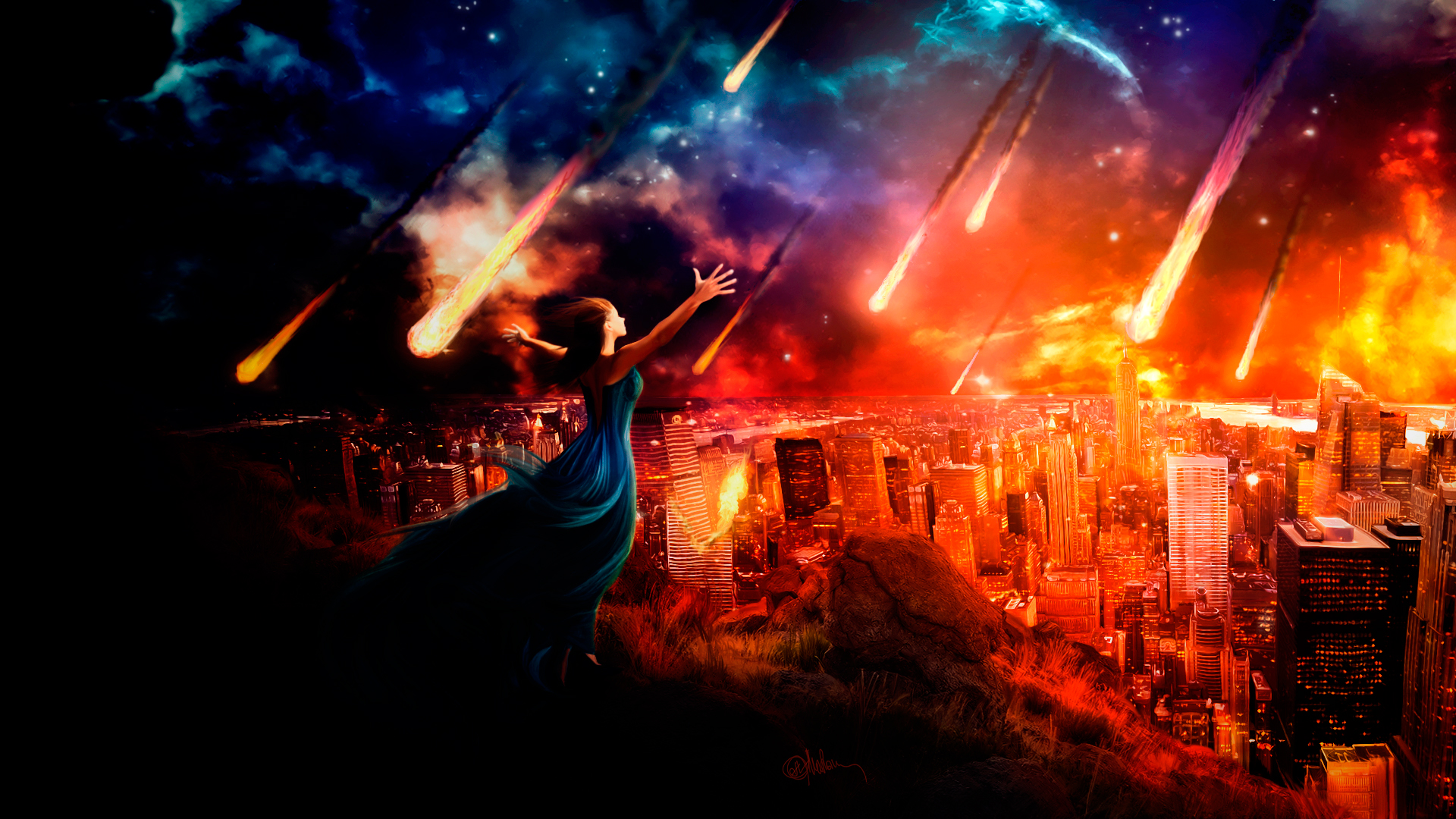
Art by Michelle Browne.

What makes someone end up as the main character on Twitter for a particular day? 

It might be a subculture issue - for example, tabletop roleplay game (TTRPG) Twitter is pretty mad at Critical Role right now because their opening credits feature arguably colonialist imagery/fantasies, and some have argued that its Marquet setting is supporting/pushing orientalism. (Orientalism is the term for the Western artistic fascination with "The East," conflating a whole mess of cultures that include everything from Anatolians and Turks to Egyptians and Iranians, all the way to to Chinese, Vietnamese, Japanese cultural elements, and more.) 

I can't really debate this argument because I'm not a SWANA (South-West Asian and/or North African) or SEA (South-East Asian) person, but I would say that there's only so much any particular work of media can do to unpack the entire legacy of colonialism. Change is always going to be incremental; even revolutions leave a lot of paperwork in their wake. 

However, there is something interesting about a good-faith effort being taken as cynical, false, and ill-willed. It's not the first time I've watched something like that happen, either - particularly on Twitter, which thrives on anger, because its algorithm says it has to.

So - just posting on Twitter to vent or be angry is kind of inherently dangerous on that basis alone - it's more likely that you might go viral just when you're vulnerable. Add in a mixture of people interacting in bad faith, and the recipe for conflict is already spicy. But what about people who see themselves as inherently just, or fighting for the right cause? Surely we've all been that person, who signal-boosted a conflict because it seemed important, or weighed in with their two cents. Sometimes, or frequently, the target of that ire may be a person or group with whom we usually would agree - except for this time, or a few other times, of course...

But why would we treat each other badly? 

To survive in a system hostile to our existence, many marginalized people have to learn the art of reading subtext. People with Post-Traumatic Stress Disorder or Complex Post-Traumatic Stress Disorder and those who have survived trauma and/or abuse also tend to be members of marginalized groups - and reading the subtle tells of people acting abusively tends to train in hypersensitivity. Unfortunately, that hypersensitivity and the rampant lack of mental health care and resources means that many marginalised people are extremely jumpy, even around each other. The casual abuses of the world around us trains us to default to paranoid readings of the words and writing of mainstream culture. After all, being openly homophobic/queerphobic, openly racist, or openly discriminatory in other ways is punished socially, or at least awkward - but passive-aggression or more subtle jabs abound. Not noticing these things can be harmful to us, so unfortunately, we tend to default to paranoid readings of situations - even when creators, content makers, or other internet strangers are acting in good faith. 

Good intentions, bad chemistry

Speaking of abusive or discriminatory environments, it's also true that a lot of leftists in North America have come from culturally Christian backgrounds. Even if we've moved away from that lifestyle and religion, the logic and classification system remains in our minds - the moral hierarchy of goodness and badness, of evil and moral rightness. And unfortunately, that system is pretty lopsided and badly balanced. After all, we're talking about the system of beliefs wherein - particularly for evangelical Christianity - anal sex is about on par with sexual assault; robbery with being overly proud of yourself; and murder, on par with masturbation. 

"Wait, that's not right!" 

Well - that's a complex topic, but technically, they're all sins. Sure, some admit that not all sins are equally bad - but they're all considered sinful.  There's more to it than that, sure, but from a lay-Christian perspective, the sin thing is persistent. We are all sinners before God, and ultimately, only He can forgive us - so the rhetoric goes. 

Now substitute in "problematic" for the word "sinful." Suddenly, certain behavioural patterns make an uncomfortable amount of sense. There is also no God-figure or representational stand-in, such as a priest or pastor, to act as a forgiver or mediator of transgressions for those of us in the social justice sphere. There is the crowd - whose reactions are cherry-picked by the algorithm to show their worst side - and that's about it. Thus, we may turn to the crowd in hopes of forgiveness, but without leaders (or even a belief in leadership), that just results in a wall of diverse opinions. 

So what comes next? Do we need secular forgiveness-priests?

I'm not saying we need leaders or arbiters of forgiveness, because that's inherently a system of power that seems both ineffective and dangerous, but it's worth being conscious of our roots so that we can understand the flaws in our own rhetoric and belief structures. 

And hey, it's a lot easier to be less suspicious of others when we understand the flaws and dangers of our own perspectives - and the way our mental health issues and backgrounds colour our perspective. Slowing down and giving others the benefit of the doubt takes time, practice, and discipline - but once the habit is created, life becomes so much more relaxing. 

***

Michelle Browne is a sci fi/fantasy writer and editor. She lives in Lethbridge, AB with her partners-in-crime and their cats. Her days revolve around freelance editing, knitting, jewelry, and learning too much. She is currently working on other people’s manuscripts, the next books in her series, and drinking as much tea as humanly possible.
Find her all over the internet: * OG Blog * Mailing list * Magpie Editing * Amazon * Medium * Twitter * Instagram * Facebook * Tumblr * Paypal.me * Ko-fi

Tuesday, 15 February 2022

Is the Internet Getting Meaner?

 I'm going to dispense a bunch of advice that I wish both I had heard when I was younger and on the internet, and that I think younguns on the internet could benefit from hearing.


The way people talk about very minor celebrities and critique their every action would absolutely destroy any normal person. Before you write anything online, consider - has someone else already said? Did they maybe say it better? Are you actually adding to a conversation? Yeah, those are a lot of questions to think about. 

But especially white people like myself, and especially young people who may not have learned the full weight of empathy and emotional maturity, need to think before we post. So, take it from an older millennial - you're going to make big mistakes that you regret, you're not always going to say the right thing, and god help you if you blow up enough to make an income at the entertainment industry. 

Accept that microcelebrities and celebrities are going to be problematic or just do things that you don't like - and make room to just not like something without having to justify it on a moral basis. 

Oh, and learn the difference between personal nitpicks, like "I don't like the way she pauses between sentences, or the way they're incredibly cringey" and actual issues, like, "okay, that was racist, that's not okay." Of course, there's overlap here - fandoms can be incredibly fragile about critiques of their faves - but delivery does mtter.

And finally - learn to complain and mock people in private, rather than on forums. Every time we post something on Twitter rather than complaining about it in private, we're putting it out there for the world to read. And that has a different effect than bitching in private to friends. 

Because if you don't? You're going to betray any principles you have of being empathetic. and even if you don't care about the celebrity's feelings, your fellow fans will still read what you say. And it might make them feel terrible about themselves, especially if they're dorky, or they snort when they laugh, or idk, they overshared something recently. So - try to hold others only to the standard you hold yourself to, and for both yourself and others, learn the value of grace and forgiveness. Not everything is really worth throwing someone in the trash bin over.

It's so easy to spend way too much energy on critiquing youtubers or any other mildly public figure when we actually have real, serious problems to focus on - like holding cops and politicians accountable, and climate change. And yes, someone can care about two things at once - but can you care about ten at once? 

So don't fall for the easy trap of wanting to fix or mock something small and stupid. Our anger should be directed at the wealthy class, definitely, but celebrities are just the scapegoats of the rich. Spend your energy and rage on organizing, not merely griping. 

Should I follow my own advice? Absolutely. Are we all still in a pandemic, which makes it kind of hard to protest? Yeah. But let's spend our energy annoying the people who really, really deserve it.


***
Michelle Browne is a sci fi/fantasy writer and editor. She lives in Lethbridge, AB with her partners-in-crime and their cats. Her days revolve around freelance editing, knitting, jewelry, and learning too much. She is currently working on other people’s manuscripts, the next books in her series, and drinking as much tea as humanly possible.
Find her all over the internet: * OG Blog * Mailing list * Magpie Editing * Amazon * Medium * Twitter * Instagram * Facebook * Tumblr * Paypal.me * Ko-fi

Wednesday, 19 June 2013

The End is Nigh, Part 1: The Biomass Revolution and Other Tales

Hello hello!


As those of you who’ve strayed near a movie theatre in the past couple of weeks may have noticed, there is a very noticeable trend to this summer’s hits. My Facebook feed has been on fire with reports that This Is The End is hilarious and gritty; The Purge has been racing through theatres as well. Catching Fire (which I plan to both re-read, watch, and review) has been advertising itself frequently, as has World War Z, which has been putting much more of an emphasis on the end-of-the-world bits than the zombie bits.

Trend-counting time: we had vampires and werewolves, then a slight interest in dystopias (especially with a dose of romance), a raging surge in zombie fiction and media, and now, we’re hitting a wave of proper dystopian works. What’s up with that? I had some theories before—basically, ‘challenges are fun and so is destroying stuff’—but it’s time to re-evaluate and see whether more forces are at play. I’ll be name-checking some of those previous references in this round, so don’t be surprised if my recommendations and examples have some overlap.


This is going to be a two-parter; in the first half, I’m going to give you some terms and some media, and in the second, I’m going to talk about why everyone is in love with the end of the world more than usual.

Without further ado, let’s talk about some terms.


Source. This really sums up my feelings on Dark World sci fi. 


Learning new words is fun!

In my last article, I deliberately blurred the lines between cyberpunk, dystopia, and apocalyptic/post-apocalyptic fiction. Cyberpunk is often a style feature in both apocalyptic/post-apoc and dystopian fiction. All three of these tend to be more planet-centric than galaxy-centric sci fi; where some media (Mass Effect, Star Trek, Doctor Who, Dune, Star Wars) focus more on building a big, shiny universe to play in and tour around, these three genres tend to stick to one planet or even one city. I’ll get to a couple of exceptions to the ‘limited travelling’ idea in a minute, but let’s lay the terminology down first.  Also, you might want to keep Google or GoodReads open in the side so you can look up some of these titles.

In case cyberpunk just sounds like the word you’d use to describe your smart-ass IT guy, I’ll clarify—cyberpunk is fiction with a heavy focus on mixing analog and futuristic technology into daily life. It tends to be gritty, noire-influenced stuff with an existential bent. Transhumanism and equality issues are often themes, as well—the nature of humanity, of reality, changing social roles, and all the ‘fun stuff’ that comes with it. Think of BladeRunner, Johnny Mnemonic, the Sprawl series by Gibson, the anime Ghost in the Shell, or, of course, The Matrix trilogy. It’s sort of a heavily 80s/90s influenced version of steampunk. I’m going to avoid a discussion on all the ‘punk’ subgenres, and get back to the other types of dark-world fiction.


Apocalyptic fiction can be loosely described as fiction about how everything goes to hell. Post-apocalyptic fiction (such as The Road by McCarthy, Brown Girl in the Ring by Hopkinson, or many zombie books) takes place after everything’s gone to hell already. Desert Punk is another anime example; the Fallout series is probably the most famous post-apocalyptic game set out there, though Metro 2033 is a very good one too. The Terminator and Tank Girl also technically count as post-apocalyptic fiction, too.


A dystopia is, as mentioned in this article, a ‘bad world’, often characterized by totalitarian governments, personal controls, lack of freedom, poverty, and a struggle for survival. The Fade by (author) is a good example. Of course, 1984 by Orwell, Brave New World by Huxley, Fahrenheit 451 by Bradbury, A Clockwork Orange by Burgess, Lord of the Flies by Golding, and I Have No Mouth And I Must Scream by Ellison are famous, even ‘classic’ dystopias. For film media, Dark City is a pretty excellent dystopian movie, and Metropolis (both the black-and-white and animated versions) also serves as another fine example. As mentioned previously, even the two Portal games (part of the Half-Life series) fit into this category.


All of these together fall into the realm of ‘Dark World Sci Fi’, though fantasy elements sometimes sneak in. For obvious reasons, they often overlap heavily; it’s easy to have a post-apoc book that involves a dystopian government or living situation, and survivors might use cybernetic implants (a cyberpunk element) to get by in fights to the death. The Mad Max series, The Ballad of Halo Jones, Firefly, Lexx, and a novel I’m going to review a bit today—The Biomass Revolution and its companion, Squad 19, by Nicholas Sansbury Smith—all make use of overlapping aspects of the terms I mentioned above.


I'm focusing on it because I liked it. 


Oh hey, another book!


Shameless plug time—I came across this remarkable book and then got to help a little with its development; it’s very timely, and I’m about to explain why it’s both a) awesome and b) relevant to the points about why dystopias have gotten the limelight lately. The Biomass Revolution kind of sounds like a sci fi diet plan if you glance at the title alone, but the pretty wasteland cover and the poetic opening immediately tell you which genre you’re in. Biomass combines the ripping thrills of a technothriller with the darkness of a dystopia. The moments of beauty in its atmospheric descriptions can be heartstopping--a unique book, that show itself to be far more than it appears at first glance.


The thing that got me about this book is the fact that it wasn't just a technothriller sort of romp. I was expecting that from some parts of it--charge through wasteland, shooting baddies, being big damn heroes. The book focuses on corruption and makes no bones about its political stance, but little details like the dead wives of the leaders really come back to haunt one. Even the 'bad guys' are people. And when civilians get caught in the crossfire, they aren't just meatbags of dramatic convenience. They have names. 

The tone is nicely dispassionate, and Sansbury Smith does a good job of referencing reasonable technologies and current issues. They're hauntingly familiar issues; energy, resource wars, conservatism echoing the non-interference Monroe Doctrine of the early World Wars, and, ultimately, the desolation that results. There are haves and have-nots. Immigrants and deviants are treated badly, while people in the right places get off scot-free. It's heavily inspired by its predecessors, but still manages to add to the genre. I'll admit that some of the content has a video-gamey feel to it, which might turn some readers off, and a lot of the characters are very big and very muscly types. However--it all works. It strives for cinematic rather than silly details, and it works. 


Getting back on topic...


The thing about DWSF (Dark World Sci Fi; see above) is that the entire field is built on societal subversion and questioning the system. That makes it one of the darkest types of entertainment, almost as dark as horror (an entire field devoted to primal fear responses) and sometimes darker. DWSF is about how wrong things are in the world, and how characters attempt to fix them. Unlike other books, the heroes don't necessarily succeed, either. Sometimes, they just ameliorate things temporarily, but are eventually screwed over by the crushing weight of the world.

There's always that glimmer of hope, though, and it is a little brighter when the surroundings are bleaker. I'd like to think that the reason people love Dark Worlds stuff is that they like a taste of hope that's sharper than usual. However, my suspicions are more sinister. Tune in soon to find out exactly why I think people really dig the dark stuff.


*****
Thanks for dropping by the nest once again. Don't miss any of the phuquerie. Find me on TwitterFacebook, and on Tumblr. More interviews and witty commentaries are coming. Keep checking back to see those surprise posts, too. This is your darling SciFiMagpie, over and out! 


Monday, 25 June 2012

A Brief Comment About Mass Effect 3: The Extended Cut

Hello, everyone!

Well, it's virtually unavoidable: time to dig up a metaphorical dead horse and possibly beat it with a stick. You know what I'm talking about: the Mass Effect 3 ending fiasco.

Wait, what? You don't know what I'm talking about? Have you been on the internet since March? If you've avoided it, by intent or accident, this should help: my post about ME3. If that doesn't help explain some things, this post might: a reflection on why heroes die. Go read them and come back, if you're confused.

Okay, enough shameless self-plugging. At this point, our proverbial horse is basically a slowly fossilizing skeleton, already leaving immortal calcium deposits on the history of gaming. The mess Bioware got itself into by providing three very different endings with radically similar animation is now legendary, and will probably be the bete noire of gaming companies completing epic stories for years to come. After all, is there anything worse than slaving over a beloved game and pouring your heart into it, only to discover that fans resent your decisions and consider them an emotionally damaging pile of slapdash phuquerie?

As a writer and a casual artist, I have to sympathise, and say I can't imagine anything much worse than that. However, I'm also not part of a large corporation rushing me to finish something and forcing me to achieve consensus with dozens of other writers. And, for better or for worse, I don't have hundreds of thousands of fans breathing down my neck every time I make a decision they don't like (yet). At the risk of being a hypocrite, much as there are plot holes that the Normandy herself could pilot through with ease, I can see why they wouldn't want to change their own work.

However, I am a fan, and though I enjoyed at least one of the endings, the emotional dissatisfaction with similar animation and similar implications for all three was truly heartbreaking. There have been other games that caught my attention, and made my heart beat faster. There have been other games that made me truly care about the their protagonists, settings, and struggles. And yet, I have not seen a game as richly alive and as soul-captivating as the Mass Effect trilogy. The ending, which was nearly a cliff-hanger in its brevity, seemed to foreshorten the struggle. A whole world of possibilities opened for the ending, but we didn't see them. The only options given were a variety of failures, and nearly all involved possible or implied genocide of various flavours.


Source. Personally, I liked the green apple flavour! Or, as some would have it, the watermelon flavour. Strawberry was also okay, but phuque the blue raspberry flavour. Did anyone choose blue? Didn't think so.


This downloadable content should fix the problem of tying up plot threads and fixing the "oops, we didn't mean to kill the galaxy" issue, but it's not going to change the ending. Our hero will still make the ultimate sacrifice, or kill everyone else trying. This was Bioware's decision, from the sound of things. I won't pretend it's perfect, but when you work hard enough to get either that much-vaunted red or green ending, there is still a certain satisfaction about it. They got their controversy, all right, and then some.

So, final thoughts. Have I seen the DLC yet? No, of course not, though you can bet your shapely blue asses I'll be writing some thoughts up as soon as I do. Am I happy that saving the galaxy (?) will probably require Shepard's death? Not really, because I really was crossing my fingers for a happy ending, or at least something less clichéd. However, if it's a question of whether or not I respect the writers for having the guts to say they weren't going to make everyone happy, that's an easy answer. In spite of all the fire, the dissatisfaction, the endless threats, raging, trolling, and even lawsuits, they're going to be faithful to their own work. And that represents an ethic that deserves no argument.

*****

As always, I hope you enjoyed today's batch o' fresh thoughts. There will be more Humble Bundle, more writing updates, some missed-it reviews. Keep an eye on new releases by following on Twitter and on Tumblr. This is your SciFiMagpie, over and out!

Google+